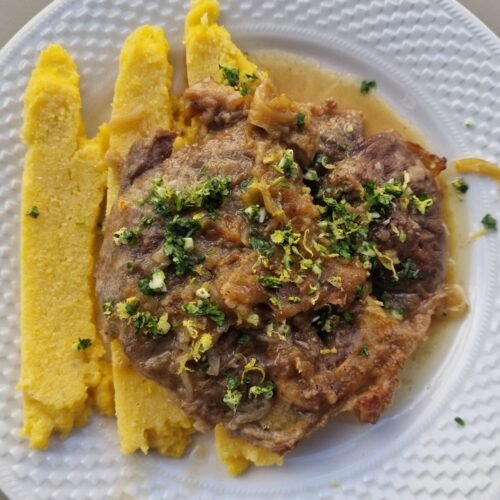
Osso Buco alla Milanese
Cross-cut slices of veal shank braised in an onion and white wine sauce, sprinkled with fresh herbs.
Ingredients
For the meat
- 4 pieces osso buco cross-cut veal shank, about 2.2–2.6 lb (1–1.2 kg)
- 2 onions about 9 oz (260 g)
- 1/4 cup 60 ml white wine
- 1/4 cup 60 ml extra virgin olive oil
- 3 1/2 tbsp 50 g butter
- About 6 tbsp 50 g flour
- 2 1/2 cups 600 ml stock
- Salt
- Ground black pepper
For the gremolata
- 2 cloves garlic
- 1 bunch parsley
- Grated zest of 1 lemon
Instructions
- Peel and slice the onions.
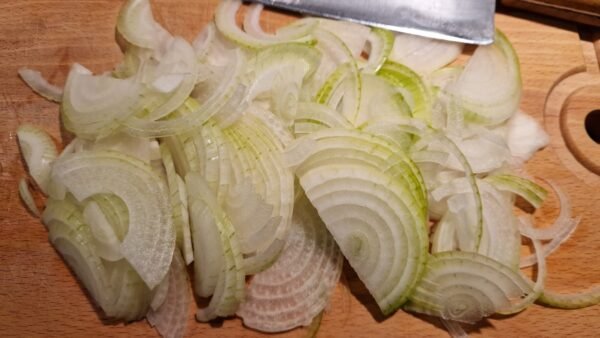
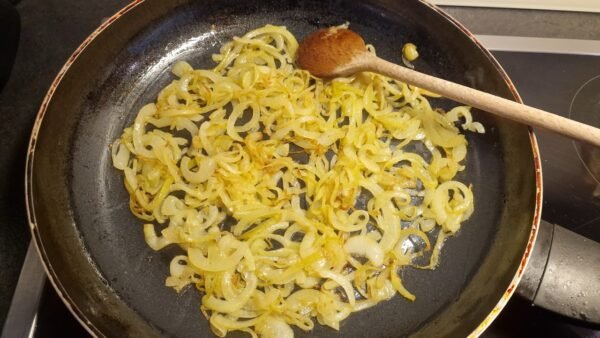
- In a large skillet or wide pot, cook the onions in half of the oil over medium heat for 20 minutes, stirring occasionally. They should be golden, but not too browned.
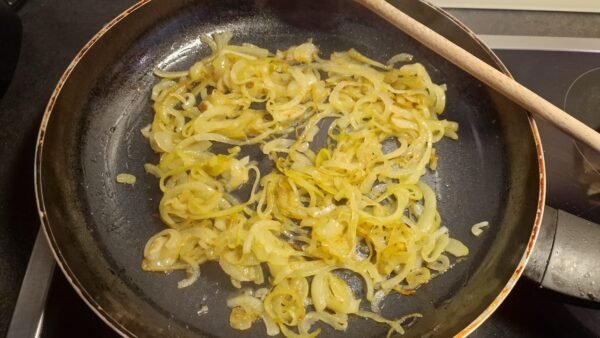
- Add half of the white wine, stir, and cook over low heat for another 10 minutes. When done, set the onions aside on a plate.
- While the onions are cooking, prepare the veal shank. Cut into the tendons around the edge in 3–4 places with sharp scissors or a knife so the meat curls up as little as possible during searing and cooking. Season both sides of the meat with salt and pepper.
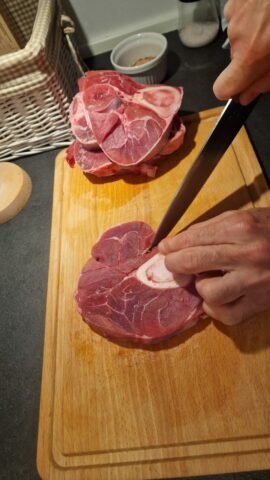
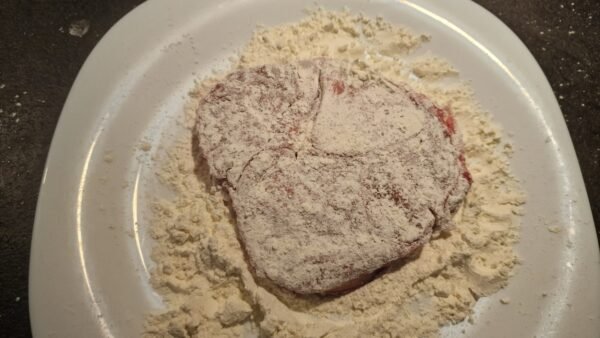
- Dredge the meat slices in flour, shake off the excess, and place them on a plate.
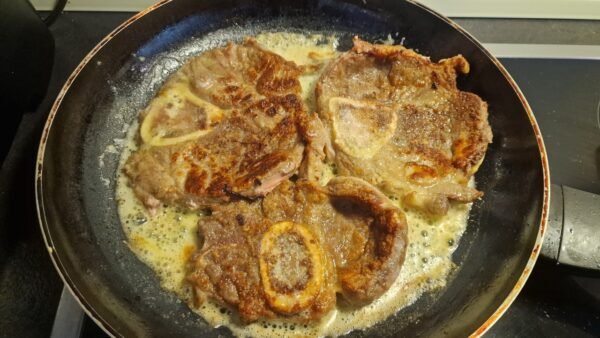
- Pour the remaining oil into the pot used for the onions, and add the butter. Melt the butter over high heat, then add the meat slices. Brown them on both sides, about 3 minutes per side. If the meat does not fit in the pot all at once, as in my case, brown it in two batches.
- Add the remaining wine, pour in enough stock to almost cover the meat, and add the onions. If you are using unsalted stock, add more salt at this point. If the meat does not fit in a single layer, you can stack the slices while they cook. But only add enough stock to just cover the first layer.
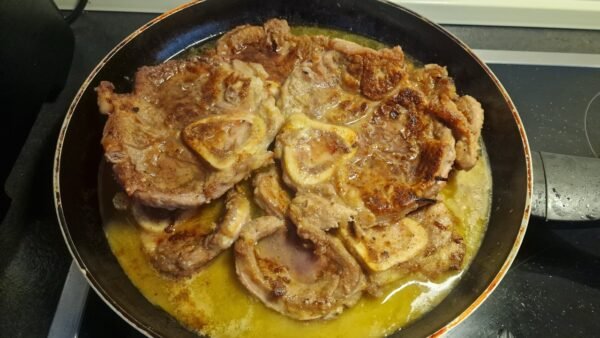
- Start cooking it covered, over low heat. After half an hour, carefully turn the meat over. If your skillet does not have a lid, use aluminum foil. Be careful that the meat does not fall apart when turning, and that the marrow does not come out. If you stacked the meat slices, move the top ones to the bottom when turning so every slice becomes tender evenly.
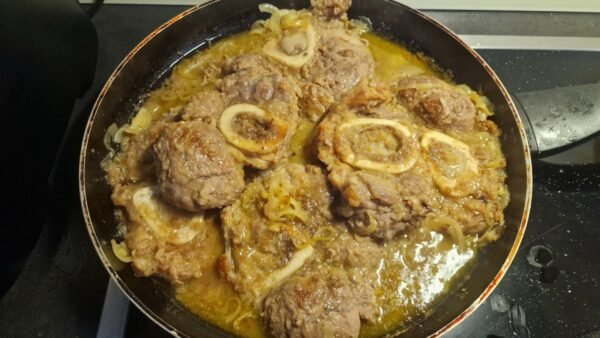
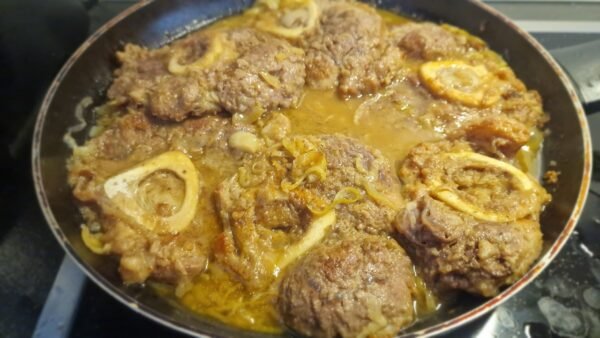
- Cook for another 45–60 minutes, until the meat is completely tender. This makes the total cooking time 75–90 minutes. It depends on the thickness of the meat slices, and even on the skillet. It is better to cook it a little longer, until it is completely soft and fall-apart tender, than to leave it even slightly chewy.
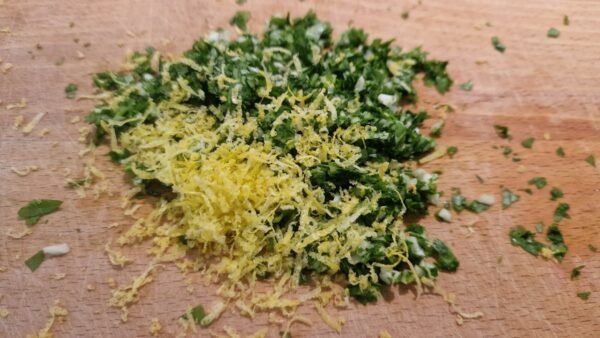
- While the meat is braising, make the gremolata. Grate the lemon zest, peel the garlic, and smash it with the flat side of a large knife. Remove the thicker stems from the parsley. Finely chop the garlic and parsley with a sharp knife, then add the grated lemon zest.
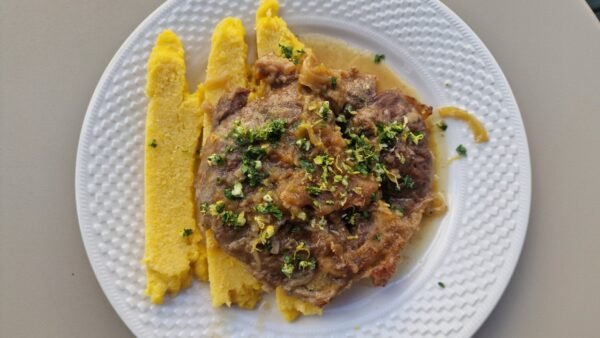
- When serving, sprinkle the gremolata over the meat slices. Classically, it is served with Milanese saffron risotto or polenta.
Notes
Original name: ossobuco alla milanese
Tried this recipe?Let us know how it was!