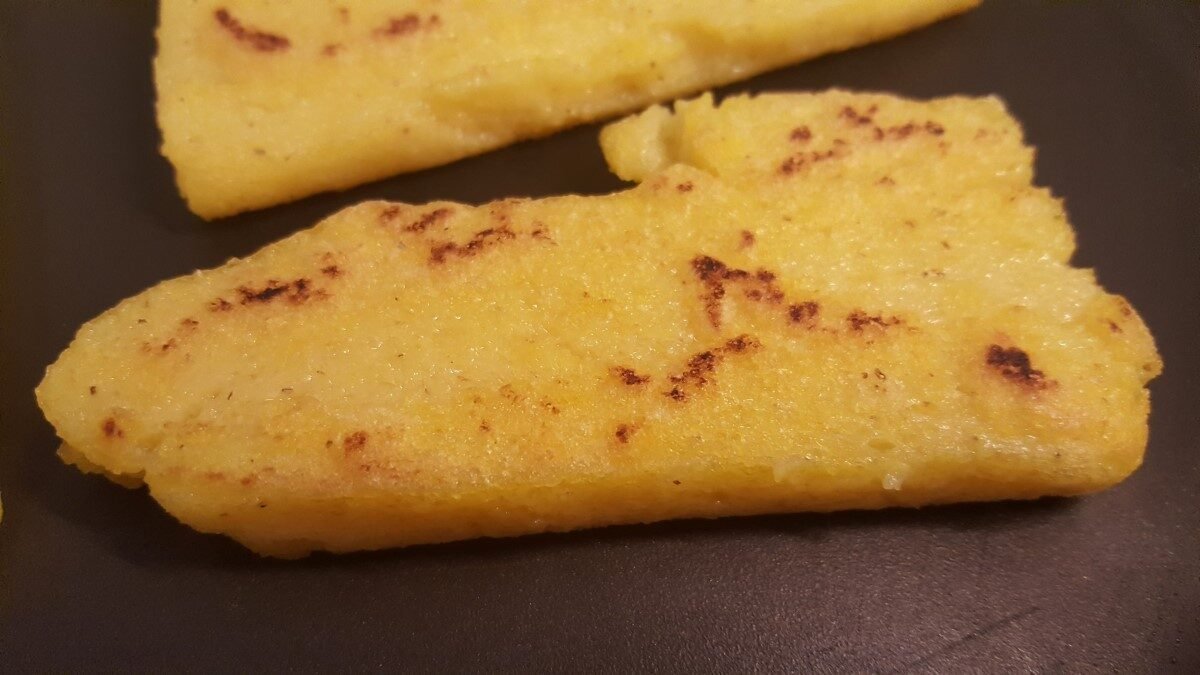
Polenta is a well-known traditional Italian dish made from boiled cornmeal. It can be served as a hot porridge, or left to solidify. In the latter case, polenta is cut into slices before serving. The slices can be baked, fried, or grilled, which gives them an extra layer of flavor.
Polenta is very easy to make at home: you basically cook cornmeal in water. The only thing that makes it a bit more demanding is that you need to stir it almost constantly for about 50 minutes. Still, it’s a nice gluten-free, vegetarian, and vegan addition to your diet.
Polenta Recipe
In the recipe below, I show you how to make traditional Italian polenta at home—the kind you can cut into slices. This goes very well with roasted meat, like my rosemary pork loin.
Please read my remarks on the ingredient amounts below. I’m giving you exact amounts in both U.S. and metric units.
Note on the Ingredient Amounts
In the U.S., cornmeal is often sold in 24 oz (680 g) packages, while in Europe it’s more common to see 500 g or 1 kg packages. To make it easy to cook polenta using one full package of cornmeal, I’m giving you the ingredient amounts for both systems.
Please note that I use Himalayan salt here, where 1 tablespoon is about 23 grams. Kosher salt is similar, but regular table salt is more dense (about 18 grams per tablespoon), so you’ll need less if you’re using that. I recommend weighing your salt and tasting your polenta as you go.
| Polenta Ingredient | US Units | Metric Units |
|---|---|---|
| Cornmeal | 24 oz (680 g, 4 1/2 cups) | 500 g (3 1/3 cups) |
| Water | 11 1/3 cups (2720 ml) | 2 liters (8 1/3 cups) |
| Salt | 1 1/3 tbsp (31 g) | 1 tbsp (23 g) |
| Extra virgin olive oil | 1 1/3 tbsp | 1 tbsp |
Polenta Tips
An important part of making polenta is cooking it for a long time and stirring it regularly and thoroughly. That’s how it becomes smooth—and that time is also needed for the starch in the cornmeal to cook, gelatinize, and develop polenta’s characteristic texture.
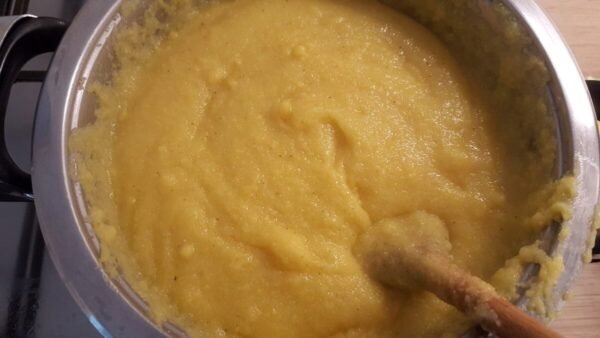
From a scientific point of view, this breakdown of the starch—basically the same process that makes a roux or béchamel come together from plain flour—is something you can actually notice as it cooks. After about 40 minutes, the nature of the polenta changes: the dense, characterless mass starts to gel, come together properly, and separate cleanly from the sides of the pot as you stir.
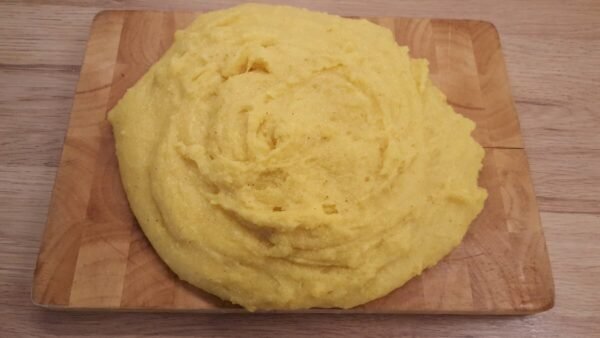
In Italy, polenta is traditionally poured out onto a wooden cutting board and sliced. For really nice slices, don’t cut it with a knife—use a length of thread pulled taut between your two hands.
Frying Polenta
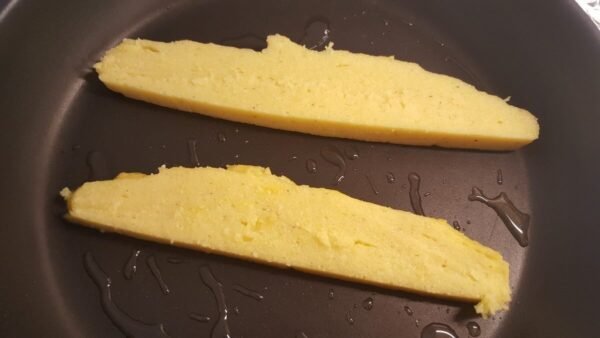
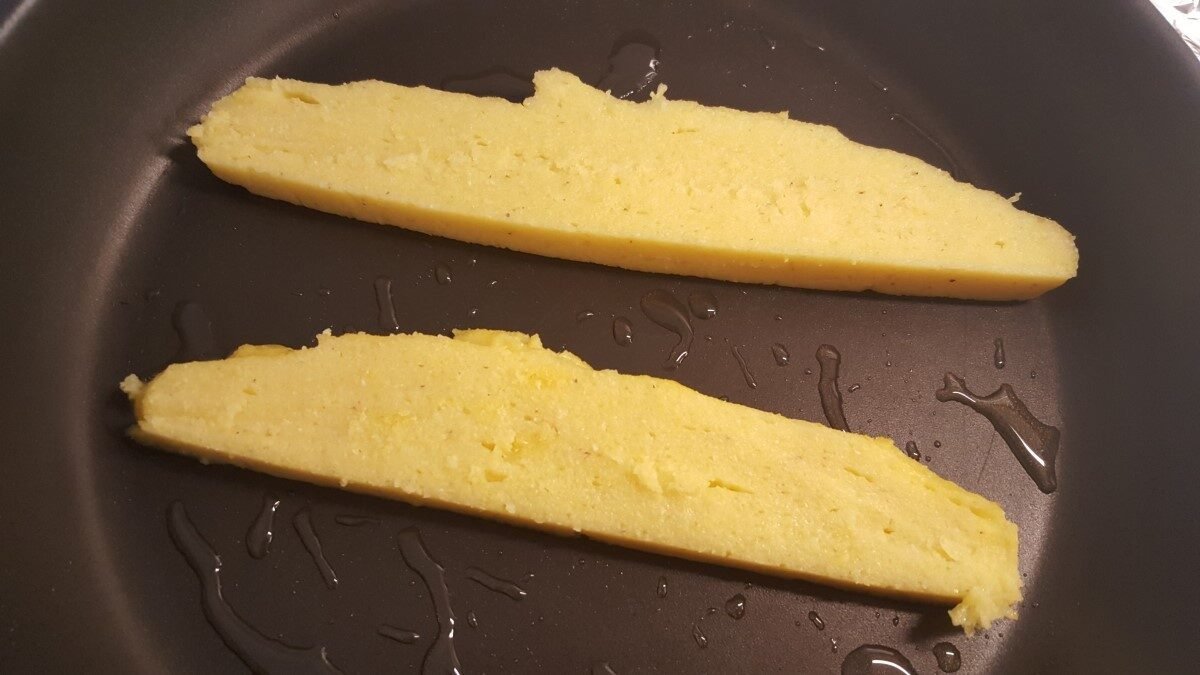
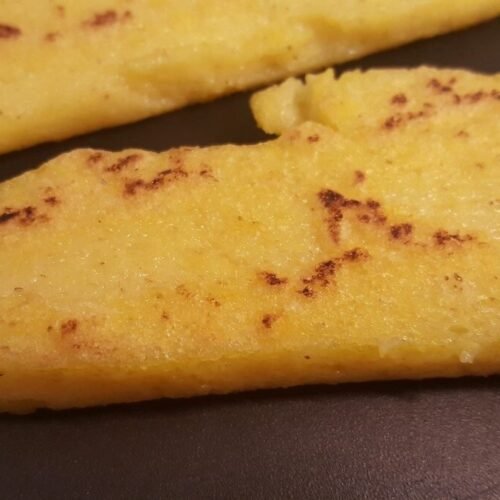
The easiest way to kick your polenta up a notch is to fry the slices in a pan before serving.
Heat 1–2 tablespoons of oil in a large pan over high heat. Add the polenta slices and fry for 3–5 minutes on each side, until you get the color you like.
International Variations of Polenta
This dish is known worldwide by its Italian name—polenta—from the central and northern regions of Italy. But the same dish (sometimes with small variations) is prepared and served across several countries in Central and Eastern Europe, including Hungary, Romania, Slovenia, Bulgaria, and Ukraine.
In Hungary (and in Hungarian-speaking parts of Transylvania) this dish is called puliszka (pronounced pooliska), and it has a long tradition as a cornmeal porridge. Interestingly, this simple dish almost sank into oblivion in the second half of the 20th century, and then became popular again—this time as a “fancy Italian meal.” Lots of people in Hungary use the name polenta for it nowadays, even though we have our own word for it.
Enjoy!
Polenta
Ingredients
- 4 ½ cups cornmeal 680 g, 24 ounces
- 11 ⅓ cups water 2720 ml
- 1 ⅓ tbsp salt 30 g
- 1 ⅓ tbsp extra virgin olive oil
Instructions
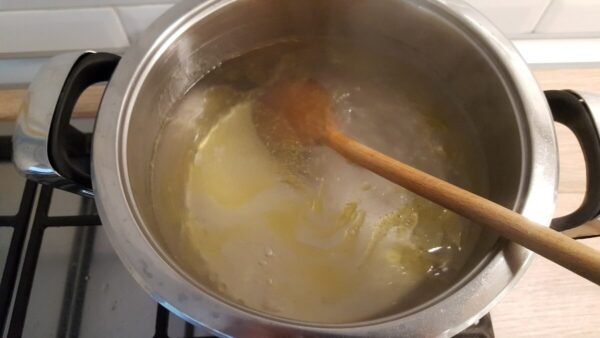
- Bring the water to a boil in a large pot. Once it comes to a boil, add the salt and the oil. Reduce heat to low.

- Slowly add the cornmeal, stirring constantly.Make sure it goes into the water in small batches and is thoroughly stirred in so it does not become lumpy.
- Cook the polenta for 50 minutesto 60 minutes over low heat. Stir very often, almost constantly.You don’t have to stir it literally constantly, but make sure you stir it every minute to prevent it from burning or sticking to the bottom of your pot.
- Pour the cooked polenta onto a large cutting board and let it cool and solidify for 10 minutes.
- Optional: Cut it in 3/8 inch (1 cm) slices and fry them over 1-2 tablespoons of oil in a large pan over high heat for 3-5 minutes on each side, until you get the desired color.To slice polenta, you can use a sharp thin blade knife. But the traditional method in several places is to use sewing cotton thread. You take about a foot long piece (30-35 cm), twist one end on a finger of your left hand, the other end on a finger of your right hand. Then you can use the thread as a knife to cut the slices. If needed, use light right-and-left motion while cutting.