Chances are, if you want to know the difference between rotini and fusilli, you’ve only used either one or the other in your whole life. And there is a reason why.
Rotini or fusilli. They are both a type of Italian pasta, but what’s the difference between them? Continue reading to find out the answer, which might be more interesting than you think. And we’ll also cover the fake rotini origins later in this article.
The Difference Between Rotini and Fusilli Pasta
The pond. Yes, you read that right. The Atlantic Ocean, to be more precise. That is the only difference between rotini and fusilli.
What does this mean?
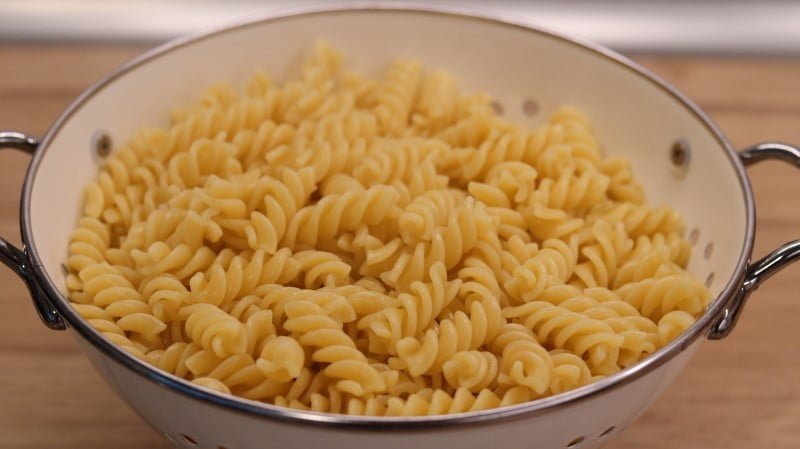
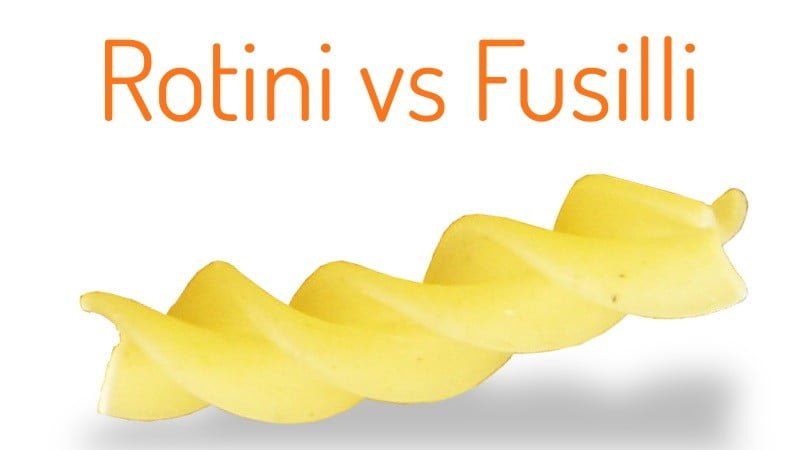
In reality, there is no difference between rotini and fusilli. They are exactly the same kind of Italian pasta, one of the best-known and most popular types, twisted into a corkscrew shape.
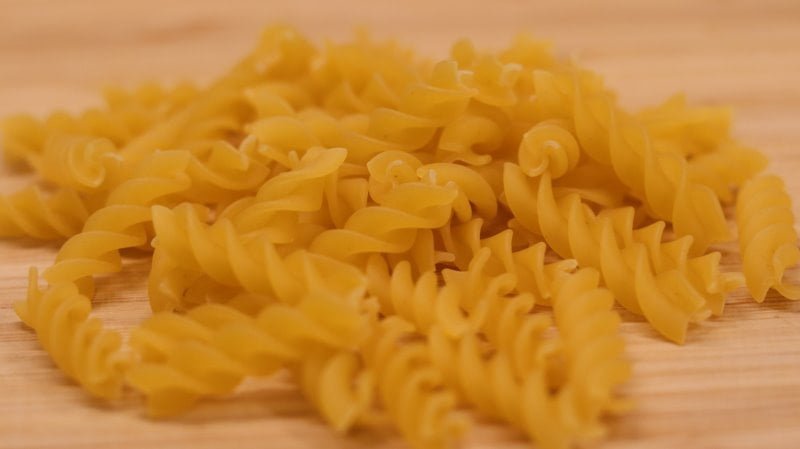
Fusilli is the original Italian name, the one that you will hear all over the world, and obviously in Italy. Rotini is the term for the same shape of pasta that’s used only in the United States and Canada.
So if you’re from North America, the term rotini is the one that you’re familiar with. For all other countries, you’ve been eating fusilli all your life.
And my U.S. friends, sorry to tell you, but I guess no Italian would understand what you wanted if you were to order a plate of rotini in a local restaurant.
Fusilli and Rotini Are the Same
Let me show you two pictures side by side. They are both products of Italy’s best-known pasta maker, Barilla. One of them is from Amazon.com, the U.S. Amazon site, and the other is from the UK Amazon.co.uk. By the way, these pictures are affiliate links. If you click on them and then buy something from Amazon, I might get a small percentage of the sale.
See? Rotini on one side, fusilli on the other. Both from the same brand. And notice that the pasta looks just the same on both packages. So they are basically the same type of pasta, just marketed under a different name.
It’s also notable that rotini is packaged in a 1 lb box, while fusilli comes in a 500 g container. The first is a U.S. measurement, while the latter is the metric measurement used almost all around the world. This again shows that rotini is for the American market, while fusilli targets other countries.
Fake Rotini Origins
While I was researching background material for this article, I came across some writings that state that rotini pasta actually originated in the south of Italy. I will not link to these, as I really don’t want to give any credit to fake sources.
In reality, searching the Italian internet, Google, and recipe blogs, no mention of the name rotini appears whatsoever.
And I’d also like to mention that if rotini were a real Italian pasta name, it should also appear in the form of rotino. The ‘i’ ending, or in some cases ‘e,’ in Italian pasta names is the sign of the plural form, just like -s in English. And even though it is very rare, Italians do use their pasta names in the singular. You cook spaghetti, a bunch of long, thin pasta. But one single piece is a spaghetto. Fusilli, fusillo. Penne, penna. Similarly, one piece of pasta is a lasagna, but the correct name for a dish where several layers are used is lasagne.
On the other hand, I did find a very descriptive line on the U.S. website of Italy’s best-known pasta maker. They state that “Rotini (meaning “twists”) are two-inch lengths of thick, screw-like pasta from Northern Italy. The shape was inspired by children, since it is fun to eat and pairs well with a wide variety of sauces.” There goes the story of rotini being of southern Italian origin…
In my opinion, this also makes the claim by some websites that there is a difference between rotini and fusilli in their shape absurd. Again, a clear example of spreading fake information.
The Real Origins of the Name Rotini
Unfortunately, I could not find any reliable sources on what the real origin of the name rotini was.
There is no Italian word that resembles this word. Some claim it means small wheels, but wheel in Italian is routa, and there is a wheel-shaped pasta in Italian cuisine called ruote (yes, simply the plural form of wheel). And by the way, this wheel-shaped pasta is called rotelle in English… maybe a good starting point for another article?
I guess this would have been some marketing trick back in the day, as rotini does sound quite Italian. Some company might have had a reason not to call their pasta fusilli; they instead opted for this made-up name, ‘rotini,’ and it stuck. But again, this is only my speculation, and I have no facts to back this up.
Rotini or Fusilli – Simply Enjoy
So next time you eat rotini or fusilli, you’ll know that they are the same. And I guess the name does not really matter. What matters most is that it is a great member of the brilliant family of Italian pasta.
Cook your favorite pasta sauce and enjoy it with rotini or fusilli.