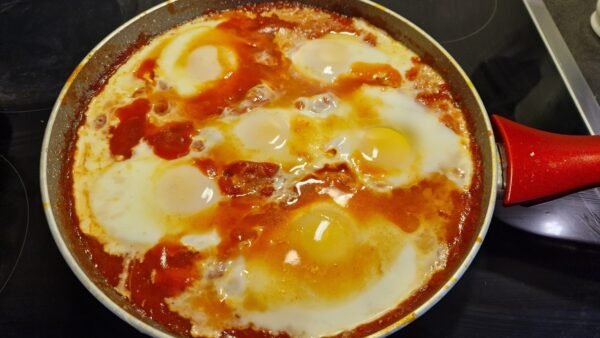
The worldwide-popular shakshuka has a slightly different face in every country. Here I’m sharing an Israeli shakshuka recipe, a version that can more or less be called authentic in that part of the world.
If anything, this version is even simpler than what is generally known internationally as shakshuka. And that is exactly how it should be. Popular local recipes are rarely complicated. Very often, it’s their simplicity that makes them so good.
So even though, with shakshuka too, every country—including Israel—has as many versions as there are kitchens, this Israeli shakshuka is much more likely to land on the table of someone local than some overcomplicated variation.
How Israeli Is This Shakshuka Recipe?
I wrote a longer article about the original shakshuka, where I explain that this dish really does exist in very different versions across the countries of the Middle East and North Africa. Even within Israel, there is no single version that can be called authentic, but the combinations most widely known internationally are also among the ones eaten most often in that region.
But if you dig into Israeli recipes, you’ll find that they tend to keep things on the simpler side. Shakshuka is not overcomplicated at all. Although there are many different versions, the one without onion and bell pepper is very common. In other words, these two ingredients—which do appear in most international versions—are often missing from local recipes.
What you’re left with, essentially, is a simple, spicy tomato sauce with whole eggs cracked into it. As for seasoning, cumin and paprika or chili are the most common, while eggs are generally part of shakshuka in Israel.
So here I’m sharing a version like that, one that is truly extremely simple and, at the same time, incredibly flavorful. And despite its simplicity, both in its flavor and in the way it is made, it is absolutely one of the versions traditionally prepared in Israel.
Serving Israeli Shakshuka
Shakshuka should definitely be served fresh and hot.
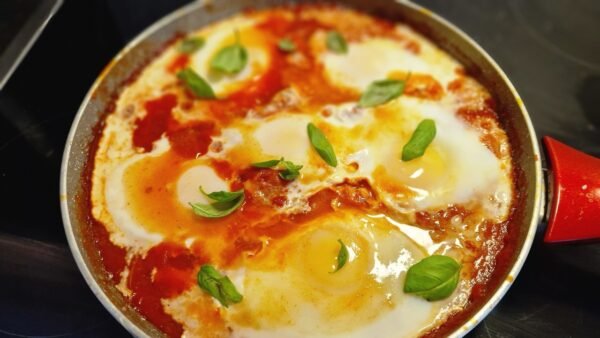
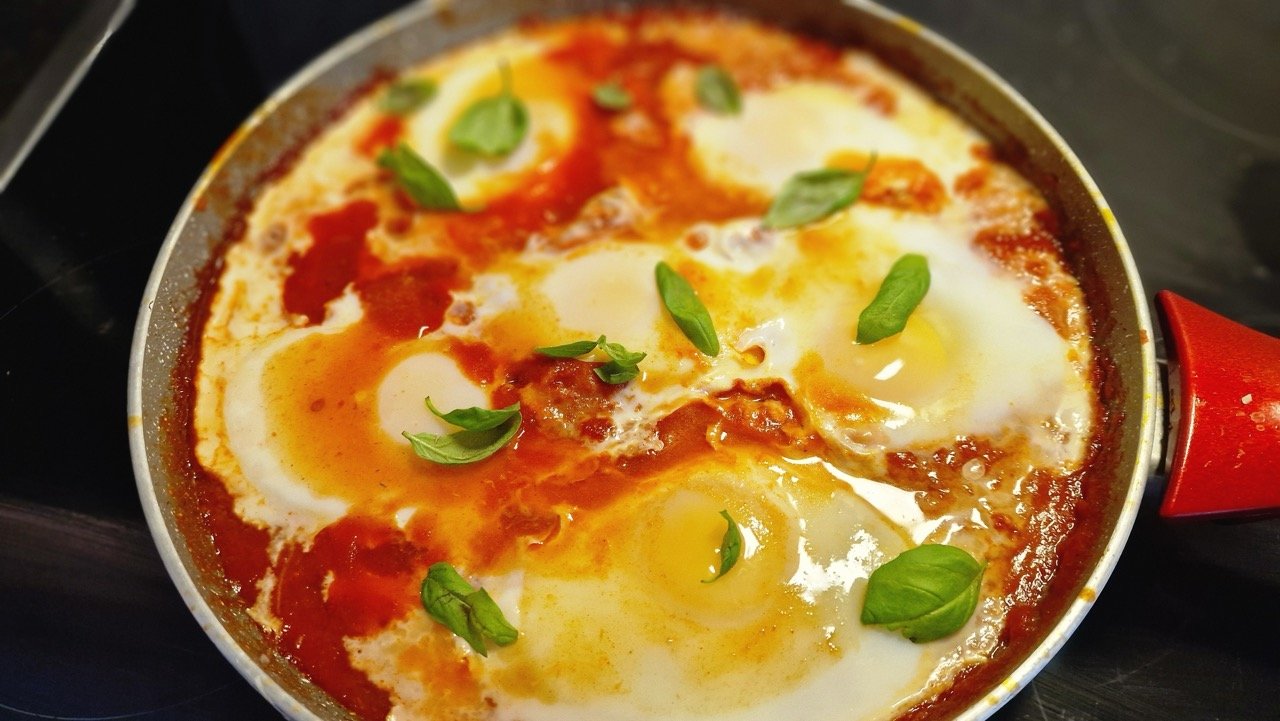
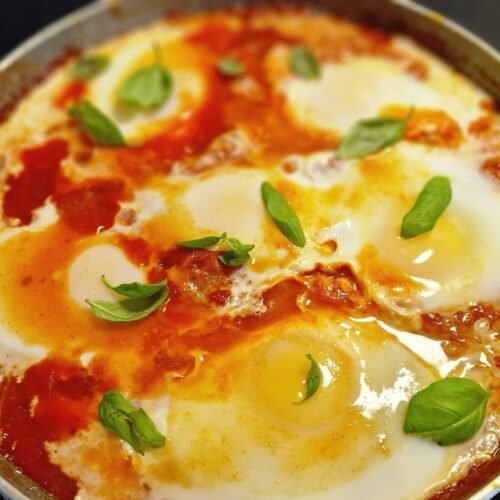
At this point, it’s common to sprinkle it with some kind of fresh herb, both for the look and the flavor. In recipes, parsley or cilantro are the ones you’ll come across most often. I sprinkled mine with fresh basil leaves this time, which not only looked beautiful but also complemented the tomato flavor incredibly well. And there is absolutely no need to worry that this made it Italian—thanks to the cumin, it very much kept its Eastern character.
In Israel, shakshuka is very often served with toasted bread. This is often not simply toast, but, for example, bread spread with butter or olive oil and toasted in a skillet. Fresh, crusty bread is heavenly for mopping up the tomato sauce, and, if you like it that way, the runny egg yolk too.
Tip: Make some amazing homemade no-knead bread to go with it!
Israeli Shakshuka
Ingredients
- 1 ½ tbsp extra-virgin olive oil
- 2 garlic cloves
- 2 cans crushed tomatoes 14 oz / 400 g each
- 1 tsp paprika
- 1 tsp cumin
- Crushed chili to taste
- Salt
- Pepper
- 6 eggs
- Parsley or cilantro for garnish; I used basil
Instructions
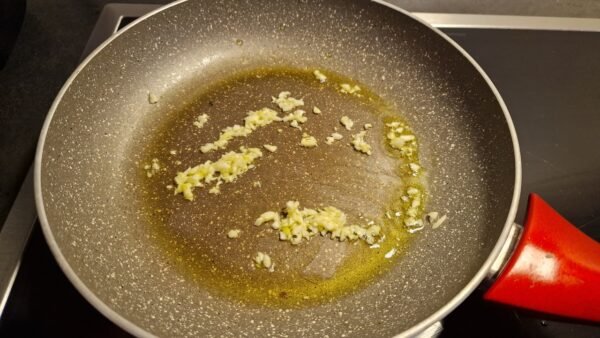
- Chop or press the garlic. Heat a skillet over medium heat, add the olive oil, and sauté the garlic for a maximum of 10–20 seconds, stirring it a few times.

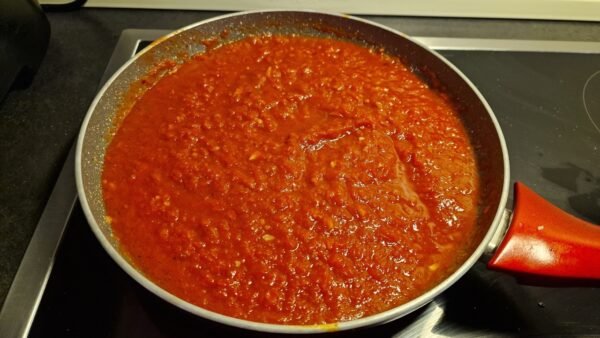
- Pour in the tomatoes, then add the spices: salt, pepper, paprika, cumin, and crushed chili. Stir to combine.
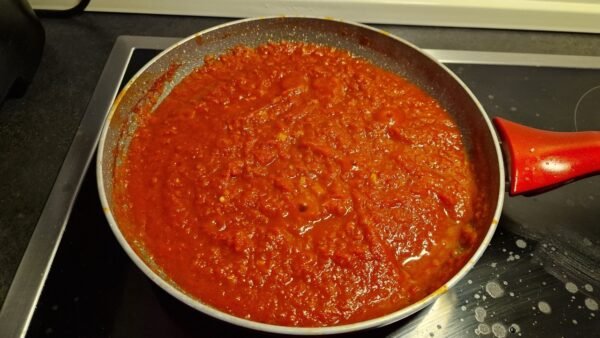
- Cook for 20 minutes over low-medium heat, until it thickens slightly. Check the flavor at the end, because after the eggs go in, you won’t be able to season it anymore.
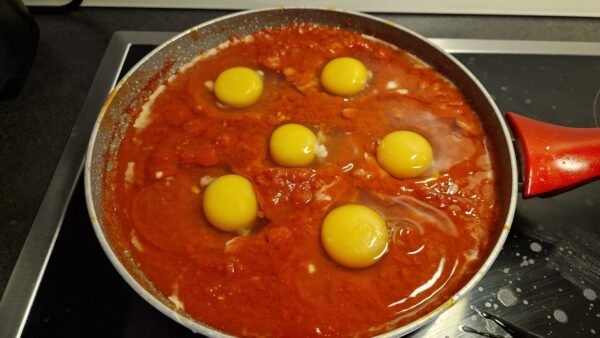
- With a spoon, make wells in the tomatoes one by one, and carefully crack the eggs into them whole.
- Cook the eggs, covered, for about 8–10 minutes. Check occasionally: when the whites have just barely turned white, the yolks will be nicely runny. If you like the yolks fully cooked, let it simmer, covered, for another 3–5 minutes.
- Serve hot, sprinkled with parsley or cilantro, or even fresh basil leaves. It’s best with crusty bread!