
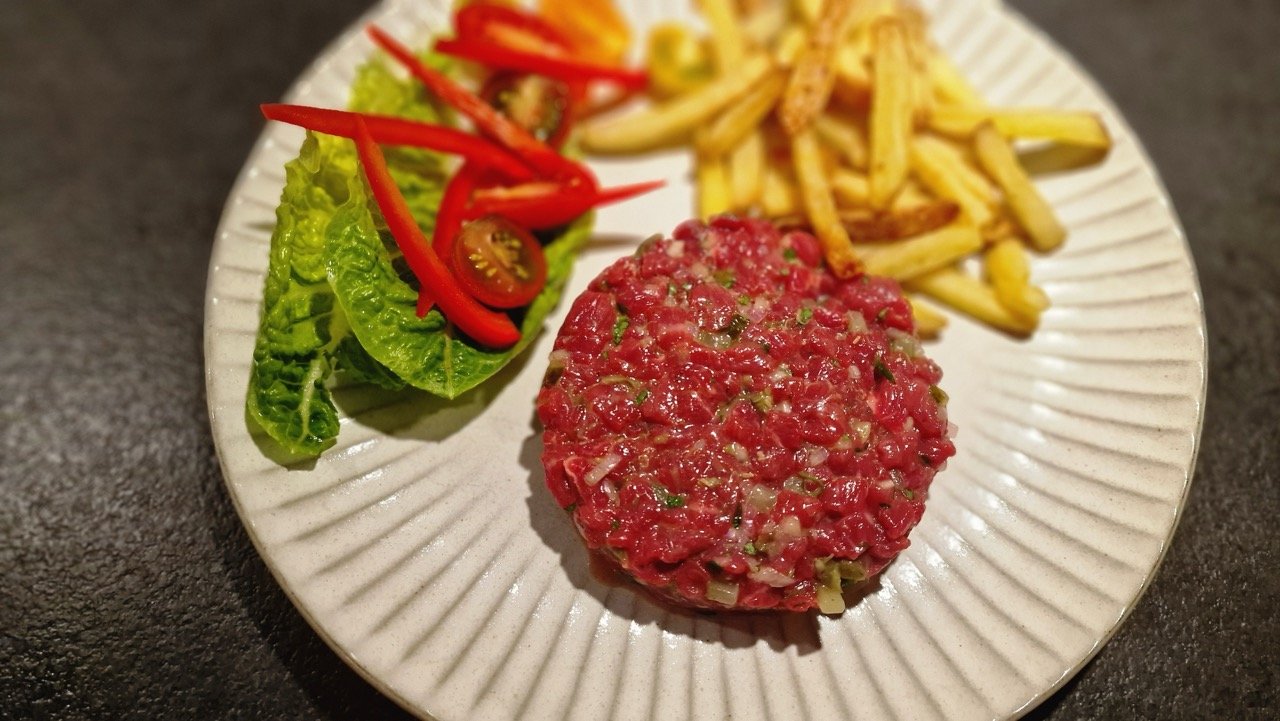
Steak tartare is one of the great classics of French cuisine and bistro culture. It’s a favorite for many, but for others it embodies the kind of dish they would “never even try”: finely chopped raw beef seasoned with egg yolk, capers, mustard, and other bold, savory ingredients.
It may seem surprising at first, but a well-made steak tartare can win over even hesitant diners. Carefully trimmed, lean, tender beef has a particularly pleasant texture when finely chopped. Once you get past the idea of eating raw meat, the small cubes of beef aren’t off-putting at all—quite the opposite, they give the dish its distinctive texture. The seasonings don’t overpower the beef; they bring out its rich, meaty flavor.
What Is Classic Steak Tartare?
Although recipes vary, French bistro-style steak tartare is generally made from beef that is finely cut by hand rather than ground or processed into a paste. The meat is cut into small but still distinct cubes, usually about 3–5 mm (⅛–3⁄16 inch).
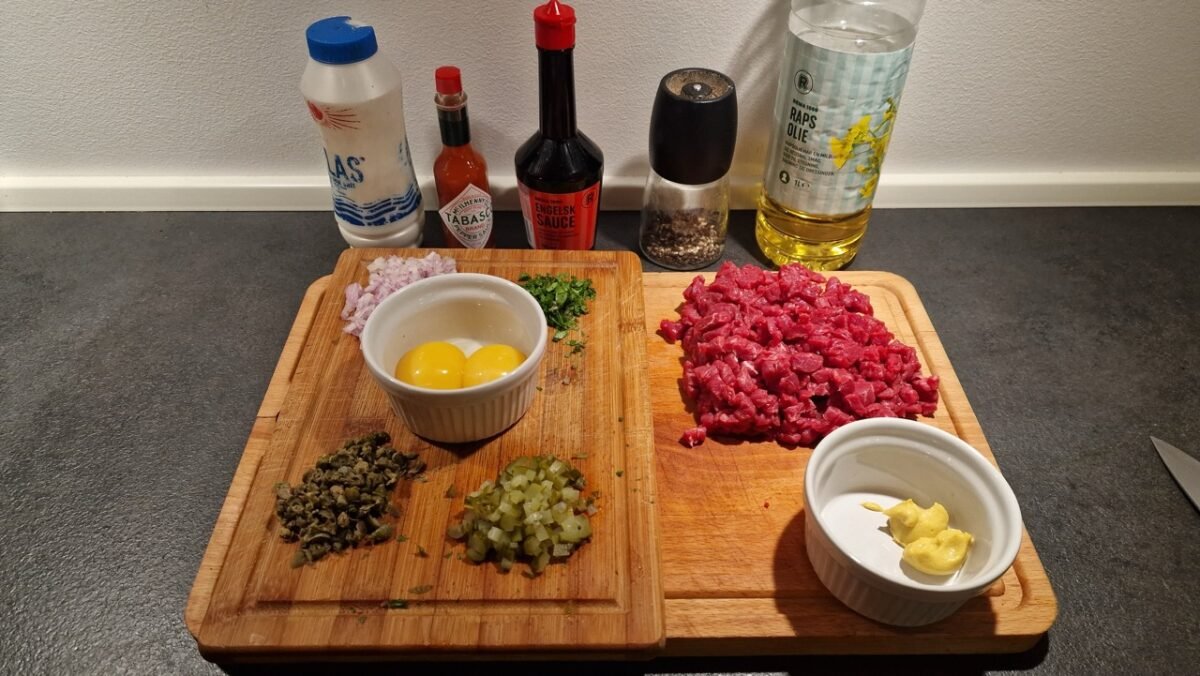
The seasoning is deliberately restrained. Mustard, capers, shallots, Worcestershire sauce, and a little hot sauce are common additions, but the aim is always to complement the beef rather than mask its flavor. Ketchup is not a defining ingredient: many versions leave it out altogether, while others use only a small amount.
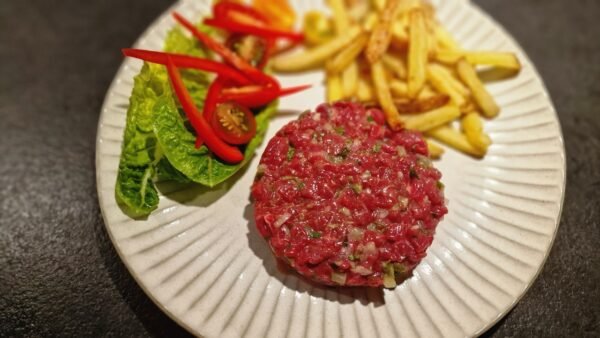
Classic steak tartare is also not a creamy meat spread. It is served as a dish in its own right and eaten with a knife and fork, usually accompanied by fries, a green salad, or both.
What Kind of Beef Should You Use?
The most important ingredient in steak tartare is, of course, the beef, and this is not where you want to cut corners. Since it is served raw, use only exceptionally fresh beef of impeccable quality. When you buy it, be sure to tell the butcher that you are making steak tartare and will be eating the beef raw.
Beef tenderloin is the most straightforward choice. It is very tender and lean, easy to trim, and remains pleasantly tender even when cut into small cubes. A tender, carefully trimmed piece of top sirloin can also work well. It usually has a more pronounced beef flavor than tenderloin, although you will need to remove the outer fat, sinew, and silverskin more thoroughly.
Other tender, lean whole-muscle cuts may also be suitable. The exact name of the cut matters less than its freshness, tenderness, and lack of connective tissue. If you are unsure, tell your butcher that you are making steak tartare and need a whole piece of lean beef suitable for serving raw.
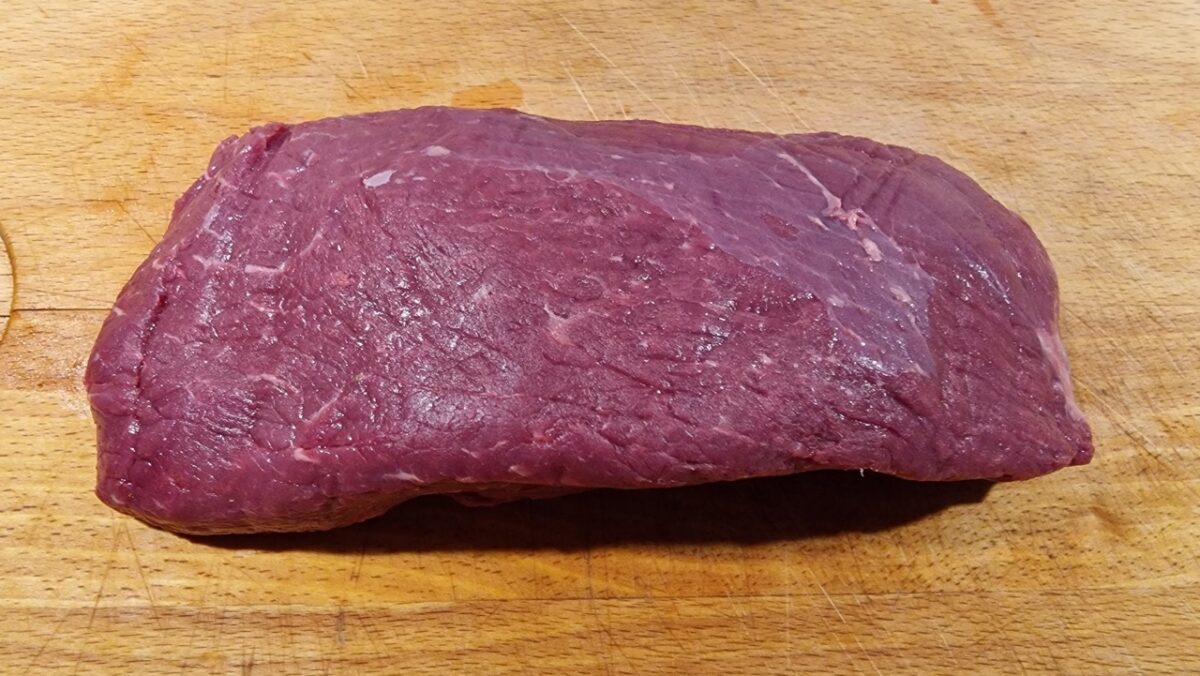
Something that is a real advantage when cooking beef can easily become a disadvantage here. Don’t choose heavily marbled meat: raw, cold fat does not melt and will have an unpleasant, waxy texture. Carefully remove all visible fat, sinew, and silverskin.
Never use prepackaged ground beef for this recipe. Buy a whole piece of beef, keep it cold throughout, and cut it up just before making the dish.
Allow about 80–100 g (roughly 3–3½ oz) of trimmed beef per person for an appetizer, or 150–200 g (roughly 5–7 oz) for a main course.
Preparing the Beef
Preparing the beef comes down to two important steps:
- Trimming the beef
- Cutting the beef into small cubes
When trimming, the point is to leave only clean, lean beef. Carefully remove every membrane, piece of sinew, and fatty part. Sinew and membranes would be unpleasantly chewy when raw, while cold fat would remain waxy. That would be especially noticeable in this dish, since we neither grind nor purée the beef, but eat it raw in small cubes.
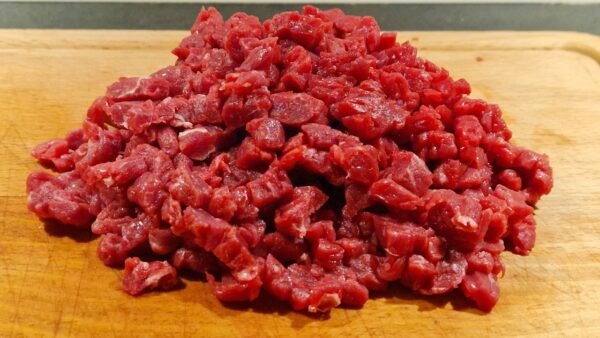
Cutting the beef is one of the key parts of making steak tartare. In this dish, we serve the raw beef cut with a knife into small but still distinct pieces, about 3–5 mm (⅛–3⁄16 inch). You don’t need a meat grinder or any special trick, just a very sharp knife.
Use the classic three-step method. First, cut the beef into thin slices, as even in thickness as possible. Stack the slices, then cut them into thin strips. Finally, cut across the strips to make small cubes. To get truly even cubes, aim for roughly the same 3–5 mm (⅛–3⁄16 inch) size in all three directions. Within that range, you can, of course, adjust the exact size to your taste.
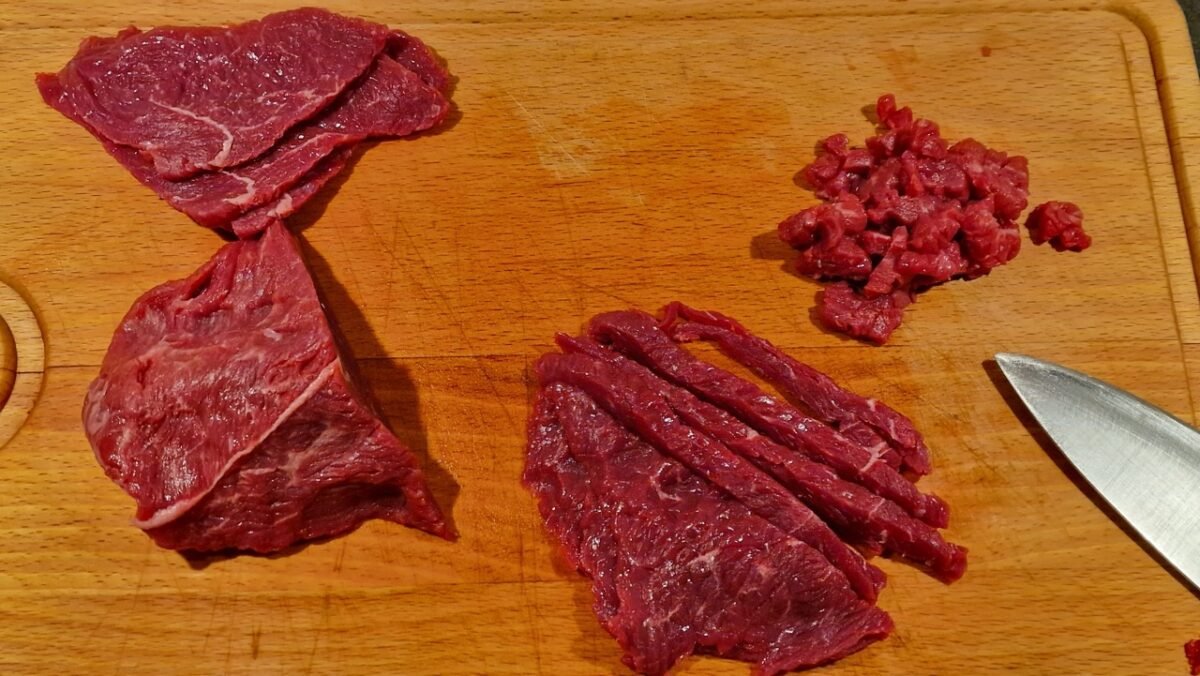
If you’re less practiced with a kitchen knife, or the beef is too soft to cut neatly, you can put it in the freezer for 15–20 minutes before preparing it. It won’t freeze through in that time; it will just firm up a little, hold its shape better, and become much easier to cut into thin slices and then even cubes.
It’s important that steak tartare be freshly prepared in every respect. Keep the beef cold throughout, then cut, season, and mix it with the other ingredients just before serving—see the recipe for the details.
Assembling Steak Tartare
There are basically two ways to assemble steak tartare.
The more striking presentation places the egg yolk in a hollow made in the center of the beef, with the seasonings offered alongside it on the plate or in separate small dishes. That way, everyone can mix the dish to their own taste.
The other version is served already mixed. Here, the beef is combined with the egg yolk and other ingredients in the kitchen, immediately before serving—even if several portions are prepared at once—and the finished steak tartare is then plated.
Neither method is better or worse than the other, and in today’s bistro culture, you can’t say that one is necessarily more authentic. The version with a separate egg yolk is undoubtedly more striking, but you’ll find both approaches in bistros and restaurants.
I think it’s considerably easier at home to mix the steak tartare in the kitchen, then shape and serve it ready to eat. If, however, you want to impress your guests with a particularly striking presentation, and they don’t mind mixing the dish on their own plates, you can, of course, choose the other approach.
What matters is this: serving it already mixed does not mean assembling it hours—or, heaven forbid, even days—ahead of time. Steak tartare is always made fresh. Cut the beef just before serving, then mix it with the other ingredients—see the recipe for the details.
Serving Steak Tartare
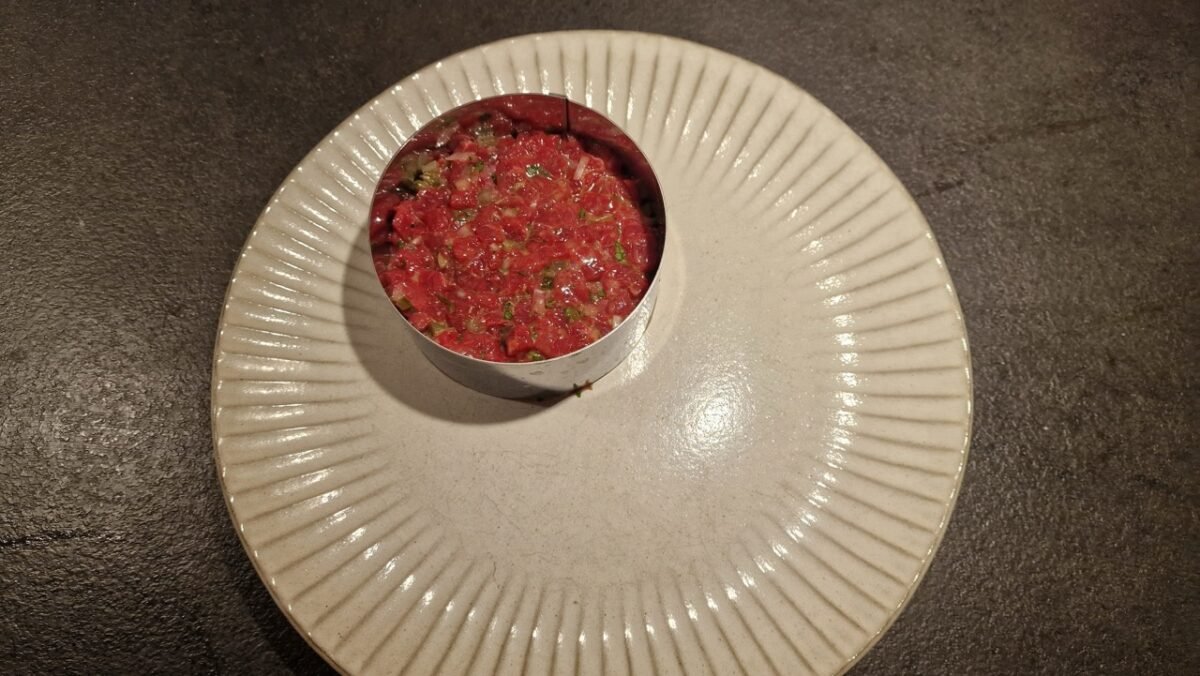
You can serve steak tartare as either an appetizer or a main course. As an appetizer, it naturally goes onto the plate in a smaller portion; as a main course, it is served as a complete dish on its own. The mixed beef is usually shaped into a compact, round mound, for which you can also use a ring mold. Don’t press it down too hard, though: keep it loose enough for the pleasant texture of the little beef cubes to come through.
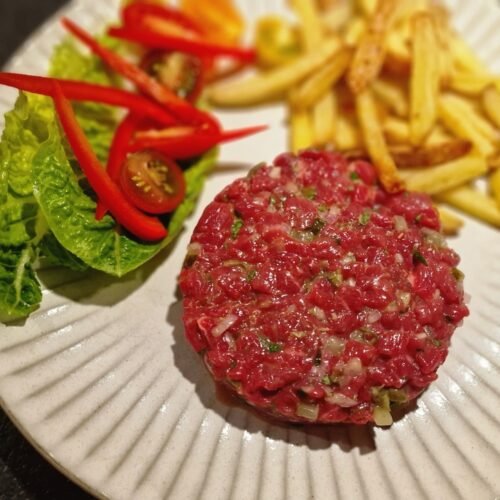
Freshly cooked, crisp fries are the classic bistro accompaniment to steak tartare. The contrast between the cool, soft beef and the hot, crisp fries works particularly well in both temperature and texture. Always make the fries just before serving so they reach the table genuinely hot and crisp.
A simple green salad is another common accompaniment, usually with a light, acidic vinaigrette. The fresh, crisp leaves and slightly tart dressing balance the richness of the egg yolk and the pronounced flavors of the mustard, capers, and other seasonings. You can, of course, serve the fries and salad together—perhaps the most characteristic French bistro presentation.
Toast or thin slices of toasted baguette can also be served alongside it, but steak tartare is not typically spread on the bread. It is eaten as a dish in its own right, with a knife and fork, while the bread serves as an accompaniment.
Serve steak tartare immediately after assembling it. Keep the beef cold, but make sure the fries are fresh and hot—this simple contrast adds a lot to the experience of the dish.
Steak Tartare’s Precursors in Escoffier’s Work
Although the legend that Mongol or Tatar horsemen tenderized raw meat beneath their saddles, eventually giving rise to steak tartare, is widespread around the world, it cannot be regarded as the dish’s documented origin. The dish we know today is much more a product of French restaurant culture in the late 19th and early 20th centuries.
Auguste Escoffier, one of the most influential figures in modern French cooking, presents two related recipes in his 1903 book Le Guide Culinaire:
- Beefsteak à l’Américaine (American beefsteak): For each serving, 200 g (about 7 oz) of trimmed, finely chopped raw beef, seasoned with salt and pepper. The beef was shaped back into a steak on the plate, with an egg yolk placed in a hollow in the center. Chopped capers, onion, and parsley were served separately.
- Beefsteak à la Tartare (Tatar beefsteak): Prepared in the same way as the preceding dish, but without the egg yolk on top and accompanied by sauce tartare served separately. This sauce differed considerably from the tartar sauce familiar to most diners today. It was an emulsion of cooked egg yolk, oil, and vinegar, flavored with a purée of scallions or chives and finished with a small amount of mayonnaise.
In its composition, what we now know as steak tartare actually resembles Escoffier’s Beefsteak à l’Américaine more closely than the version he described as Beefsteak à la Tartare. Over the course of the 20th century, however, steak tartare became the common name for the dish of raw beef, egg yolk, and various savory seasonings, while the recipe itself continued to evolve.
That is how the version now considered a classic came about—the one served in French bistros and restaurants around the world, and the one I present in this recipe.
Steak Tartare
Ingredients
- 300 g beef tenderloin or other tender, lean beef; about 10½ oz
- 10 g Dijon mustard 2 tsp
- 15 g capers about ½ oz
- 20 g pickles about ¾ oz pickles; 1 medium
- 2 egg yolks
- 1 tbsp fresh parsley chopped; about 15 ml
- 1 tbsp cooking oil neutral-flavored; 15 ml
- 20 g shallot or onion; about ¾ oz; about half a shallot or a quarter of an onion
- 1½ tsp Worcestershire sauce 7.5 ml
- 4 drops Tabasco
- 2 g salt about ⅓ tsp; to taste
- Black pepper to taste
Instructions
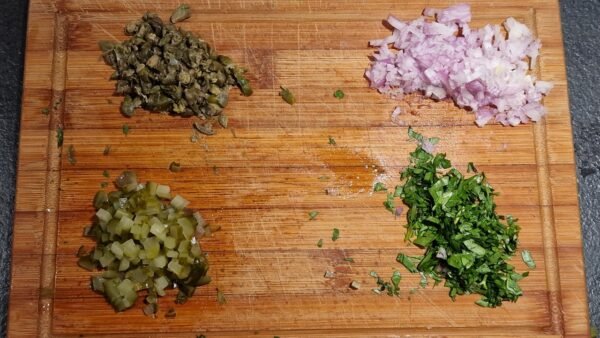
- To make steak tartare, first peel and finely chop the shallot. Chop the capers, pickle, and parsley too.

- Remove all membranes, sinew, and fatty parts from the beef. Cut it into cubes about 3–5 mm (⅛–3⁄16 inch) across. First, cut the beef into thin slices, as even in thickness as possible. Stack the slices, then cut them into thin strips. Finally, cut across the strips to make small cubes.
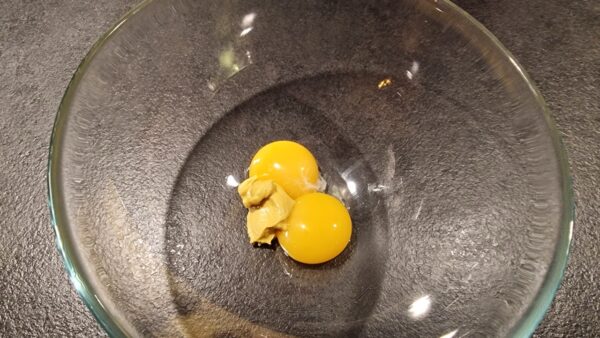
- In a bowl, mix the Dijon mustard and egg yolks.
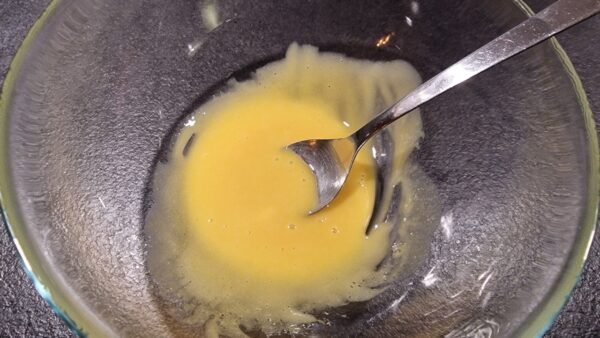
- Add the oil and mix until uniform. You don’t need to make a mayonnaise-like emulsion; it’s enough for the oil to be evenly mixed with the egg yolks and mustard.
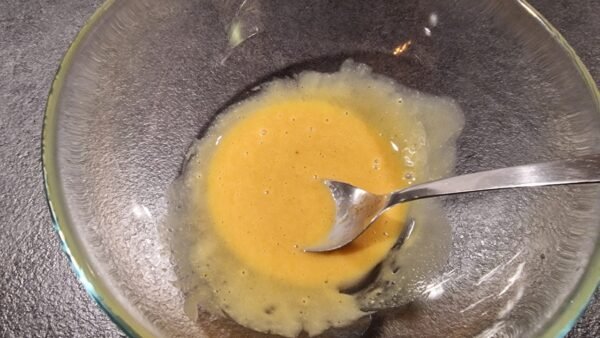
- Season with the Worcestershire sauce and Tabasco.
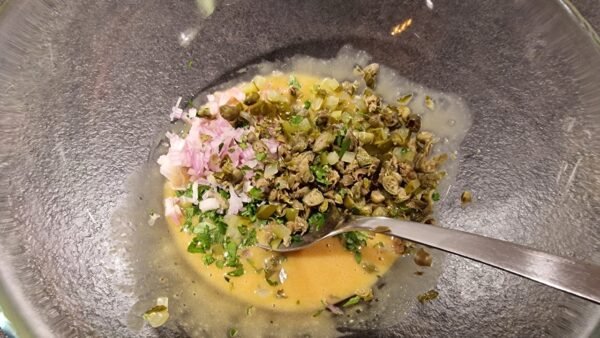
- Add the chopped shallot, capers, pickle, and parsley.
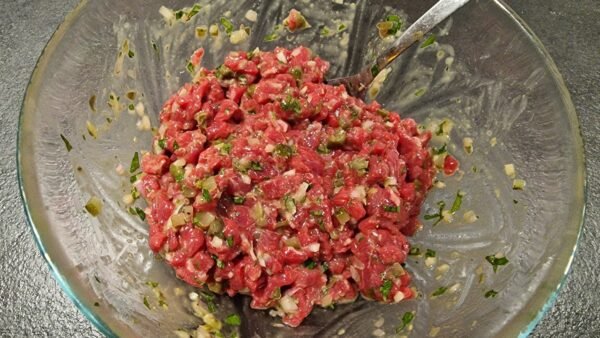
- Finally, add the cubed beef, season with salt and pepper, and fold together gently. You don’t need to beat the mixture: work with it only until the seasoning mixture coats each cube of beef evenly.
- Serve immediately. Shape it into a compact, round mound, preferably with a ring mold, but don’t press it down too much. Serve with fries, a fresh salad, and, if you like, toast.



1 thought on “Steak Tartare (French Beef Tartare)”