

This simple dish of roasted Danish pork belly with potatoes and parsley sauce was voted Denmark’s first official national dish in a 2014 poll.
There’s no French haute cuisine here, either in the combination of ingredients or the flavors, yet it’s perfect for a cozy family dinner or a gathering with friends.
Following the Danish tradition of naming dishes, the name is even simpler than the recipe: stegt flæsk med persillesovs literally means “fried pork with parsley sauce.” But this isn’t just any pork: in this recipe, it’s fresh, sliced, skin-on pork belly. And the parsley sauce is simply béchamel sauce flavored with finely chopped fresh parsley.
The Danes and Pork
It may not be particularly well known around the world, but Danes love pork. When introducing their country, they’re usually proud to point out—often at least partly in jest—that Denmark, with its six million people, has more pigs than people.
But they don’t just raise pigs; they eat them too. Flæskesteg may now be better known internationally, but the stegt flæsk med persillesovs shown here is another good example of just how often pork appears on Danish tables. It’s not complicated, and it’s hardly a riot of flavors, yet it became a national dish. Perhaps because it’s made with pork…
This recipe specifically calls for boneless, skin-on pork belly, cut into slices roughly ⅜ inch (1 cm) thick. Both the skin and the slicing matter, so finding the right cut may be the biggest challenge outside Denmark. In Denmark, since this is a national dish, the meat is widely sold already prepared this way.
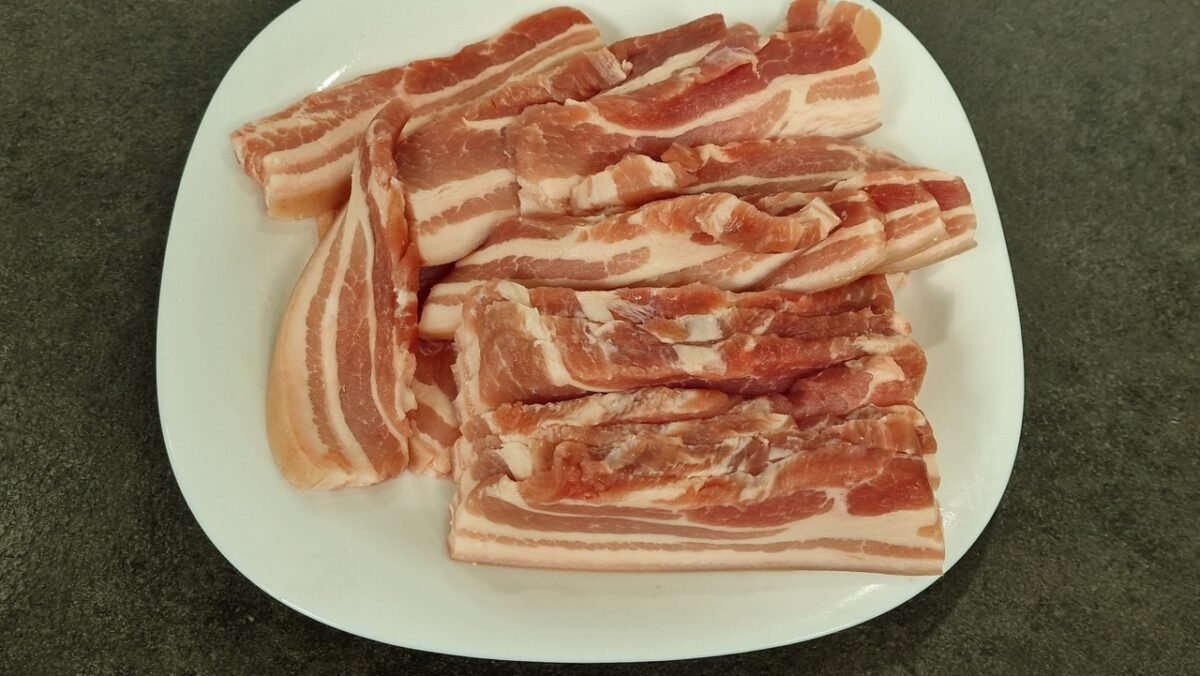
Outside Denmark, ask specifically for fresh, boneless, skin-on pork belly with a good proportion of meat. You may need to get it from a butcher, possibly by special order. Before roasting, cut the meat into slices about ⅜ inch (1 cm) thick, keeping them as even as possible.
Cooking the Pork
Well-made Danish stegt flæsk is crispy but still pleasantly juicy. Of course, that also depends very much on how you like it.
There are basically two ways to cook it: in a skillet or in the oven.
I chose the oven because it’s more convenient for preparing enough to serve four people. Essentially, you put it in the oven, tend to it twice, and it’s done. See the recipe for the details.
A skillet may give you a little more control over crispness and juiciness, but that method needs constant attention, and enough for four people won’t fit into even two large skillets at once.
Serving
Besides cooking the pork, the other essential part of this dish is how it’s served. This is a very simple recipe, so serving it isn’t about anything complicated. It’s about putting the pork, potatoes, and milk-based parsley sauce on the plate together. The sides and the way you serve them aren’t optional here: these three belong together.

Traditionally, it’s served with boiled potatoes, often left whole, with or without their skins according to taste. That’s why medium potatoes are a good choice: they look nice on the plate.
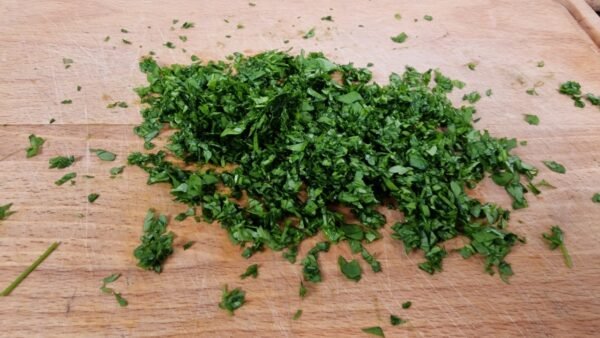
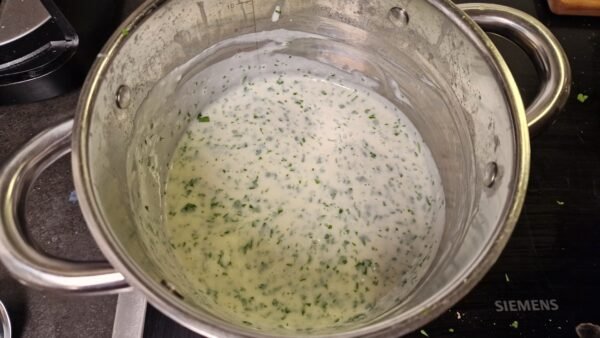
As for the parsley sauce, it’s essentially a slightly thinner béchamel with lots of finely chopped fresh parsley. The final consistency is naturally a matter of taste, but think of a pourable béchamel that doesn’t set up even when lukewarm. It does need plenty of parsley, though. You should see lots of it in the sauce and clearly taste that unmistakable fresh parsley flavor. For four servings, I used one very large potted parsley plant—see the photo.

Interestingly, these days the pork is often served sprinkled with coarse salt after cooking.
Always make the parsley sauce fresh. You can prepare the béchamel ahead, but stir it occasionally so a skin doesn’t form on top. Add the freshly chopped parsley just before serving.

Stegt flæsk med persillesovs
Ingredients
For the Pork
- 900 g fresh boneless, skin-on pork belly sliced; about 2 lb
- Salt
- Coarse salt
For the Potatoes
- 1 kg medium potatoes 2¼ lb
- Salt
For the Parsley Sauce
- 35 g butter 2½ tablespoons
- 30 g all-purpose flour ¼ cup
- 500 ml milk 2 cups plus 2 tablespoons
- 1 bunch fresh parsley large bunch
- Salt
- White pepper
Instructions
Preparing the Pork
- Preheat the oven to 400°F on the convection setting (200°C).
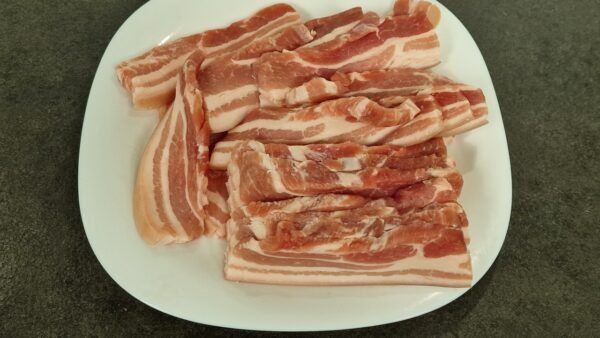
- If you haven’t bought the pork belly already sliced, cut it into slices about 1 cm (⅜ inch) thick.

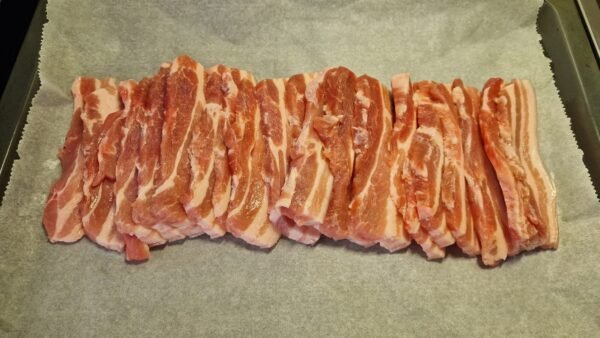
- Arrange the pork slices in a parchment-lined baking pan, overlapping them slightly, and roast for 15 minutes.
- Remove the pan from the oven and rearrange the slices so they lie side by side on the parchment. If the meat has released any watery liquid, blot it up with paper towels. Roast for another 15 minutes.At this stage, you can also season the meat with regular salt to taste if the coarse salt added at the end won’t be enough for you.
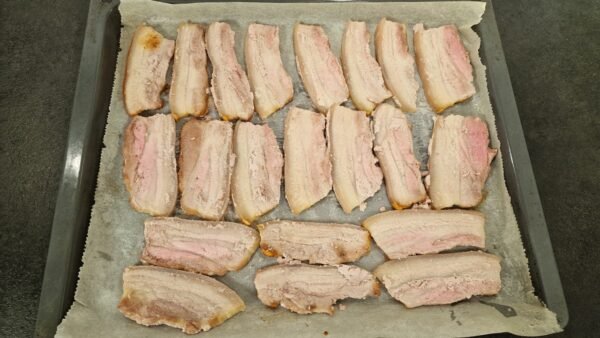
- Remove the pan and turn the pork slices over. If a lot of fat has rendered out, pour it off. Return the pan to the oven and roast for another 15–20 minutes. When you take it out, sprinkle the pork with coarse salt.The cooking time at this point depends very much on the thickness of the slices and whether you prefer them crisper or juicier. During this final stage, check the meat every 5 minutes and take it out when it looks right.

Cooking the Potatoes
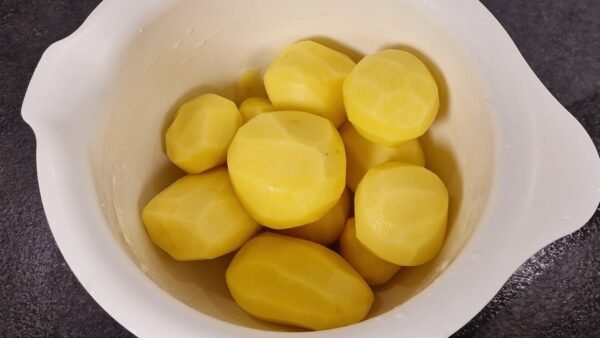
- While the pork is roasting, peel the potatoes and leave them whole.
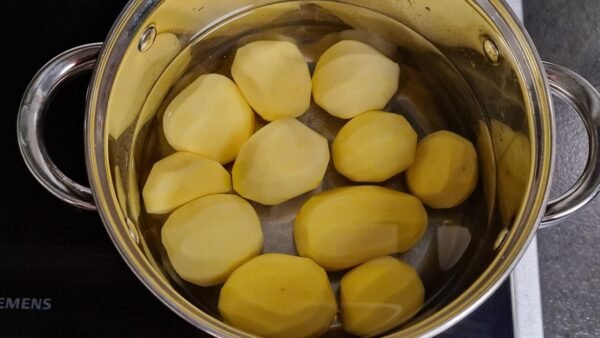
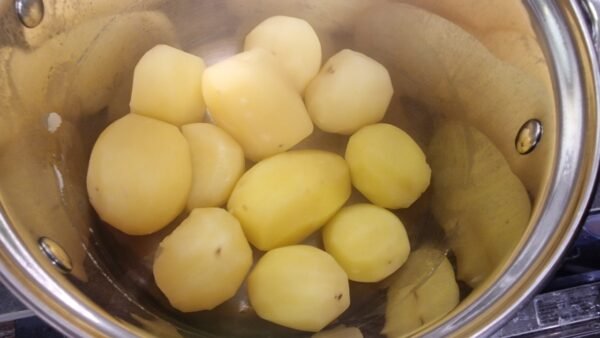
- Start them in cold, generously salted water and boil until completely tender, about 20–25 minutes, depending on their size.Check them with a knife or skewer to see whether they’re cooked rather than relying on the clock.
- Once the potatoes are done, drain them and keep them covered and warm until serving.
Making the Parsley Sauce
- During the final stage of roasting the pork, finely chop the fresh parsley.
- Heat the milk until hot in a separate container, either in the microwave or on the stove.
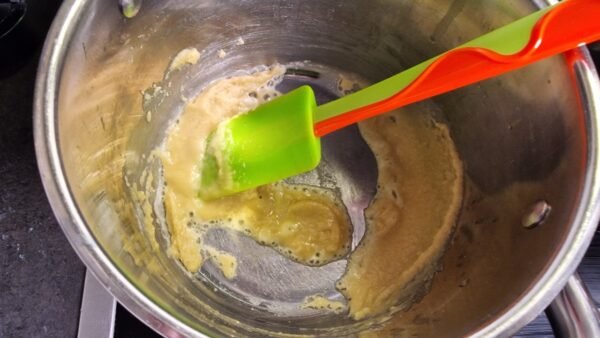
- For the béchamel base, melt the butter and add the flour. Cook over medium-high heat for about 30–60 seconds to cook off the flour’s raw taste.
- Pour the hot milk into the butter-and-flour mixture all at once and stir very quickly. Season with salt and white pepper.If you’ve done it right, this method gives you a lump-free béchamel. But you can always blend it with an immersion blender for a completely smooth consistency.
- Bring to a boil while stirring, then cook over low heat for about 5 minutes. If it’s too thick, thin it with a little milk.
- Remove from the heat and stir in the finely chopped fresh parsley.


Serving
- Divide the pork and whole potatoes among the plates, then pour a generous amount of parsley sauce over the potatoes.





1 thought on “Danish Pork Belly with Parsley Sauce (Stegt flæsk med persillesovs)”