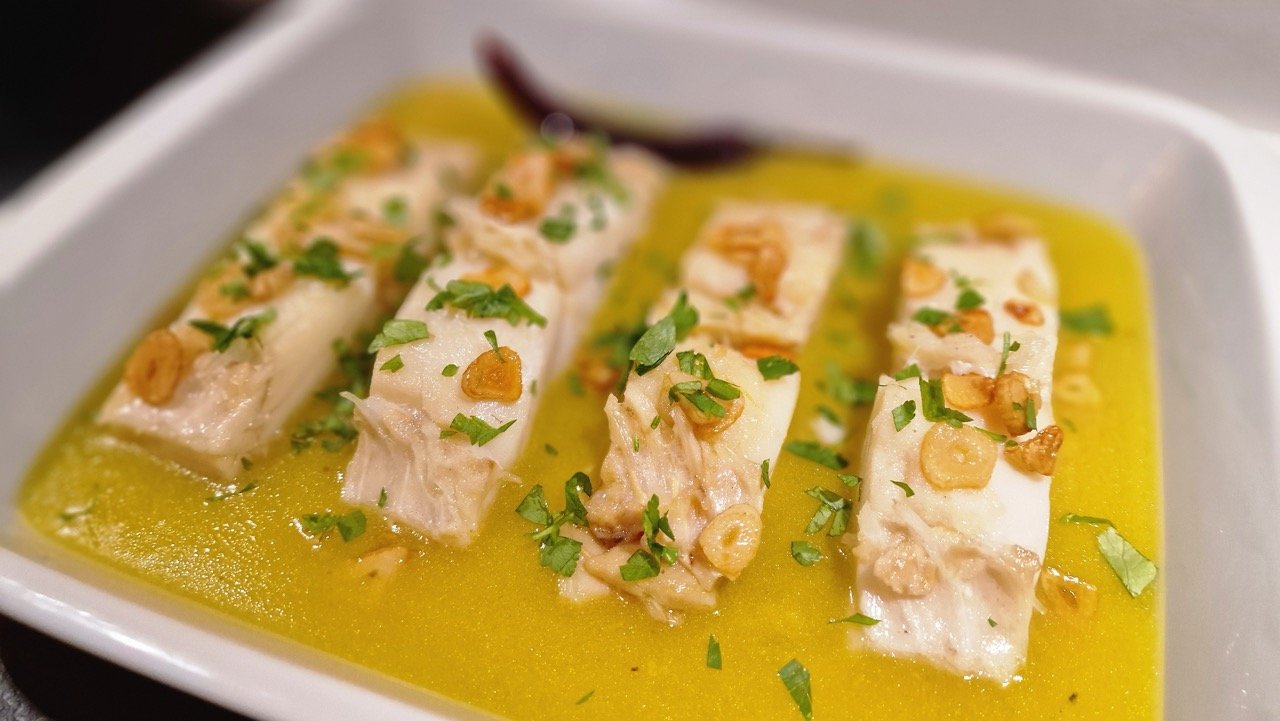
Bacalao al pil pil is a distinctive Basque cod recipe. I have to say that, the first time I made it, it was perhaps one of the most difficult recipes I’d ever attempted—and one of the most unusual dishes I’d ever come across.
What makes it unusual isn’t that it’s unusually delicious. I’ll talk about its flavor a little further down, but the best word for it—and the repetition is deliberate—is unusual. For one thing, bacalao al pil pil is made with salt cod, which isn’t exactly an everyday ingredient in much of the world. For another, the sauce is an emulsion made entirely from the juices released by the fish and olive oil, brought together by hand by shaking and moving the skillet. And that’s what makes it both difficult and unusual.
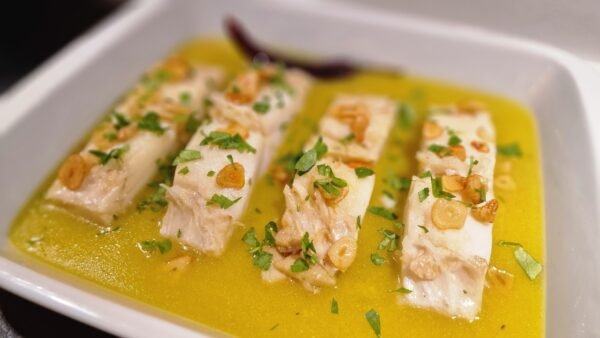
Bacalao al pil pil is a classic Basque dish in which the water, proteins, and gelatin released by the cod combine with olive oil to form a thick, glossy sauce—an emulsion.
The Origin of the Name
The name bacalao al pil pil contains two distinctive words that already help explain what we’re going to eat.
Bacalao means cod in Spanish. In Spanish and Portuguese cooking, however, it very often refers to cod preserved by salting, then soaked before cooking. This is an essential ingredient in the classic version of bacalao al pil pil.
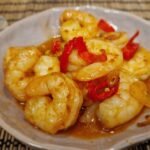
Pilpil—written as one word according to Spanish spelling conventions, although pil pil and pil-pil are also common—is an onomatopoeic word. According to explanations of the name, it refers to the sound of garlic cooking in hot oil or the gently bubbling sauce. See also my gambas pil pil recipe.
The Ingredients
Classic bacalao al pil pil contains just four ingredients: salt cod, olive oil, garlic, and dried chili pepper (guindilla in Spanish). Each has its own function, especially the first two, and they aren’t really interchangeable with other ingredients. Modern versions can, of course, include additional ingredients; I sprinkled fresh parsley over the finished dish, for example.
Salt cod is perhaps the most important ingredient in the sense that you can’t really replace it with something else. I know it can be very difficult to find in many places, but fresh cod won’t give you the same dish as the authentic version. Fresh cod can also produce a similar emulsion, especially if you use skin-on pieces, but the flavor and texture will differ from the authentic version made with salted, then soaked cod.
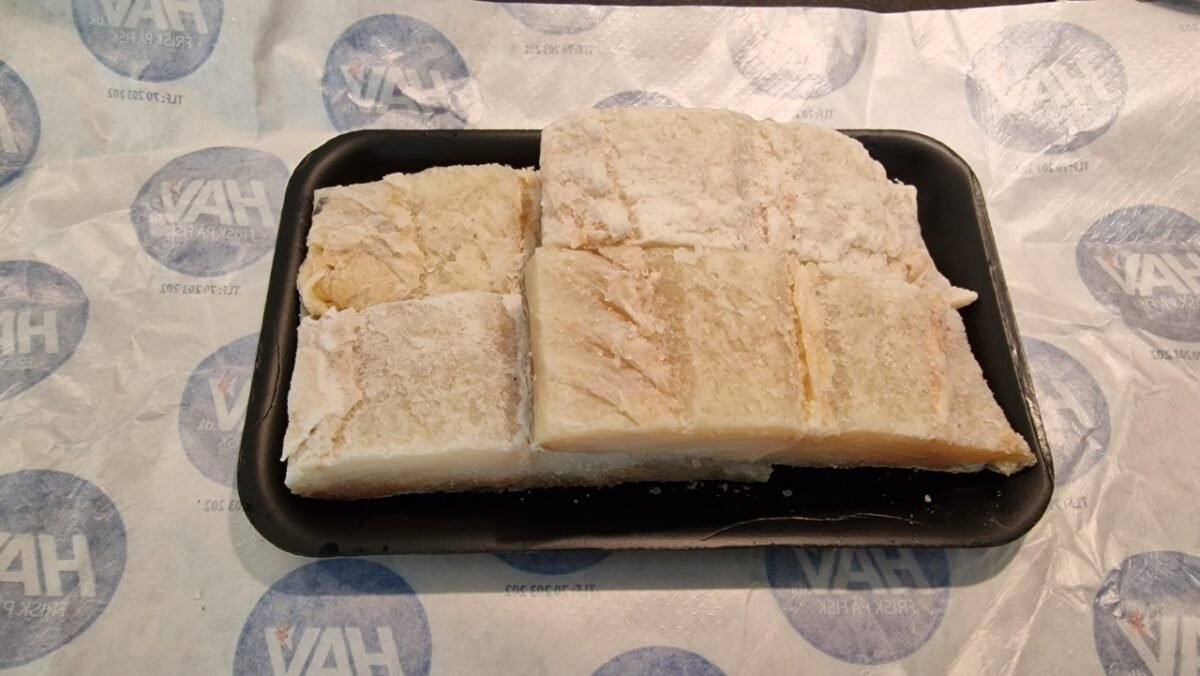
As for the olive oil, I personally recommend extra-virgin olive oil, but not necessarily the most intense, strongly bitter variety. Since the oil makes up a substantial part of the sauce, a pronounced flavor can easily overpower the fish. For this dish, choose a good-quality oil with a mild or moderately fruity flavor.
Since we’re making it with salt cod, there’s no need to add salt to the dish at all. In fact, as I explain below, you need to make sure you change the soaking water often enough so the fish isn’t too salty. It doesn’t need any other seasonings.
Three Important Steps in the Preparation
To make an authentic—and successful—bacalao al pil pil, there are three steps that can seem difficult or even a little intimidating at first, and that you need to follow carefully. For cooking the fish and making the sauce, watch the videos too; they’ll help you understand the process.
Soaking the Salt Cod
This step doesn’t make the preparation difficult in itself, but it certainly makes it time-consuming.
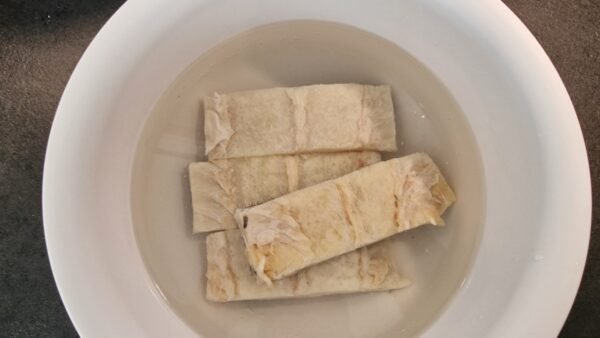
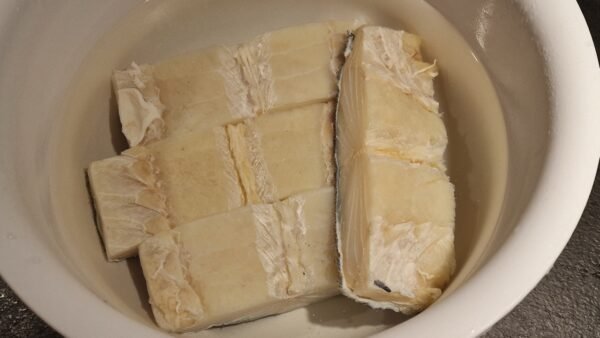
Salt cod (bacalao) can’t be eaten as it comes. Salting is a preservation method, and before we can cook the fish, we need to soak it. Depending on its thickness, soak it for 36–48 hours, or up to 72 hours for particularly thick pieces. Change the soaking water roughly every 6–8 hours, and keep the fish refrigerated throughout.
At the end of the soaking time, it’s worth tasting a small piece from the thickest part—preferably after briefly cooking it—because the time needed also depends on how thick and dry the fish is.
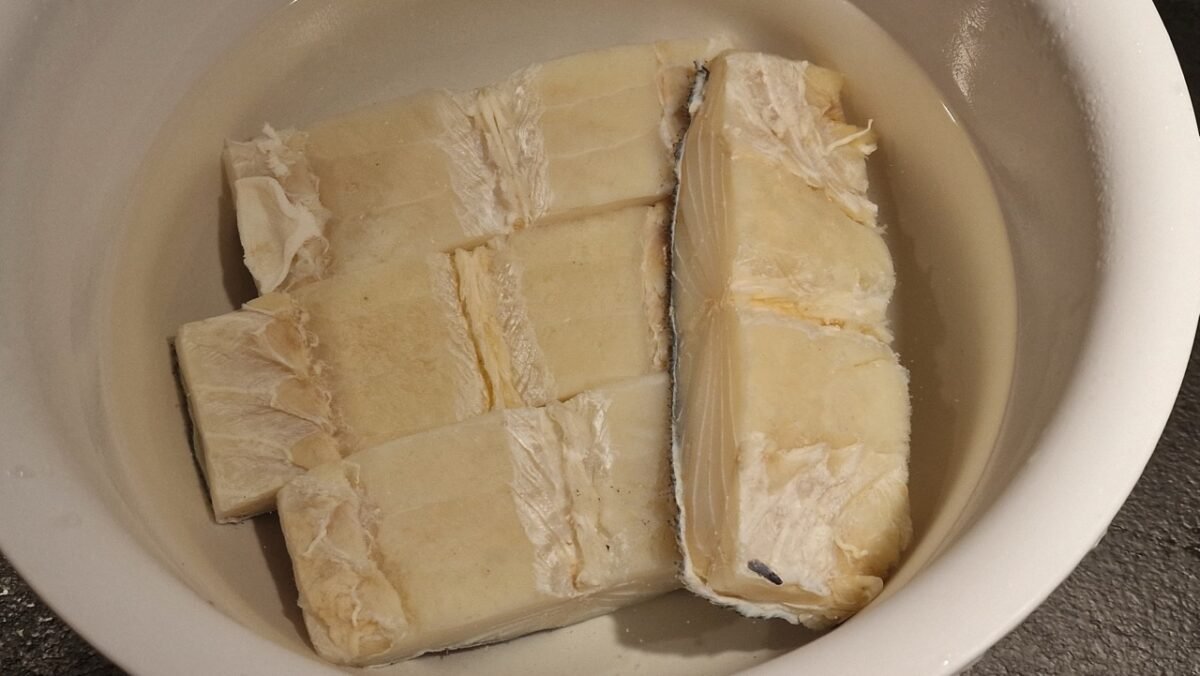
It’s also worth changing the soaking water at least three times. It depends on how salty you like it: if you prefer it less salty, change the water five or six times instead. Keep it refrigerated while soaking.
“Frying” the Fish
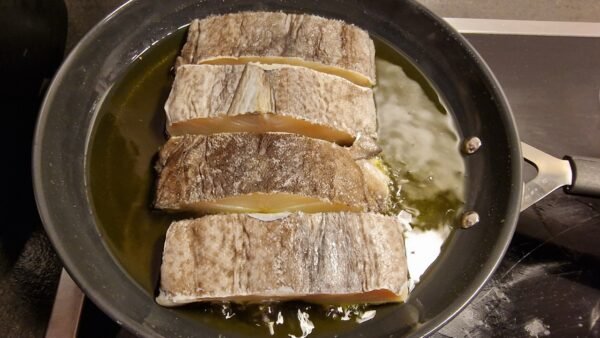
The point here is that, rather than vigorous frying, we’re talking about very gentle cooking in oil—a kind of poaching. The oil shouldn’t be so hot that the fish sizzles strongly or browns. At most, a few tiny bubbles should appear around it as it slowly cooks through and releases the gelatin-rich juices needed for the sauce.
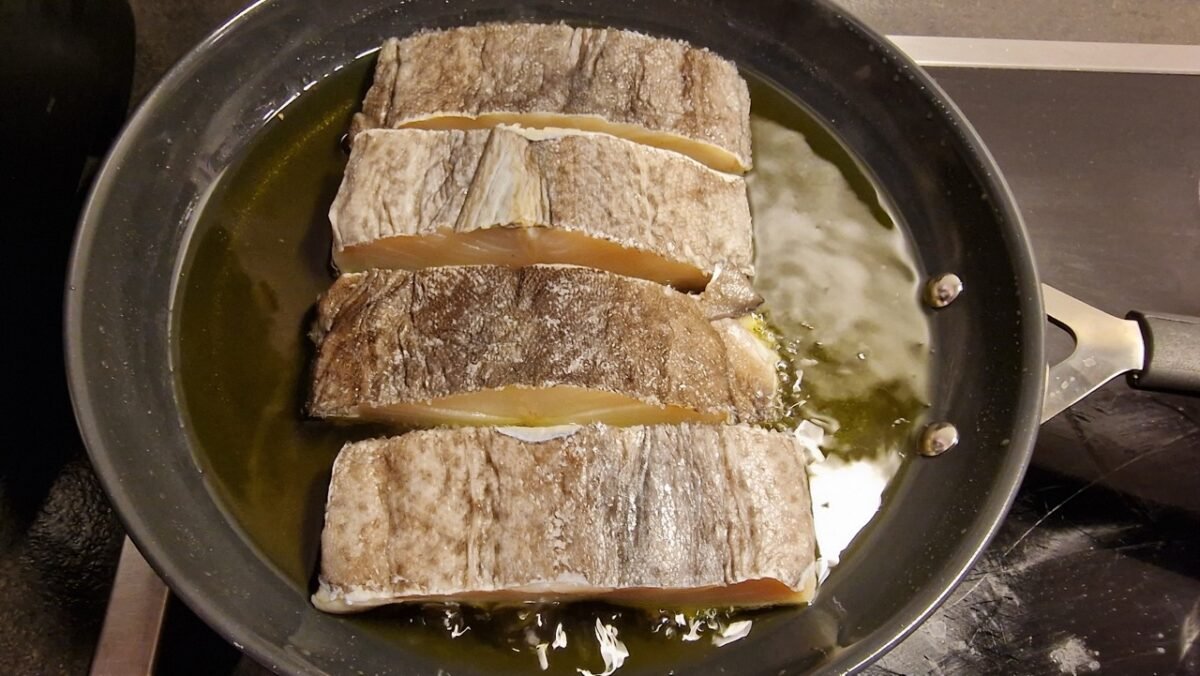
It shouldn’t sizzle; the fish shouldn’t really be frying in the literal sense. We’re essentially poaching it in the oil. This helps prevent overcooking while allowing the proteins and gelatin needed to emulsify the sauce to be released.
Using this method, the fish takes 3–5 minutes per side, depending on its thickness.
Making the Sauce
The defining feature of bacalao al pil pil is its sauce: an emulsion made entirely from the substances released by the fish and olive oil. Traditionally, the emulsion is formed by continuously moving the cooking vessel in circles or back and forth, using the technique known as vaivén.
An emulsion means combining two liquids that wouldn’t normally mix into something that looks smooth and uniform. With bacalao al pil pil, those liquids are the oil and the water released by the fish: oil alone wouldn’t mix neatly with the water, but would separate from it. The gelatin-rich fish juices, however, contain natural substances that help keep the oil suspended in tiny droplets within the creamy mixture.
That’s what makes the sauce thick, glossy, and smooth—in other words, an emulsion.
One of the best-known kitchen emulsions is mayonnaise, where egg yolk and oil come together to form a creamy sauce. But while the power of a food processor or immersion blender—its fast, vigorous action—makes emulsifying mayonnaise much easier, there’s no such help with bacalao al pil pil sauce. It’s just you, shaking the skillet by hand.
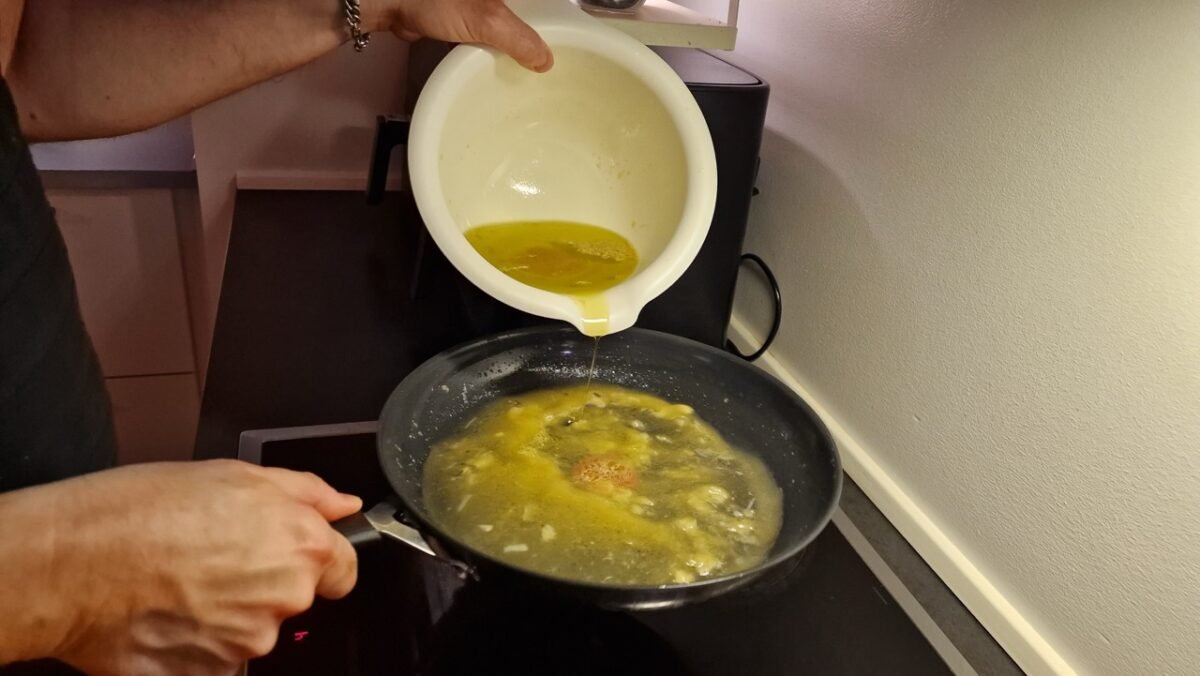
That sounds rather intimidating at first. But I should add that it really can be done, and the second time around, it feels much less daunting. Of course, it still counts as a bit of a workout.
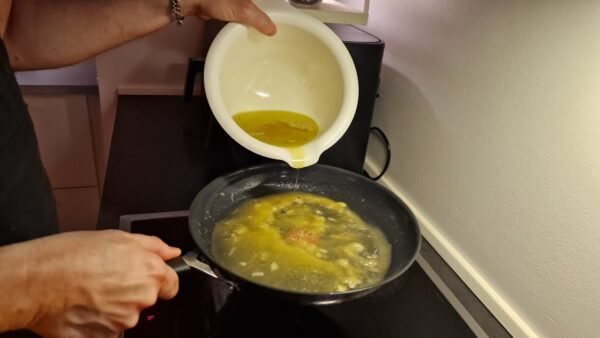
Here’s how the method works. Once the fish is cooked, spoon most of the oil into a separate container, leaving mainly the gelatin-rich juices released by the fish in the skillet, along with a little oil. Then start shaking and swirling the skillet until everything comes together into a cloudy, fairly uniform liquid with a few patches of oil.
Next, add the reserved oil in small amounts, continuously shaking and swirling the skillet. The method is essentially the same as making mayonnaise: you add the oil in very small amounts at first, then potentially in larger quantities, while continuously mixing—or, here, shaking. The significant difference is that it isn’t a food processor or even a whisk doing the work, but just your hand moving the skillet. And that, I admit, makes the whole thing quite a muscular effort.
Each time you add another portion of oil, keep shaking until the entire sauce is uniform. Only then add the next portion.
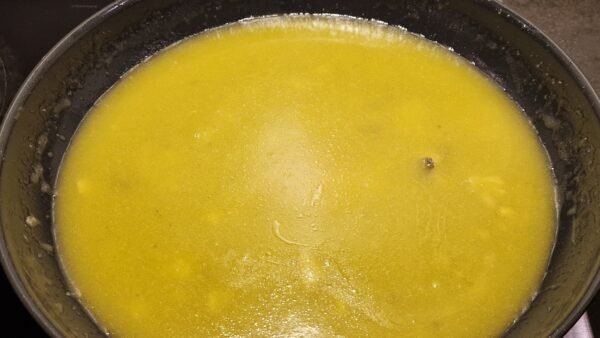
By the end of the process, once you’ve added all the oil, you’ll have a thick, silky sauce—the essence of bacalao al pil pil.
A Strainer as “Allowed Cheating”
Some recipes recommend a fine-mesh strainer as a kind of “allowed cheating.”
If you can’t get the emulsion to form using the method above, move the strainer around in circles or back and forth through the mixture in the skillet to help create the silky sauce. However intimidating the original method may seem at first, it’s the only one I’ve tried—and it worked—so I can’t say from experience what the strainer method adds.
Using a strainer isn’t the classic vaivén technique, but a modern, widely accepted shortcut. It doesn’t change the ingredients or the character of the sauce; it simply forms the emulsion faster and with less physical effort.
Skillet or Earthenware Dish?
So far, I’ve consistently referred to a skillet, and that’s what I used. But anyone familiar with bacalao al pil pil who looks at the recipe from a strictly traditional perspective will immediately notice that this part isn’t quite authentic.
Traditionally, the dish is made in an earthenware cooking vessel. It goes on the stovetop, the fish is “fried” in it, the sauce is made by shaking it, and the finished dish is served in it.
Which is perfectly fine, except that I have two problems with this.
First, I think an average household is much less likely to have an earthenware dish that’s not only the right size but also suitable for direct heat. A skillet, on the other hand, is something almost everyone has.
Second, holding and shaking a hot earthenware dish is even harder than doing the same with a skillet. At least the latter has a handle.
So although the skillet version may not be entirely traditional in terms of cookware, it’s much more practical at home. With proper cooking and emulsifying, you can make the same kind of thick, silky sauce in it.
The Temperatures
It’s very important to use the right temperature at each stage.
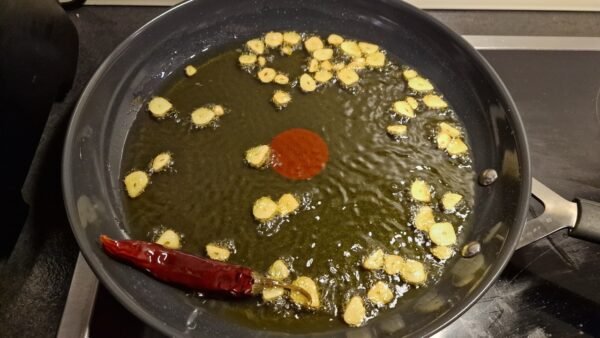
- First, cook the garlic and chili in relatively hot oil. It shouldn’t be too hot, but the garlic slices should sizzle properly at this stage.
- Then take the oil off the heat and let it cool a little. Add the fish when you can achieve the barely bubbling cooking described above. Keep the oil over low heat while cooking the fish.
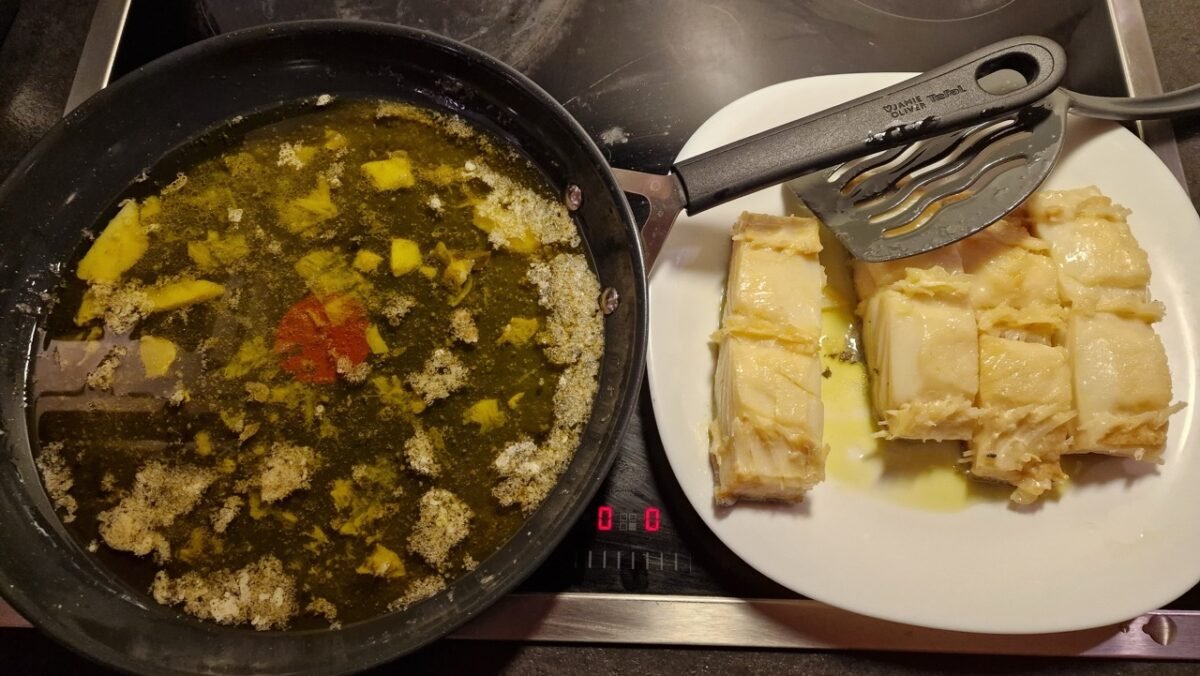
- Once the fish is cooked, pour—or preferably spoon—the oil into a separate container and let it cool until lukewarm. Meanwhile, the juices released by the fish will also cool in the skillet.
- Make the sauce at this temperature: lukewarm rather than hot, and definitely never very hot. There’s no need to heat it during the process, and you must not put it over high heat.
- Before serving, you can warm it very gently over the lowest heat, or in a 120–140°F (50–60°C) oven, and keep it warm as needed.
Reheating
If you have leftovers, bacalao al pil pil will keep for a few days. The fish itself is straightforward: it keeps in the refrigerator and can be reheated easily. The sauce is much more delicate.
In my experience, this is a stable emulsion. In other words, if you’ve made it properly, you don’t need to worry about it separating simply because it’s been refrigerated. But you do need to be very careful when reheating it.
When reheating, it’s best to heat the fish more thoroughly, but warm the sauce separately and very gently until just lukewarm, then emulsify it again if necessary.
There’s Never Been This Much Swearing in My Kitchen 😅
And finally, before the recipe, a little personal note.
Making bacalao al pil pil sauce isn’t easy. The sauce alone took me 14 minutes, with the skillet needing to be shaken continuously throughout. Honestly, there’s never been that much swearing in my kitchen. I couldn’t help it after spending minutes continuously shaking and swirling the skillet with all my strength, paying close attention just to get a small portion of oil incorporated.
At first, I tried holding the skillet up so I wouldn’t have to drag it around on the stovetop. I managed for a while, switching hands occasionally. But eventually, I’d had enough and put it down on the stovetop to continue shaking. That was somewhat easier, although I realize my glass-ceramic cooktop probably wouldn’t appreciate this recipe being made every week.
The result, though, was surprisingly good. I hadn’t expected much at the beginning, and some of the swearing came from not believing that I could form an emulsion just by shaking it by hand. Yet it came together beautifully into a thick sauce in the end.
Will we be making this dish often?
Definitely not. It’s not only difficult to prepare but also rather expensive. Unless you live somewhere where olive oil and salt cod are everyday ingredients, they aren’t cheap. And although the result is unusual and truly incredibly creamy, beyond that, it isn’t a spectacular culinary experience.
The Flavor
The flavor—or rather, the character—really is very distinctive. Unusual is the best word for it.
The sauce is unbelievably creamy, even more so than a typical emulsion. You can really taste the delicious olive oil and all the good things released by the fish. Those gelatinous, collagen-rich components keep you coming back for another bite.
Despite that, the seasoning is very restrained: alongside the salt remaining in the fish, there’s garlic and a little chili. This isn’t a dish with lots of different spices; the character of the cod and olive oil comes through above all.
The fish itself is an unusual experience too. Salt cod has a completely different texture from fresh fish. It’s much firmer, yet once cooked, it separates into beautiful, large flakes.
It’s certainly an experience worth trying at least once. Preparing it isn’t quite as difficult as it might seem on first reading, and after that first experience, everyone can decide whether they’d like to eat it again.
Enjoy!
Bacalao al Pil Pil
Ingredients
- 4 pieces skin-on salt cod bacalao, about 600 g total (about 1 lb. 5 oz.; the skin must be left on)
- 6 cloves garlic
- 1 dried chili pepper
- 400 ml olive oil about 1⅔ cups
- Fresh parsley for garnish (optional)
Instructions
Preparing the salt cod
- First, remove any large pieces of salt from the fish, soak it in cold water, and put it in the refrigerator.

- Depending on its thickness, soak it for 36–48 hours, changing the soaking water roughly every 6–8 hours. Keep it refrigerated throughout.
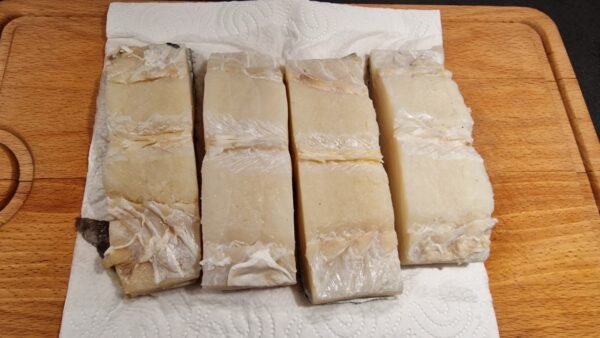
- Before making the bacalao al pil pil, remove the fish from the water and pat it thoroughly dry with paper towels.
Preparing the dish
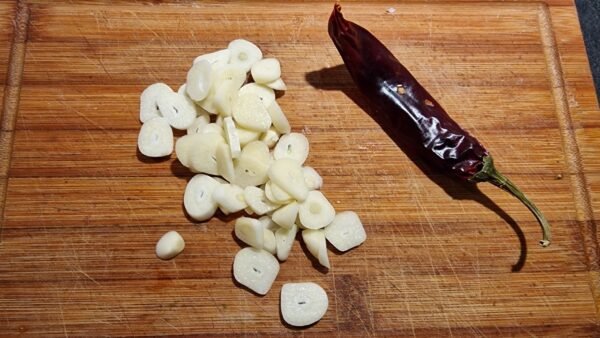
- Peel the garlic and cut it into thin, 1–2 mm slices (about 1/16 inch). If you’d like the dish spicier, slice the chili into rings, but you can also leave it whole.
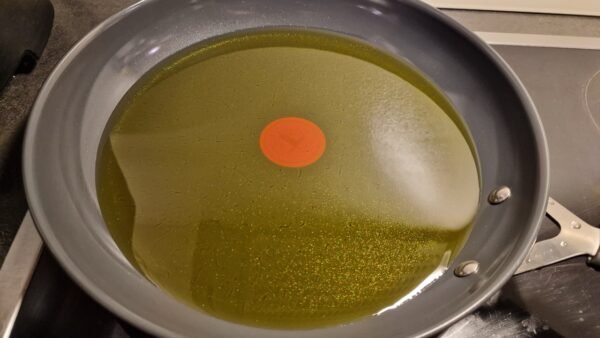
- Heat the olive oil in a skillet or an earthenware cooking dish suitable for direct heat.
- Add the chili and garlic, and cook until pale golden. Don’t overcook them! Once they’re ready, remove both the garlic and chili from the oil with a slotted spoon.
- Let the oil cool a little so it isn’t hot. The fish should gently poach in it, with barely any bubbling.Ideally, the oil should come halfway up the pieces of fish, or slightly below that.
- Place the fish in the oil skin-side up, and cook gently for 3–5 minutes, depending on its thickness.
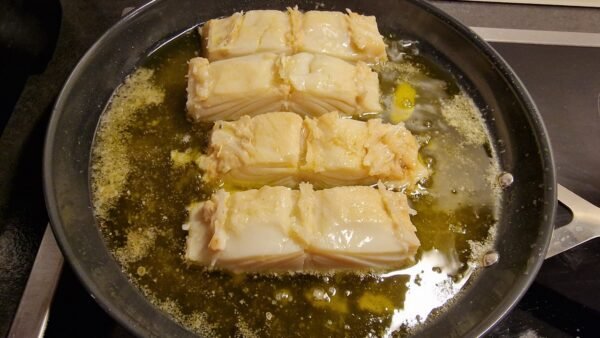
- Turn the fish very carefully, and cook gently for another 3–5 minutes on the other side.
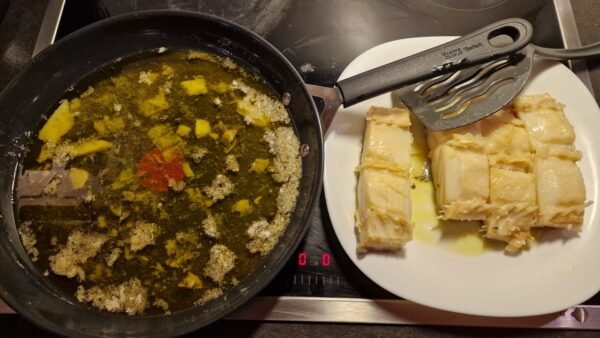
- Very carefully transfer the fish to a plate.In traditional versions, the emulsion is often made with the cod still in the cooking vessel. I removed the pieces of fish because that makes them less likely to fall apart during the prolonged shaking.
Making the sauce
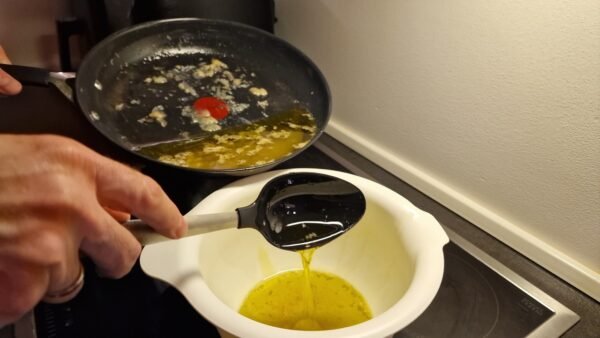
- Take the cooking vessel off the heat and use a large spoon to transfer the oil to a separate container. Let it cool until lukewarm.
- Leave the juices released by the fish in the skillet or cooking dish, along with a very small amount of oil. Add any liquid that has collected beneath the fish on the plate too.
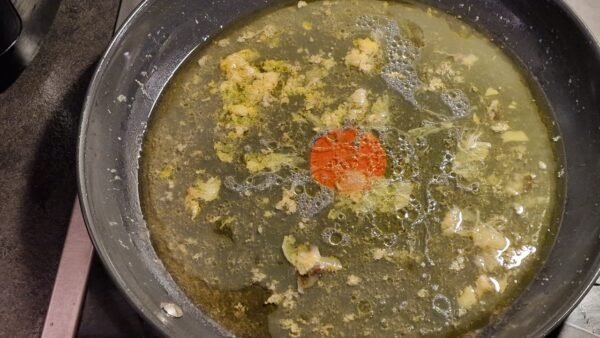
- Start shaking and swirling the skillet until the contents come together into a cloudy, fairly uniform liquid with a few patches of oil.
- While continuously shaking and swirling, add the oil in small amounts at first, then in larger amounts if the sauce allows.
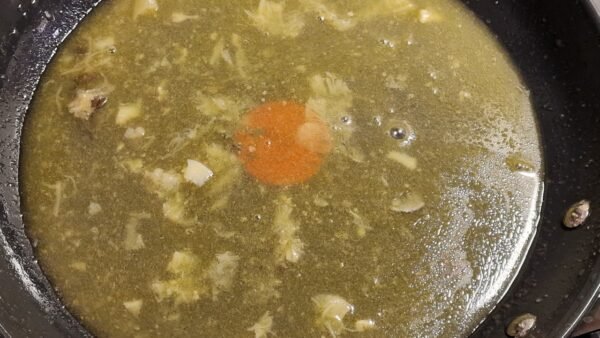
- You should end up with a silky, uniform emulsion—a sauce. There may be patches of oil on top, but the sauce itself needs to come together.This is a time-consuming process; it took me 14 minutes to finish the sauce.
Serving
- Place the fish in the earthenware dish or serving bowl you’ll use to serve it.I warmed this dish beforehand in a 120°F (50°C) oven. You can also put the fish in the oven at this temperature if you’d like to keep it warm.
- Pour the sauce over the fish.If necessary, warm it very gently, for example in a 120°F (50°C) oven. Never put it over high heat. If it starts to separate, shake it until it comes together again.
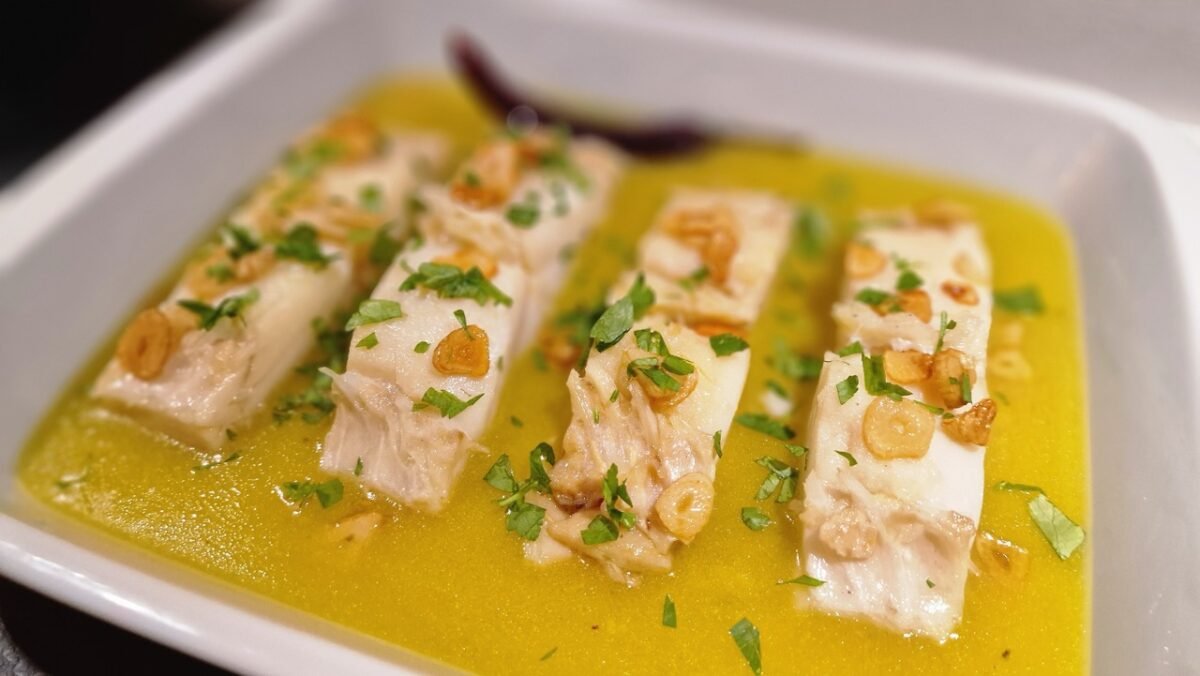
- Scatter the cooked garlic slices over the top, add the chili, and garnish with finely chopped fresh parsley.