
As the world becomes increasingly open, the Spanish tapa—or, more often, tapas in the plural—is becoming increasingly popular everywhere. But what is tapas? What does it mean in Spain, how did it develop, and does it mean the same thing in the rest of the world as it does in its country of origin?
What Exactly Are Tapas?
Let’s get straight to the point. A tapa—plural tapas; pronounced roughly TAH-pah and TAH-pahs—is a small portion of food typically served as an accompaniment to a drink. Its most typical setting is a Spanish bar, though it is not necessarily eaten at the bar counter.
And perhaps the idea many people outside Spain associate with tapas has already begun to fall apart. Abroad, tapas often means a restaurant concept in which many small plates are ordered for the table. In its original Spanish setting, however, it is not primarily a separate type of restaurant, but part of traditional bar culture. Naturally, these days you can also find bars and restaurants in Spain that specialize in tapas.
But What Exactly Are Spanish Bars?
In Spain, the places you can find in practically every town—and lined up with striking frequency in many cities—are simply called bares, or bars. They are something of a café–pub–snack bar hybrid, offering breakfast, coffee, drinks, and smaller dishes. People do not necessarily go in solely to eat or drink: meeting others and socializing are at least as important.
If that happens over a glass of beer, then beer it is. If it happens over coffee, then coffee it is. And if a few bites of food join the drink and the conversation, that is just as natural a part of Spanish bar culture.
When I was still a student, I spent a few weeks with a Spanish family. Once we went to visit an uncle, and believe it or not, we stopped at three such bars along the route of no more than about 0.6 miles (1 km) between the train station and his apartment. At each one, we had something—a Coke, a serving of fries, or another bite—while we talked and simply enjoyed life.
And naturally, this story also reveals another important characteristic of Spanish bars. These places are not exclusively about drinking alcohol, and they are not just for adults: it is completely normal for families to stop in, even with children.
What Makes a Dish a Tapa?
A tapa is not a specific dish or cooking method. It is much more a portion size, a way of serving food, and a way of eating it. Practically speaking—with only slight exaggeration—almost anything can be a tapa if it is offered in a small portion, typically as an accompaniment to a drink. Although a single tapa is generally only a few bites, several different tapas together can add up to a complete meal. For the most part, though, they are eaten alongside a drink or conversation, rather than as a main meal.
Naturally, there are classic tapas dishes—more on those a little farther down—but in reality, every region and every bar offers something different. A single bar will often offer several tapas to choose from, and they can differ greatly from one another:
- Cold or hot
- Extremely simple, such as olives, cheese, or ham
- Freshly prepared dishes, such as fried shrimp or meatballs
- A complimentary bite served with a drink or a separately ordered dish
- A traditional local specialty or a modern, creative dish
The Best-Known Spanish Tapas Dishes
Although there are almost countless varieties of tapas, some classic tapas dishes are widely known. You will encounter many of these in different parts of Spain, though naturally the selection varies by region and by bar.
Simple cold tapas:
- Olives
- Almonds
- Manchego cheese
- Jamón serrano or jamón ibérico
- Anchovies and other canned fish
Prepared cold tapas:
- Ensaladilla rusa, a mayonnaise-based potato and vegetable salad
- Boquerones en vinagre—my personal favorite, I might add
- Salads made with different kinds of seafood
Hot tapas:
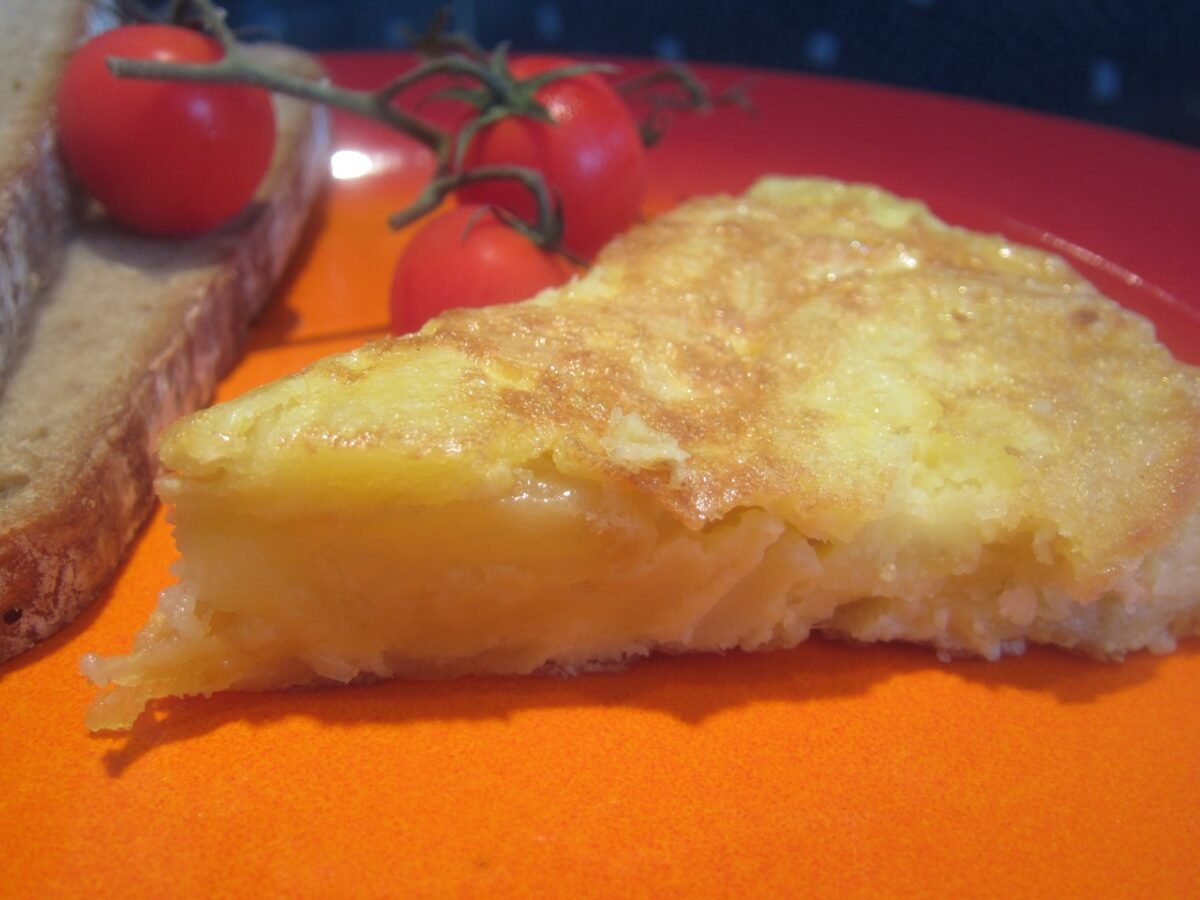
- Tortilla española
- Patatas bravas
- Croquetas
- Albóndigas
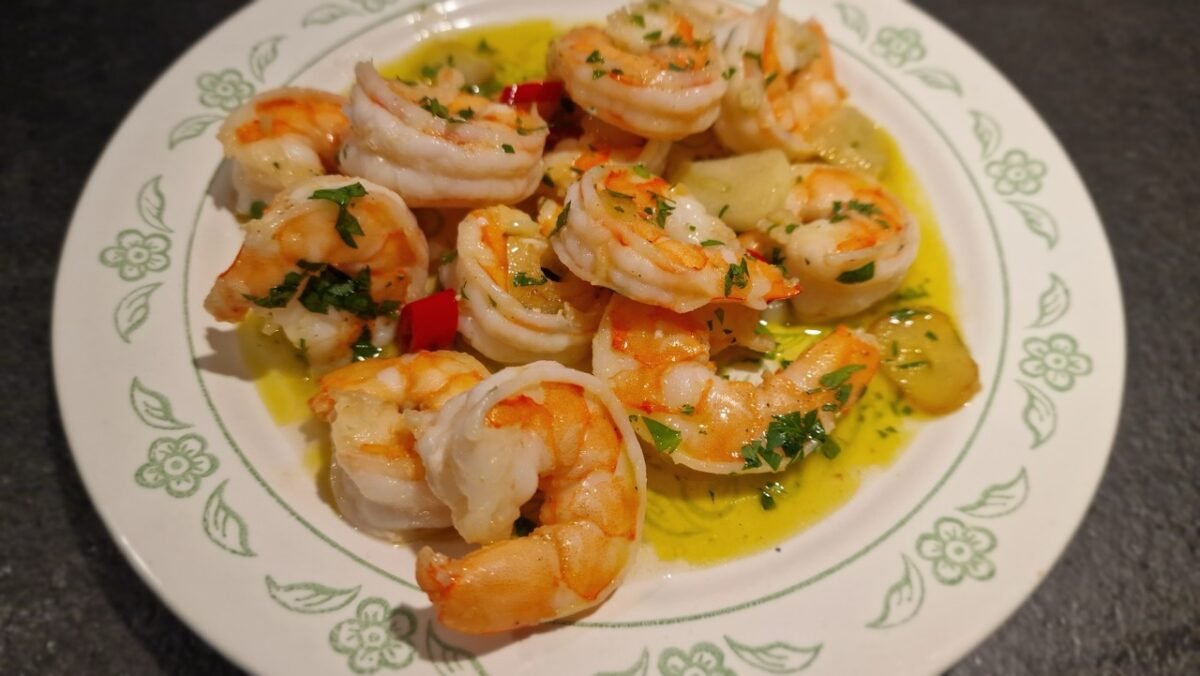
- Gambas al ajillo
- Calamares fritos or calamares a la romana—breaded and fried calamari rings
- Pimientos de Padrón
- Chorizo—Spanish sausage—cooked in wine or cider
Going Out for Tapas in Spain
The many kinds of tapas and the way they are eaten are part of Spanish culture. It is not just about the food itself, but also about where and how it is served, who you eat it with, and under what circumstances.
Spanish even has the expressions ir de tapas—to go out for tapas—and tapear—to eat tapas. The outing itself is called tapeo. This also shows that we are not talking merely about a few dishes, but about a social custom in its own right. The food is naturally an important part of it, but the company, conversation, and casual time spent together matter at least as much. One tapa is generally not enough to fill you up, but during a tapas outing that takes in several places, the many small portions can add up to a complete meal.
The most important elements of going out for tapas in Spain are these:
- It is done with friends or family members
- It generally includes a drink
- People do not necessarily stay in the same place all evening
- It is common to go from bar to bar, having a drink and a few bites at each one
- The emphasis is at least as much—if not even more—on socializing as it is on the food itself
See my personal story above, which captures precisely this way of life. In many countries, stopping three times within about 0.6 miles (1 km) might have seemed like a pointless detour, but in Spain it is part of the general culture.
Are Tapas Free?
Although it is true that in some parts of Spain a small tapa automatically comes with your drink, in most cases it has to be ordered and paid for separately.
A complimentary tapa is not a rule throughout Spain, but a local tradition that can vary by region, city, and even bar. Granada is particularly famous for the fact that in most places, a tapa is served with every drink you order at no additional charge. In León—especially in the Barrio Húmedo neighborhood, known for its tapas bars—you will also often encounter this custom.
In this case, “free” naturally means that the tapa is not charged separately: you pay for the drink, and the small portion of food comes with it. At some bars, the kitchen decides what you receive; at others, you can choose from several options. Often, each new drink comes with another tapa.
In most of Spain, however, tapas dishes appear on the menu and have to be ordered and paid for separately from the drinks. You may still be given a few olives, almonds, or some other simple snack with your drink, but you should not take that to mean that the other tapas dishes are complimentary too.
So if you sit down at a bar in Spain, do not automatically expect free food. If a tapa comes with your drink, it is generally brought out without your having to ask. If you can choose, the server or menu will usually let you know. And if no one says anything, look over the mouthwatering dishes lined up on the counter and point to the one—or ones—you would like to try.
The History of Tapas and the Origin of the Name
Search for the origin of tapas and you will come across kings, sandy winds, and slices of ham placed over drinking glasses. These are good stories, but we do not know exactly how tapas was born with complete certainty. The surviving sources suggest that the tapa in its modern culinary sense is not a medieval invention, but developed in Andalusia around the turn of the 20th century, probably primarily around Seville.
The origin of the name is somewhat less mysterious. The original meaning of the Spanish word tapa is a cover or lid, while the verb tapar means to cover something. According to the most likely explanation, the name comes from the practice of placing a slice of ham, sausage, or another bite on top of a wineglass—in other words, literally “covering” the drink with it.
One of the earliest known descriptions dates from 1903. At the Venta Eritaña inn in Seville, a traveler described a small glass of manzanilla—a Spanish, sherry-style wine—covered with a paper-thin slice of salami or ham. At that point, the bite was still called by the Andalusian word tapaera, meaning a cover. In a Spanish dictionary published in 1918, however, tapa already appeared with a culinary meaning of its own: an olive, sausage, or another small cold bite served with beer or wine.
We can no longer know for certain whether the food placed over the glass really served to keep out dust and insects. The slice of ham or sausage covering the glass, however, can be documented historically, so this explanation for the name is not merely a story invented later.
Even so, several popular royal legends are associated with the origin of tapas. According to one of them, while the 13th-century King Alfonso X was ill, he drank wine on medical advice and always ate a few bites of food with it. After he recovered, he supposedly ordered that inns serve wine only with some kind of food from then on.
Another story is associated with Alfonso XIII. According to the legend, in the early 20th century the king stopped at an inn near Cádiz and ordered a glass of sherry. Because a strong wind was blowing, the server covered the glass with a slice of ham to keep sand out of the drink. The king supposedly liked the solution so much that he ordered another drink “with the same cover”—in other words, with the same tapa.
Both stories are charming, but there is no historical evidence for either one, so they are best treated as legends. The version involving Alfonso X seems particularly unlikely, since we have evidence of the word’s culinary use only from many centuries later. The story about Alfonso XIII falls closer to the period when tapas is documented as appearing, but at most it can be considered a memory of a custom that already existed at the time, not a proven origin story. Spain’s official tourism website also presents these explanations as legends.
What is more certain is that during the first decades of the 20th century, the concept of the tapa spread quickly from Andalusia to other parts of Spain. Before the Spanish Civil War, tapas dishes were already being served throughout much of the country, and even in the Balearic and Canary Islands. Over the following decades, increasingly varied dishes entered this category, and from the 1970s and 1980s onward, the style of tapas dining we know today—tapeo, going from bar to bar—became increasingly widespread.
And so the simple slice of ham or sausage placed over a wineglass first became an Andalusian bar custom, then a way of eating found throughout Spain, and finally one of the best-known symbols of Spanish gastronomy.
Tapas in Spain and Abroad
If you visit a tapas restaurant outside Spain, you will most likely have a somewhat different experience than you would in a traditional Spanish bar. That does not necessarily mean the food you receive is not genuinely Spanish. It is more that tapas has partly taken on a new meaning beyond Spain’s borders.
Abroad, tapas is often a restaurant concept in its own right. You sit down at a table, choose several smaller dishes from the menu, and then they are brought out either all at once or one after another for you to share with friends or family. In this setting, tapas essentially means a meal made up of many small plates intended for sharing. A drink can naturally still be part of the experience, but everything is not necessarily organized around it.
In Spain, by contrast, the traditional setting for tapas is primarily the bar already described above. You order a drink and a tapa with it, talk for a while, and then either order something else or move on to the next place.
In this respect, Spaniards do not necessarily sit down for an entire evening, and they may not order all the food at once. Going out for tapas—tapeo—often becomes a special social activity precisely because they visit several bars and try something at each one.
The selection of food may differ as well. Menus at tapas restaurants abroad generally feature the internationally best-known Spanish dishes: patatas bravas, tortilla de patatas, croquetas, chorizo, fried calamari, and garlic shrimp. Naturally, you will find these in Spain too, but alongside them, countless local dishes are also offered in tapa-sized portions. It might be some kind of meat stew, fish dish, offal, cold salad, or practically anything people in that particular region or bar enjoy preparing.
What is more, the portions called tapas abroad are often closer in size to the Spanish media ración or ración. These are larger portions generally shared by several people. Since these Spanish terms are less familiar in the rest of the world, however, the word tapas has often become an umbrella term for every smaller Spanish dish meant for sharing.
At the same time, the distinction should not be treated too rigidly. Today, Spain too has a great many bars specializing specifically in tapas, taperías, modern gastrobars, and gourmet markets. In many places, tapas are ordered while sitting at a table, even as part of a complete meal, and you will find modern, creative versions alongside the traditional bites. In other words, the tapas-restaurant concept familiar outside Spain is no longer entirely foreign to modern Spain either.
Both versions therefore have their own place. Tapas restaurants abroad offer a taste of the diversity of Spanish cuisine at a single table. The experience of traditional Spanish tapas, however, requires not only small portions of food, but also the casual bar culture and social life from which the tapa itself was born.


1 thought on “What Is Tapas? Spain’s Gastronomic Treasure”