There may be no food more Danish than smørrebrød, pronounced roughly “smur-bruh.” Internationally, there certainly isn’t. You could say that this wonderfully loaded open-faced sandwich is the best-known Danish dish, and perhaps the one tourists seek out most. It can impress just about anyone, and it probably tastes good to almost everyone who gives it a try.
The good news is that this open-faced sandwich is actually quite easy to make. All you need is a little creativity. Don’t think of it as one specific recipe, but rather as ideas, freedom, and an incredibly good-looking, just-as-delicious, colorful parade of sandwiches. You can make it for a festive occasion or simply for an easy dinner.
What Exactly Is Smørrebrød?
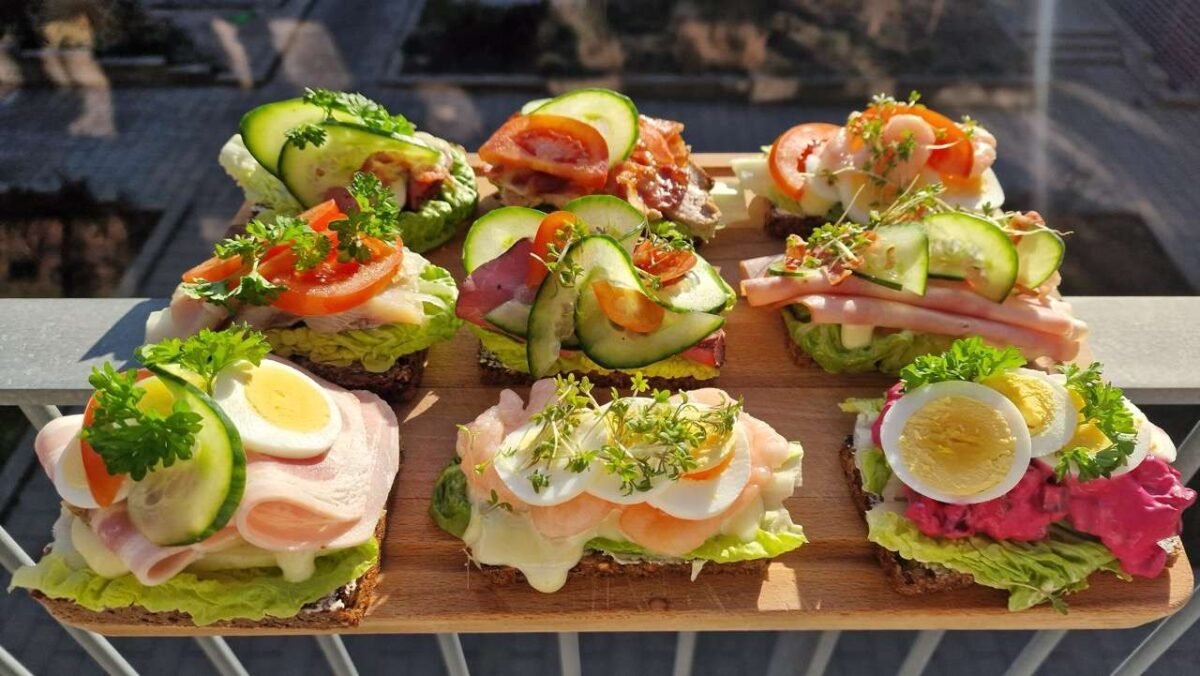
Let’s start with the “most disappointing” part. The name of this world-famous, very impressively loaded Danish sandwich simply means this: buttered bread. In Danish, smør means butter, and brød means bread. And somewhere, a very long time ago, this dish started from exactly that: a simple slice of bread with butter, or perhaps back then more likely with lard, that people took with them to work during the day.
Smørrebrød, in the decadent sandwich form we know today, was created in the 1880s at the famous Nimb restaurant, which still exists today in Tivoli, by Louise Nimb. Oskar Davidsen then made it world-famous later in the same decade. And although this traditional, very typical Danish food, which was mainly eaten for lunch, faded somewhat from everyday life after the 1960s, today—thanks in no small part to tourists’ curiosity—it is flourishing again.

Smørrebrød can basically be anything when all kinds of toppings are freely placed on a slice of bread—usually, but not exclusively, rye bread. In its current form, this Danish sandwich is not only delicious but also incredibly decorative. It carries within it the essence of Denmark: happiness wrapped in aesthetics.
The Bread
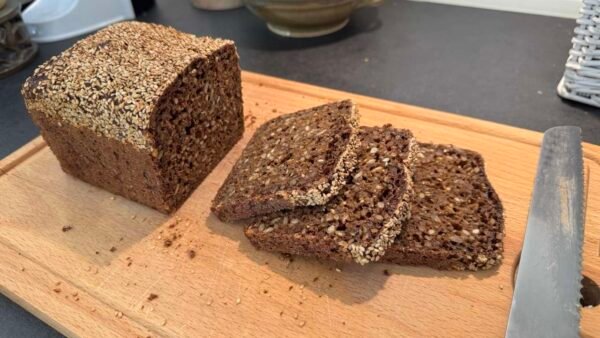
Smørrebrød is an open-faced sandwich, so bread is always the base. This is usually the typical Danish rye bread: very dense, baked in a loaf pan, and therefore rectangular.
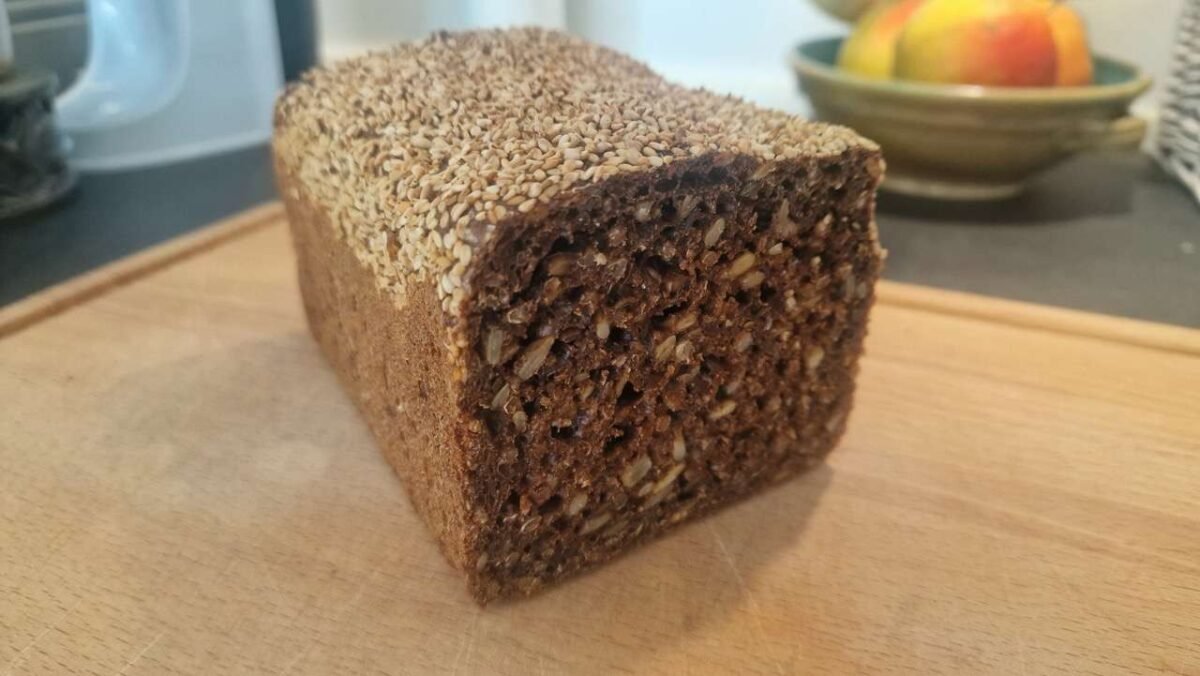
But you don’t have to think only in those terms. Danes also make smørrebrød with other kinds of bread—whether brioche-like bread or sourdough. Based on available documents, as early as 1883, people could choose from rye, sourdough, and French bread. You can vary the base, meaning the bread, however you like, just as you can vary the toppings.
True to the name of the dish, we buttered every slice of bread, and this is often done in the original version too. But of course, this step can be skipped. With smørrebrød, the goal is not to cling to some set of rules that was never written down and that no one follows, but to make a beautiful sandwich with toppings that taste good to you—one that will please not only the mouth but also the eye.
The Toppings
And this is where complete freedom comes in. Basically anything goes: whatever you feel like, whatever you love, or whatever happens to be at home.
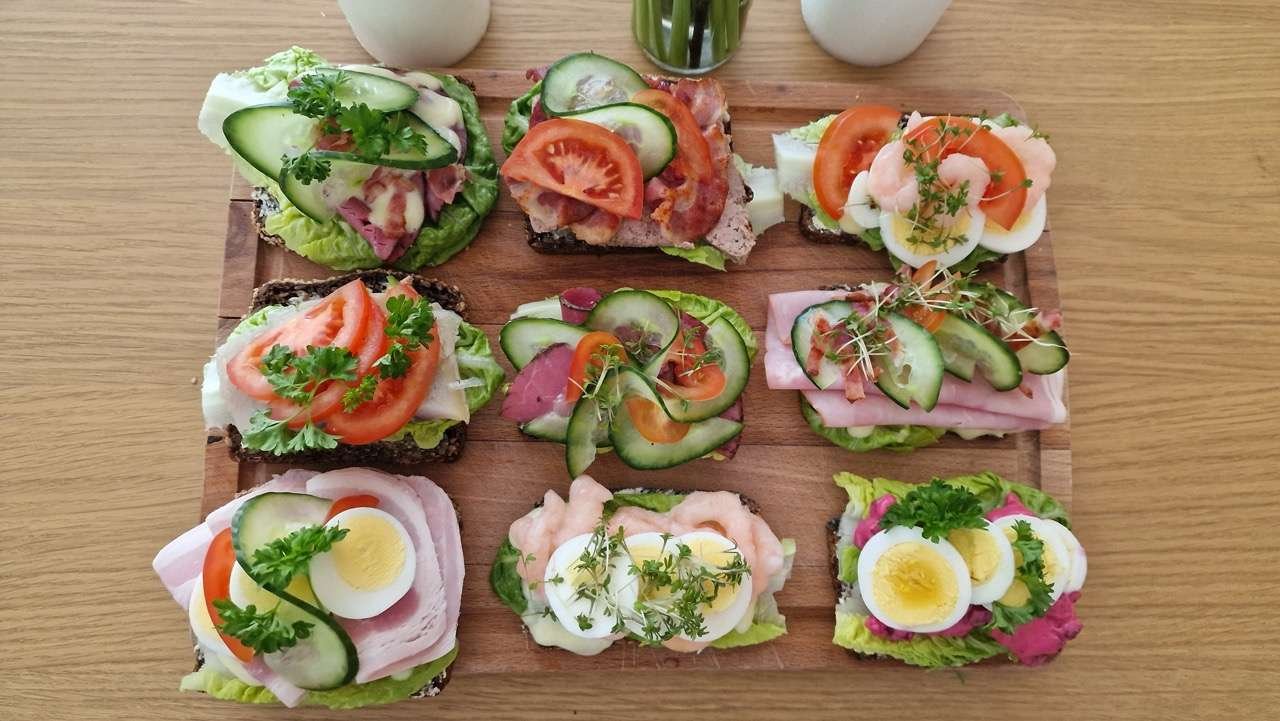
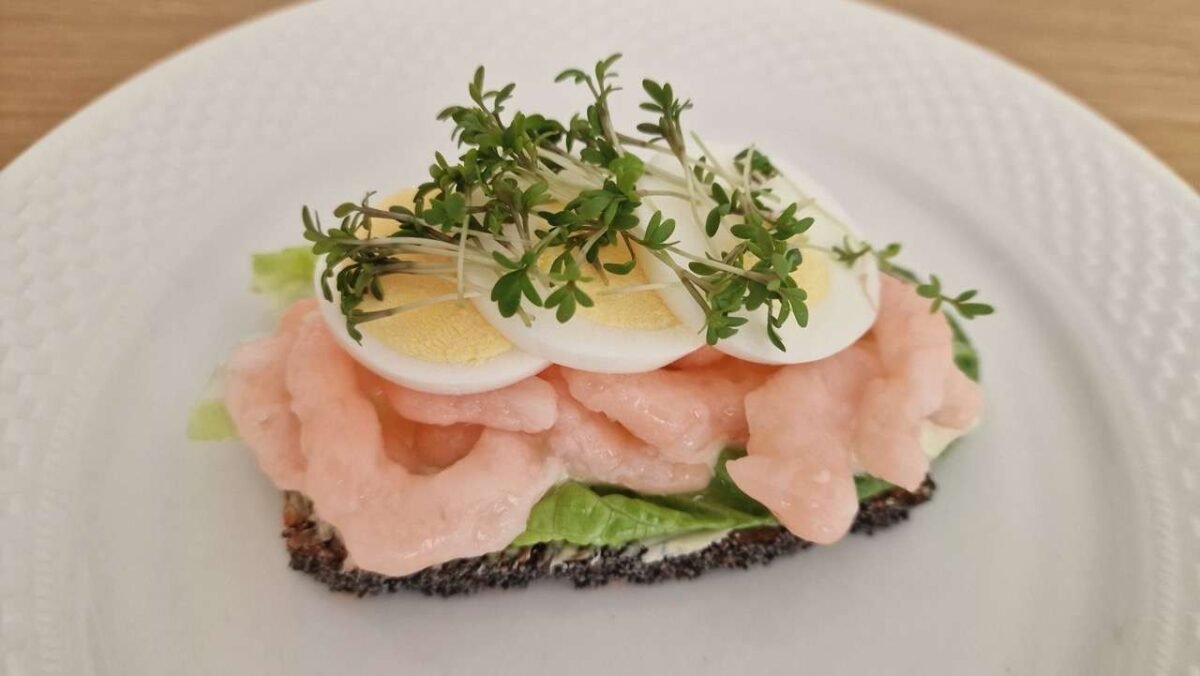
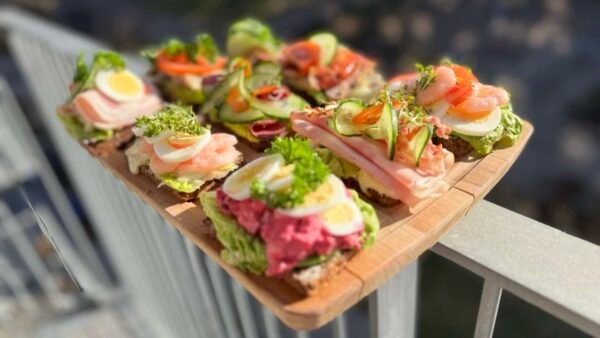
Very often—especially when smørrebrød is made for a festive occasion—green lettuce goes on the bread, and the different toppings go on top of that. This looks very beautiful, as you can see in the photos too.
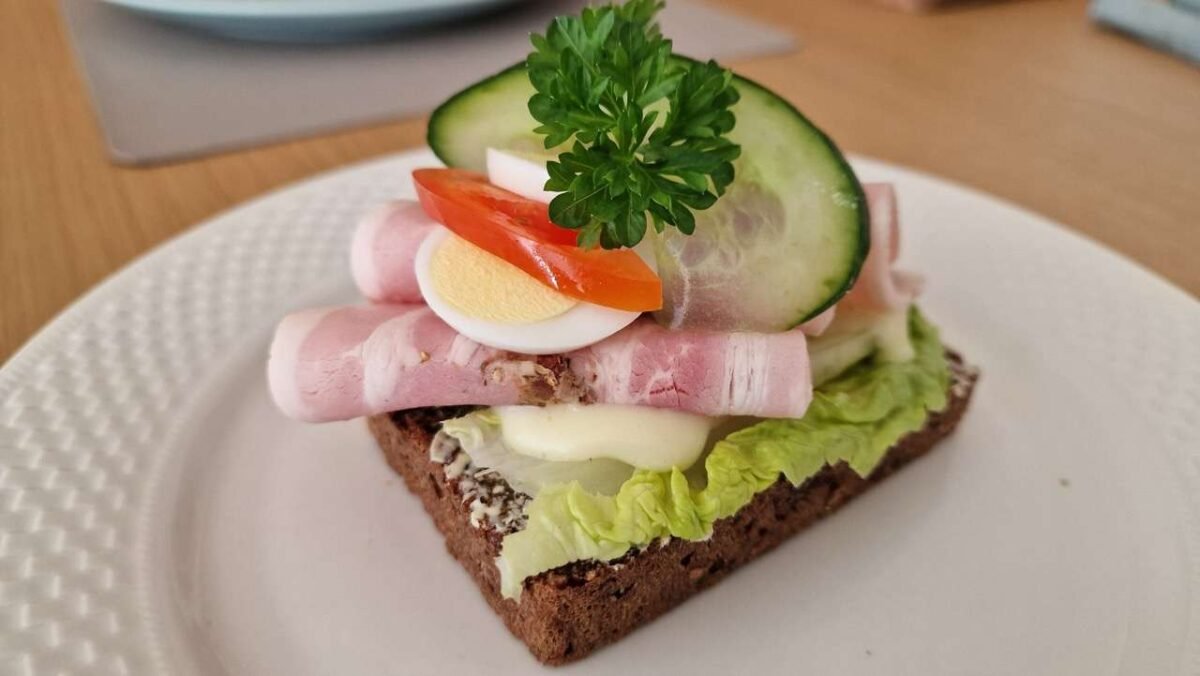
As for building the sandwich, the amount loaded onto the bread is usually more modest or more decadent depending on the current economic conditions. Denmark is currently incredibly well-off, and that is even more true of places visited by tourists, so these days you are most likely to encounter sandwiches piled high, generously loaded, and assembled with all kinds of good things. But at home, a little cold cut and a few slices of tomato count just as much as smørrebrød as a sandwich piled high with shrimp, mayonnaise, and caviar.
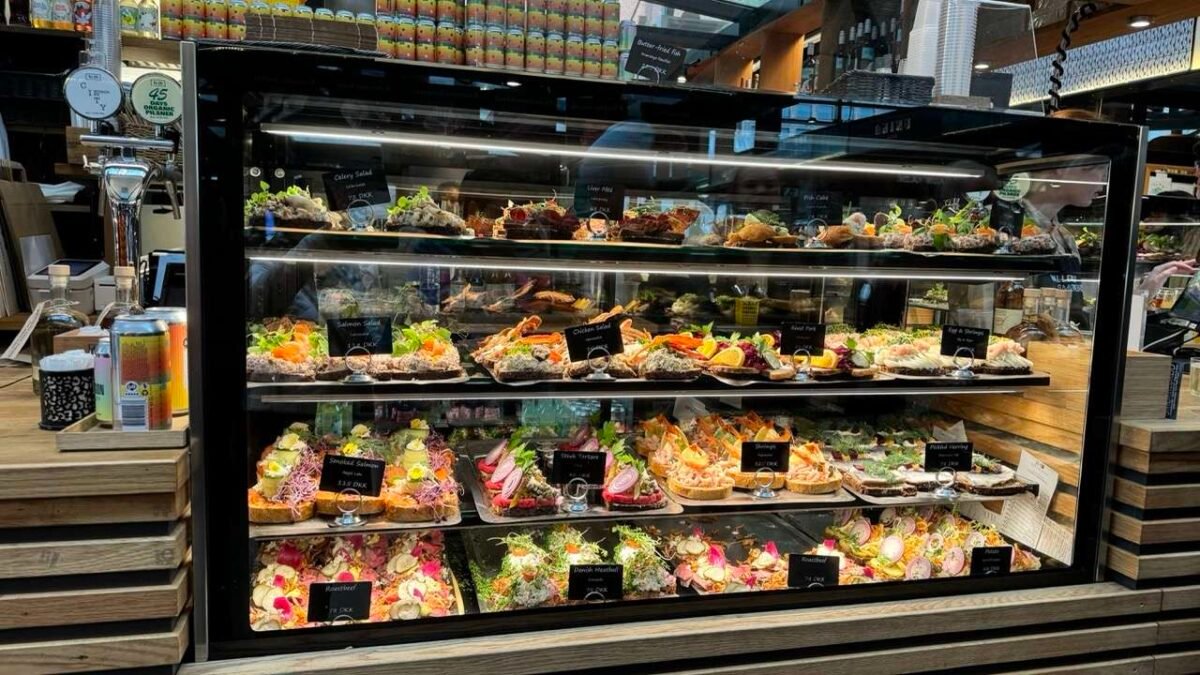
Here are a few typical Danish toppings that make this sandwich feel truly authentic. You can combine these to your taste, and of course you can use anything else as well.
- Pickled herring.
- Shrimp.
- Smoked salmon.
- Roast beef, available in Denmark as sliced deli meat in every grocery store.
- Rullepølse, a rolled, spiced Danish cold cut.
- Liver pâté, called leverpostej in Danish.
- Boiled egg.
- Boiled potatoes.
- Tartare-style meat topping. Here, don’t think of the beef tartare you may be used to, but rather French-style tartare.
- Flæskesteg, Danish crispy skin-on pork loin, with Danish red cabbage.
And season and decorate all of this with mayonnaise, fried bacon, tomato, English cucumber, lemon, parsley, or any other greens or sprouts.
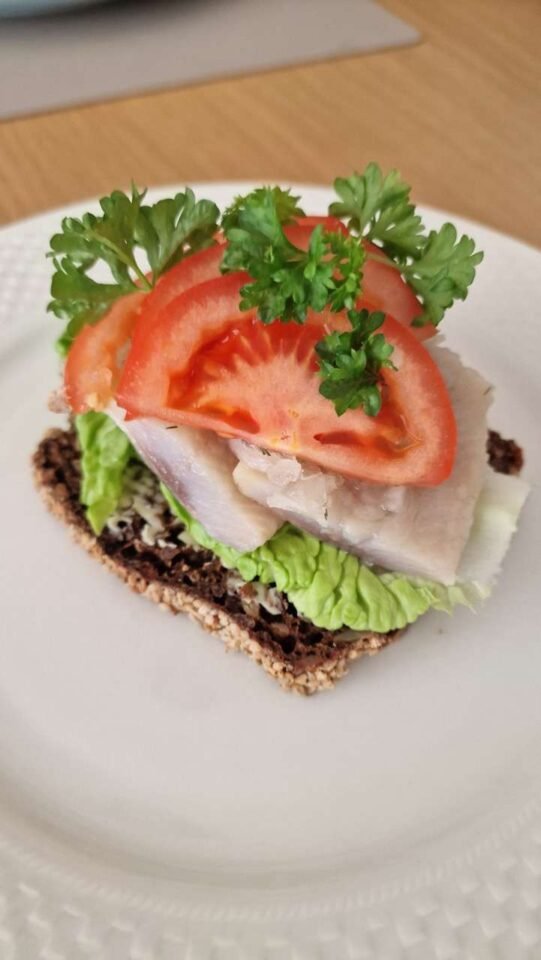
Our Combinations
We made ours with two kinds of rye bread, both traditional, baked in a loaf pan and rectangular. One was a completely regular version, and the other was gluten-free.
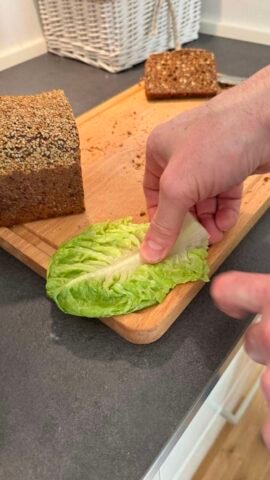
We buttered each slice of bread and, depending on the size, placed one or two leaves of little gem lettuce on it. Then the following toppings went on top.
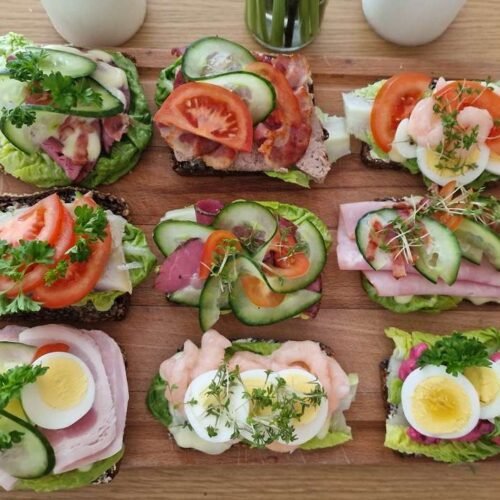
- Slices of roast beef, mayonnaise, cucumber, and tomato.
- Slices of roast beef with beet salad in mayonnaise and tomato slices.
- Danish rullepølse cold cut, slices of boiled egg, tomato, and cucumber.
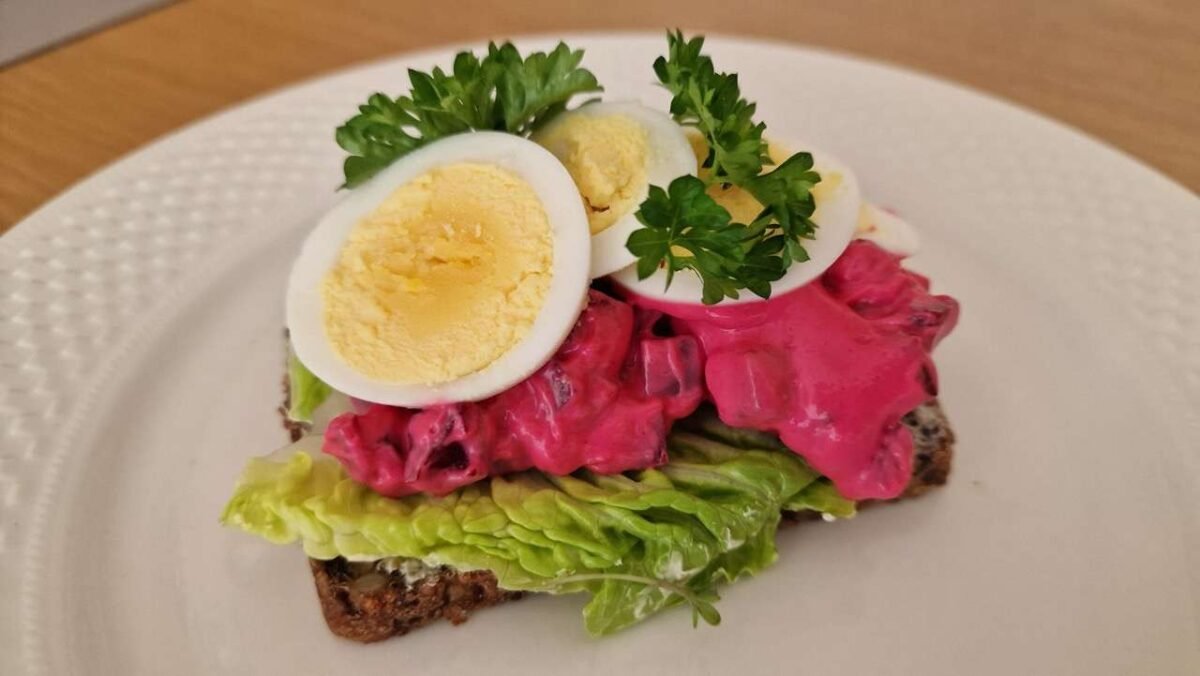
- Beet salad in mayonnaise, slices of boiled egg, and parsley.
- Vinegar-pickled herring, tomato slices, and parsley.
- Liver pâté, fried bacon, tomato, and cucumber.
- Boiled shrimp, mayonnaise, and slices of boiled egg.
Try these, or experiment according to your own taste!
Enjoy!
Smørrebrød
Ingredients
- 1 slice rye bread
- Butter
- Lettuce
- Toppings see the article and the notes
Instructions
- Smørrebrød can basically be assembled freely. As the first step, slice the bread. Traditionally, it is most often made from dense, loaf-pan-baked, rectangular rye bread, but any kind of bread can work.

- Butter the slices of bread thinly, and place a lettuce leaf on each one. Both steps can be skipped, but the butter adds a little extra flavor, while the lettuce gives the sandwich character—and also looks very good.

- Pile the toppings onto the sandwich. Be generous: these days, smørrebrød is not so much a flat sandwich as one generously loaded with delicious things. Decorate it with tomato slices, English cucumber, lemon, parsley, sprouts, or other greens. To make smørrebrød, you can use any toppings you like, whatever you have at home, or whatever you feel like.
Notes
- Pickled herring.
- Shrimp.
- Smoked salmon.
- Roast beef, available in Denmark as sliced deli meat in every grocery store.
- Rullepølse, a rolled, spiced Danish cold cut.
- Liver pâté, called leverpostej in Danish.
- Boiled egg.
- Boiled potatoes.
- Tartare-style meat topping. Here, don’t think of the beef tartare you may be used to, but rather French-style tartare.
- Flæskesteg, Danish crispy skin-on pork loin, with Danish red cabbage.
Sources used:
- Bianca’s smørrebrød recipe.
- lex.dk articles on smørrebrød and smørrebrødsjomfru.
- Smørrebrød etymology.