
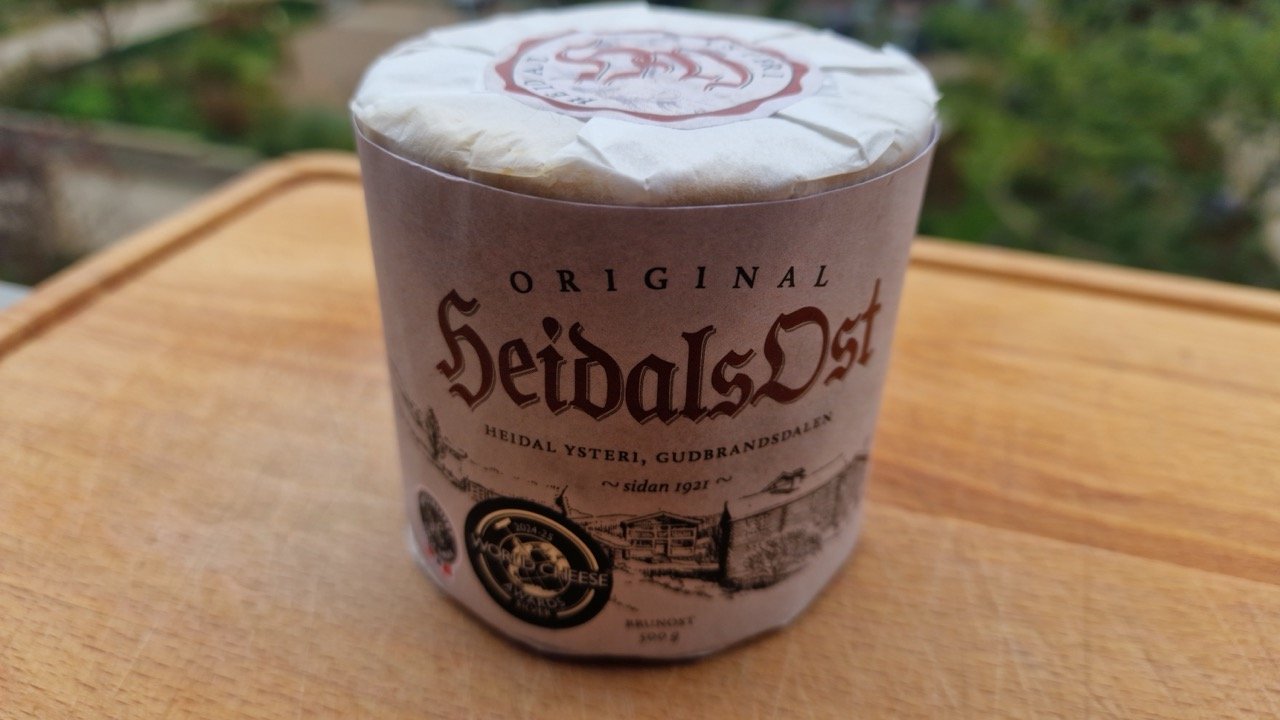
Brunost, or Norwegian brown cheese, looks a lot like a large piece of caramel fudge. It has a caramel-like flavor and a dense, creamy texture, too. Yet Norwegians put it on bread just as they would a slice of cheese, and it’s also one of the traditional toppings for Norwegian waffles.
That combination might seem unusual at first. But the best way to get to know brunost is to understand what it tastes like, which variety to choose, and how to try it.

What is brunost?
Brunost is a Norwegian word that simply means brown cheese. It refers to a family of brown whey cheeses made in a similar way. The dairy ingredients can come from cows, goats, or a combination of the two.
The key ingredient is whey: the liquid left behind after the curds have been separated during cheesemaking. While familiar cheeses are made from the curds, brunost uses the whey, with milk and cream added.
Its characteristic brown color and sweet flavor develop during prolonged heating. Making brunost is therefore quite a different process from making cheddar or Parmesan. Concentrating and browning the mixture give brunost its character, and no aging is needed.
What does brunost taste like?
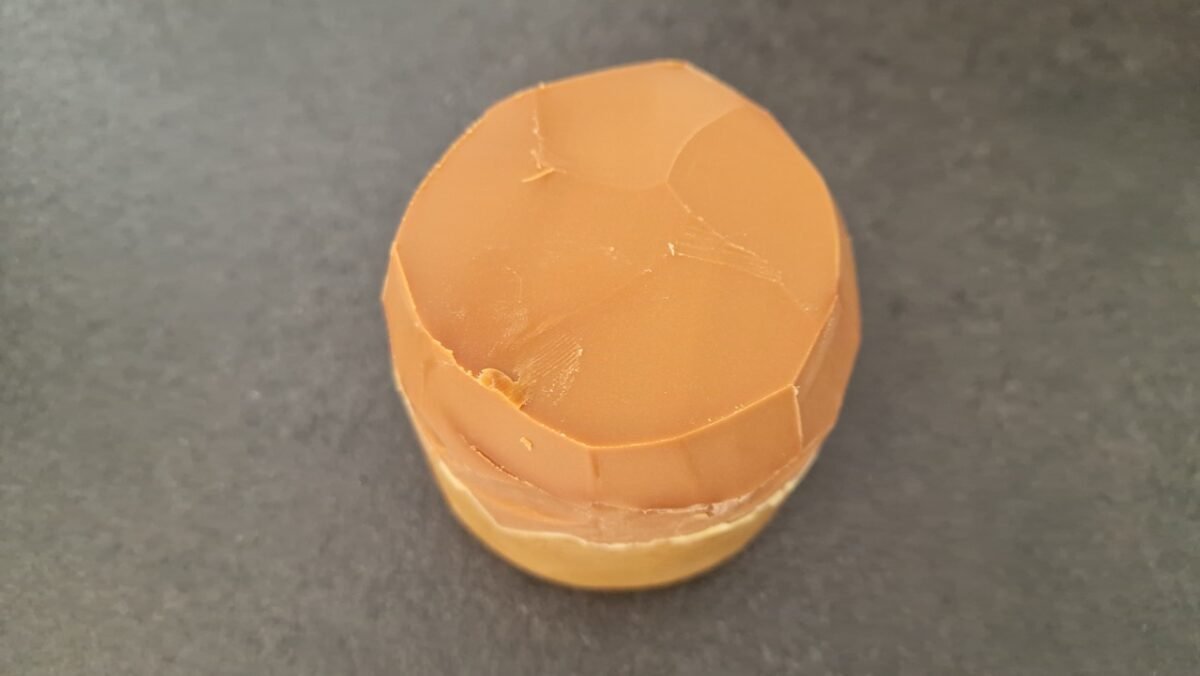
The first thing you’ll usually notice is its caramel-like sweetness. This comes with a rich, milky, creamy flavor, a little saltiness, and varying degrees of tanginess. Varieties made with goat’s milk also have a distinctive goat’s milk character.
The texture is dense and easy to slice when cold. In your mouth, it can feel creamy, almost fudgy, and slightly sticky. Caramel fudge or dulce de leche—the thick spread made by slowly heating sweetened milk—can therefore be useful reference points if you’ve never tried it. But these are only comparisons: brunost also has its own distinctive dairy flavor.
There can be a surprisingly big difference between a mild cow’s milk brunost and a stronger goat’s milk version. If you don’t enjoy one, you don’t necessarily have to write off the entire family.
The main types of brunost
The Norwegian names might seem a little difficult to remember at first, but three are worth getting to know. They’ll help you find your way around the cheese counter and give you an idea of what to expect. These general characteristics provide a starting point for comparing the main types.
| Name | What is it made from? | What does it taste like? |
|---|---|---|
| Fløtemysost | Cow’s milk whey, milk, and cream | Usually lighter in color, milder, and gently caramel-like |
| Gudbrandsdalsost | A combination of dairy ingredients from cows and goats | Rich and caramel-like, with a noticeable but generally milder goat’s milk character |
| Geitost | Varieties based on goat’s milk and goat’s milk whey | A more pronounced goat’s milk character and often a stronger flavor |
Geitost literally means goat cheese; here, it refers to the brown goat cheese varieties. It’s always worth checking the package for the exact ingredients.
For a first taste, I’d choose fløtemysost or Gudbrandsdalsost. The former is a gentle introduction, while the latter is a good way to discover brunost made with both cow’s and goat’s milk ingredients.
There’s much more to the selection than these three types. You’ll also find regional varieties and cheeses from smaller producers. Their color and flavor depend on the ingredients as well as how they’re cooked and for how long.
How is brunost made, and why is it brown?
To make brunost, the whey is concentrated with milk and cream. The proportions depend on the variety being made. Much of the water evaporates during heating, gradually turning the thin liquid into a thick mixture.
The characteristic brown color and caramel-like flavors develop during this heating process. The degree of browning helps determine whether the finished brunost will be lighter and milder or darker and more intense.
The thick mixture is then cooled and stirred under controlled conditions before being transferred to molds, where it sets. Careful cooling helps prevent large lactose crystals from forming, keeping the finished brunost smooth.
The sweetness comes from lactose, the sugar naturally present in milk. Traditional plain varieties don’t need added granulated sugar for their caramel-like flavor. However, there are also sweetened brunost varieties and versions flavored with ingredients such as cardamom, so the ingredient list is useful here, too.
How do Norwegians eat brunost?
In Norway, brunost is an everyday bread topping. People eat it for breakfast, as a snack, or as part of a packed lunch. The simplest way to serve it is in thin slices on bread or crispbread. It’s also worth trying on buttered bread.
For thin slices, Norwegians often use a cheese slicer, known in Norwegian as an ostehøvel. This small, flat tool shaves thin slices from the top of the block. If you don’t have one, a sharp knife will do.

Another classic combination is Norwegian waffles with brunost. Thin slices soften on a warm waffle, and the caramel-like, milky flavor goes well with the freshly cooked batter. You can add jam, too, although for a first taste, it’s worth getting to know the waffle and brunost combination on its own.
For your first try, I think buttered bread or a warm waffle is the best place to start. That way, you’ll experience brunost in a form that Norwegians themselves regularly enjoy.

Cooking and baking with brunost
Brunost has a place in cooking, too. For example, it can be a traditional ingredient in Norwegian cream sauces served with game. Its sweetness and full flavor make an interesting addition to meat stock and cream.
The cheese is cut into small pieces or grated, then stirred into the warm sauce until it dissolves. If you’re experimenting at home, start with a little and taste before adding more. A stronger goat’s milk brunost can give quite a different result from a mild fløtemysost.
It also works in sweet dishes, including cakes, creamy desserts, and ice cream, and as a grated topping. Many of these are newer, creative uses. Once you’ve tried brunost on bread and waffles, they offer a good opportunity to experiment further.
A brief history of brunost
Brunost’s history is closely connected to Norwegian dairy farming and life on the mountain farms. Using the whey left over from cheesemaking helped people make the most of their milk. Whey cheese was made in Norway long before the richer varieties familiar today appeared; written references date back to 1646.
An important figure in the development of modern brunost was Anne Hov. In 1863, at just 17 years old, she was working at the Solbråsetra mountain farm in the Gudbrandsdalen valley. She added cream to whey, creating a richer, fattier version of the earlier, leaner whey cheeses.
She later used goat’s milk, too, and her work played an important role in the development and spread of Gudbrandsdalsost. The cheese’s popularity also provided a new source of income for farms in the area. In 1933, Anne Hov received the King’s Medal of Merit for her contribution to Norwegian food culture and the region’s economy.
Brunost therefore has older roots, while Anne Hov’s importance lies in developing the richer versions we know today.
Buying and storing brunost
Outside Norway, good places to look include specialty cheese shops, Scandinavian food stores, supermarket cheese departments, and online stores selling imported foods. Search for brunost and Norwegian brown cheese, as well as specific names such as Gudbrandsdalsost and fløtemysost. The spelling gjetost is also worth trying, and Ski Queen is a brand name you may come across. Availability and product names vary by country, so searching under several names can help.
If you’re visiting Norway, it’s naturally much easier to find. Most supermarkets sell it, and you can even pick some up at the airport if you’ve forgotten. Don’t ask me how I know. 😅
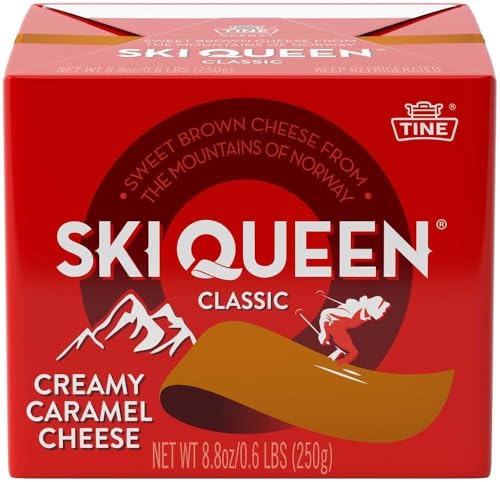
- Includes (12) 8.8 oz blocks of Authentic Ski Queen Gjetost Cheese
- Soft, Sweet & Creamy Caramel Flavored Cheese
- Also known as Brunost
When buying brunost, check which milk ingredients it contains, as these will tell you a lot about its likely flavor. The brown color alone won’t tell you how mild or how distinctly goaty it will be.
If your brunost has a wax coating, remove it before eating. To help keep the rest protected, you only need to remove the wax from the portion you’re about to use.
Brunost contains a substantial amount of lactose. In this respect, it differs from many long-aged cheeses, so don’t assume it’s suitable for a lactose-free diet. Always check the label.
At home, keep it refrigerated and store the opened block well wrapped or in an airtight container. Follow the storage instructions on the package; TINE’s standard Gudbrandsdalsost, for example, calls for refrigeration at 32–39°F (0–4°C). It’s easier to cut neat, thin slices when the cheese is cold, so take it straight from the refrigerator when you’re ready to slice it.