I know, octopus is not exactly one of the most common ingredients in most kitchens. In fact, I think it’s fair to say that almost everywhere, it still counts as something a little exotic. Still, cooking octopus can be tricky if, by some unexpected twist of fate, you suddenly find yourself needing to prepare and serve a dish made with octopus.
Because octopus can be ruined simply by cooking it the wrong way. This ingredient is quite delicate and tender—if you haven’t tried it yet, I recommend tasting it when it’s really well prepared. And, of course, only if you can get past the thing that certainly not everyone can get past: preparing and eating octopus. But the fact is, an improperly cooked, chewy octopus can put someone off this seafood ingredient for good all by itself.
Because properly prepared octopus is tender, flavorful, and a wonderful experience. Poorly cooked octopus, on the other hand, is chewy and can be truly unpleasant. After that, it’s no wonder if someone never wants to hear about it again. But once again, that’s not a problem with the ingredient—it’s a problem with faulty preparation.
So maybe it’s time to prepare octopus really well and fall in love with it?!
How do You Cook Octopus?
For octopus to be tender rather than chewy, you need to follow a few rules. This is what’s worth knowing when it comes to cooking octopus. And this is what I’m sharing with you here.
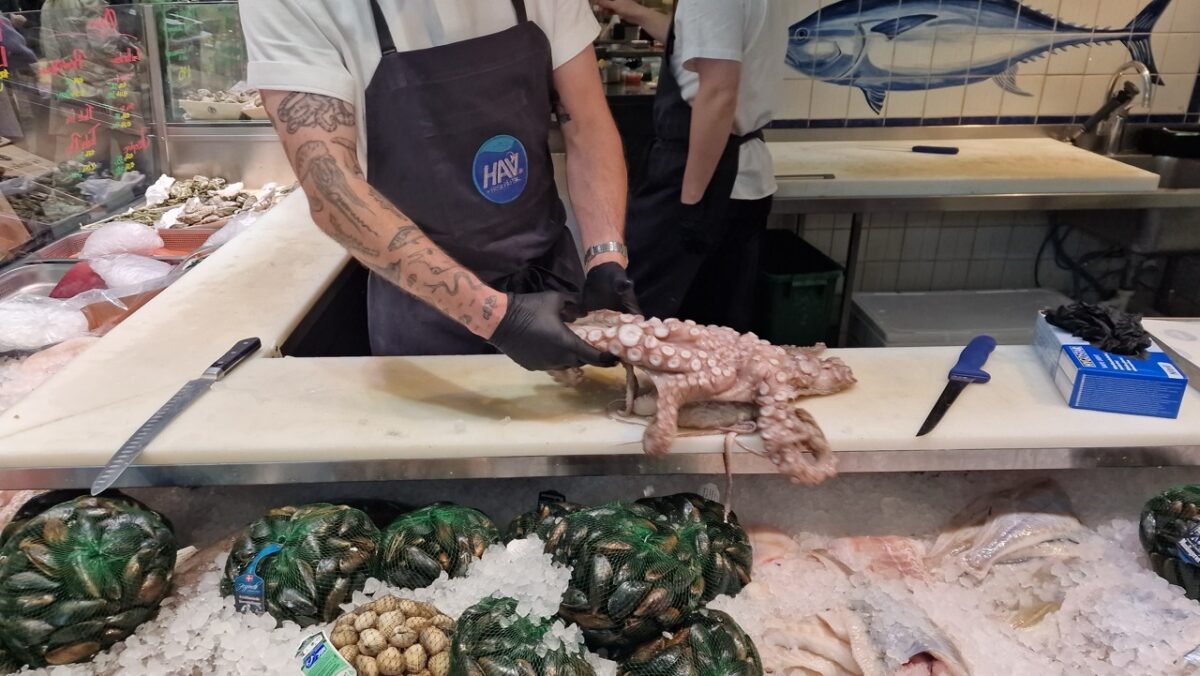
If you haven’t prepared octopus before, it’s better to ask the fishmonger to clean it for you. Or buy octopus arms, which don’t need to be cleaned. Of course, if you buy prepared octopus, such as frozen octopus, then you won’t have to worry about this at all.
Preparing Tender Octopus
There’s one interesting point when it comes to preparing truly tender octopus. And it’s not actually related to cooking it, but to something you need to pay attention to before that.
Octopus benefits from being kept in the freezer for a few days before you cook it; this helps make it more tender. So if you buy fresh octopus, simply put it in the freezer for a few days before preparing it.
Before cooking, let the octopus thaw. This takes about 6-8 hours at room temperature, or about 24 hours in the fridge. If you’re not keeping an eye on it continuously, it’s better to thaw it in the fridge, so there’s really no chance you’ll accidentally leave it out and have it spoil.
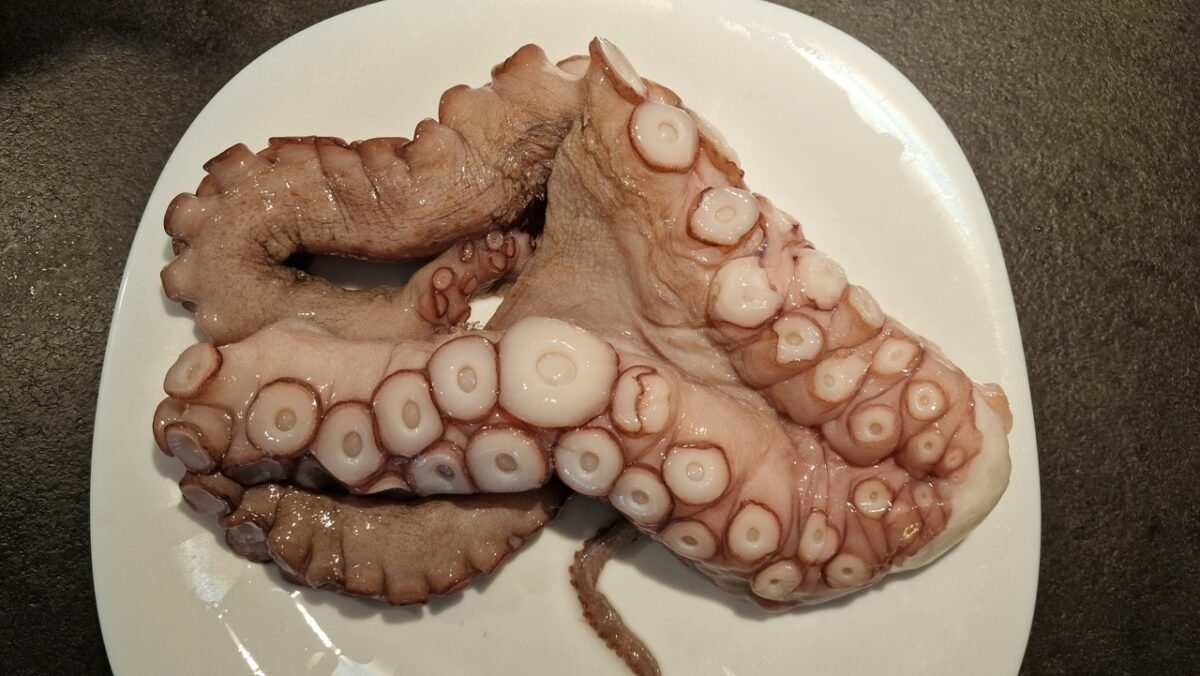
Cooking the Octopus
It’s worth dividing the cooking of octopus into two parts:
- Parboil it in water
- Finish it according to the recipe, cooking it until done
Parboiling
Parboil the thawed octopus in water for about half an hour.
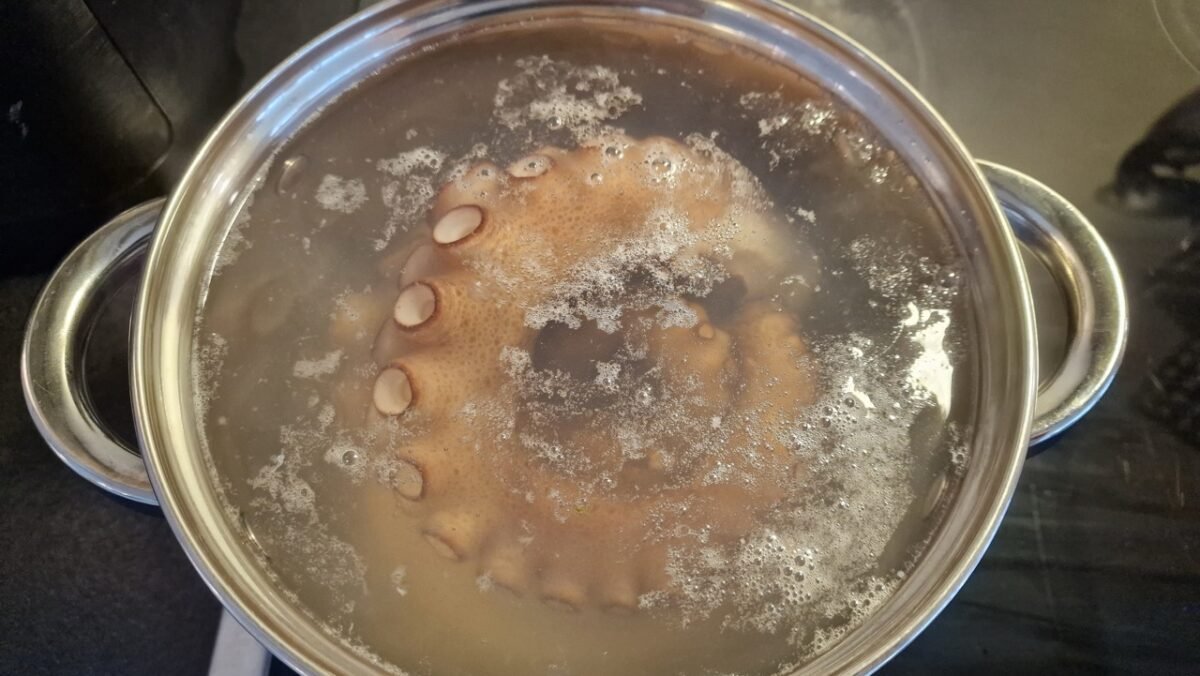
Simply bring water to a boil in a pot large enough to fit the octopus. Add the cleaned octopus and cook it, covered, in barely simmering water for 30 minutes.
There’s no need to salt the water; octopus is salty enough on its own. In fact, you can even use the cooking liquid when preparing the dish itself.
Take the parboiled octopus out of the water and let it cool a little. Cut it into pieces as specified in the recipe. Most often, this means bite-size pieces of about ¾-1¼ inches (2-3 cm).
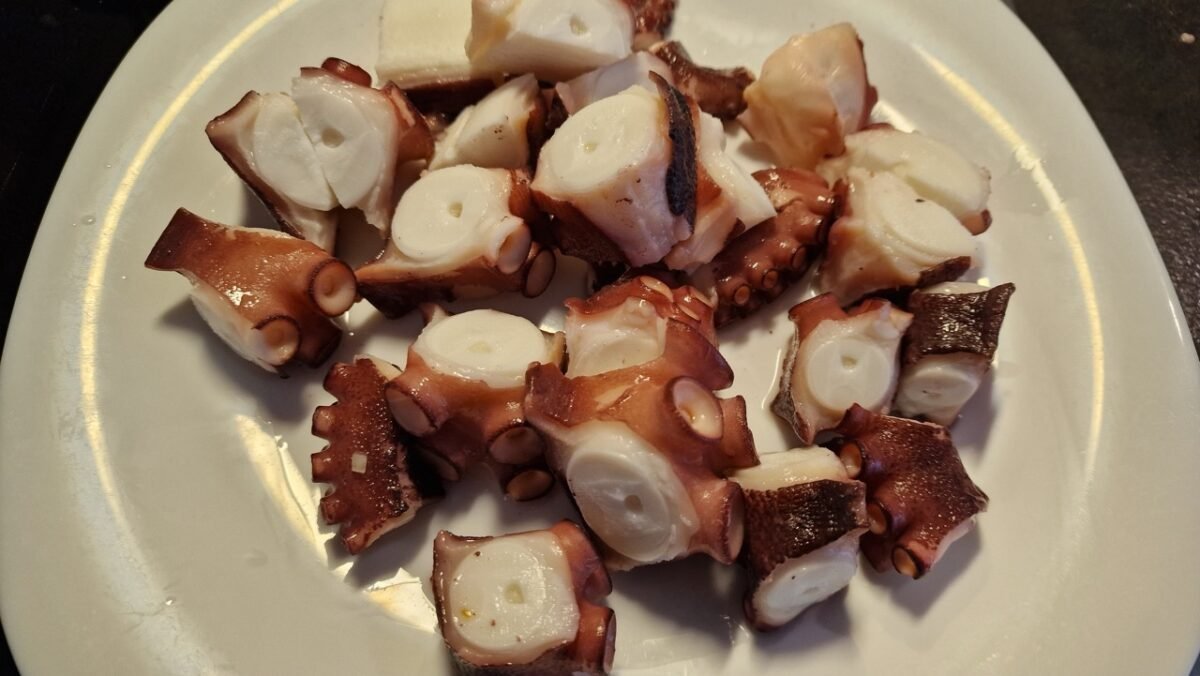
Cooking it Until Done in The Recipe
Cook the parboiled, cut-up octopus until done according to the recipe instructions. This way it will not only be tender, but flavorful too, since it takes on the flavor of the sauce it cooks in.
Unless the recipe says otherwise, cook the octopus in its sauce for another 30-50 minutes. It’s worth tasting it, and when it’s completely tender, it’s done.
Octopus prepared this way is guaranteed to be wonderfully tender!
Octopus Cooking Time
According to the method above, the cooking time for octopus is 60-80 minutes. Of this, 30 minutes is parboiling in water, and 30-50 minutes is cooking in the sauce.
Octopus Shrinks Significantly During Cooking
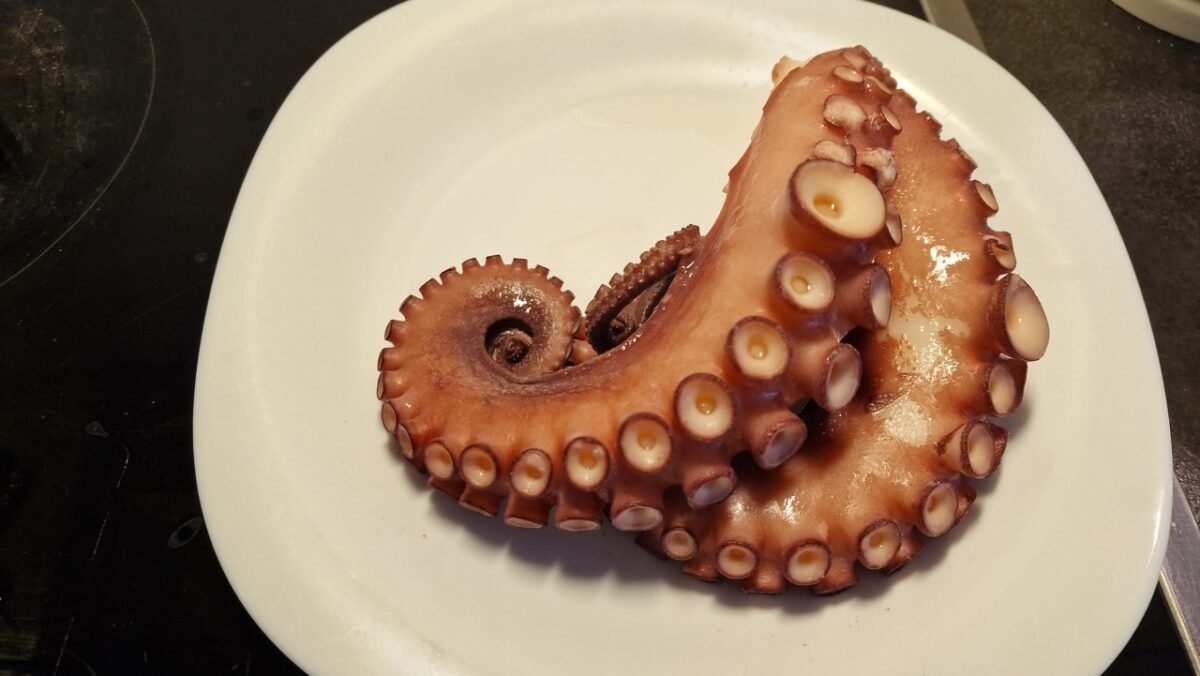
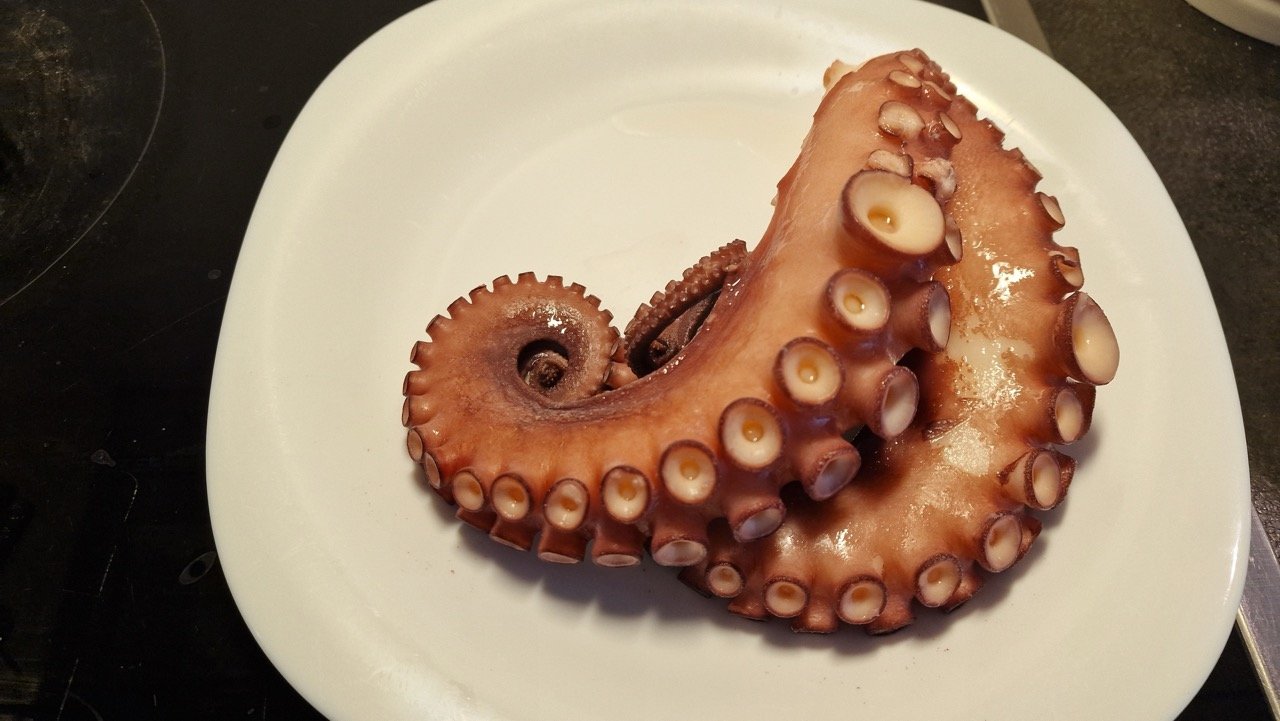
When cooking octopus, it’s worth knowing that it shrinks significantly in the process. So when you start preparing it, the octopus usually looks like a lot at first glance. Then, when you take it out of the cooking water, you’ll see how much there really is.
To illustrate this, in these two pictures you can see the same two octopus arms on the same plate. One is before cooking, after thawing, and the other is immediately after parboiling.