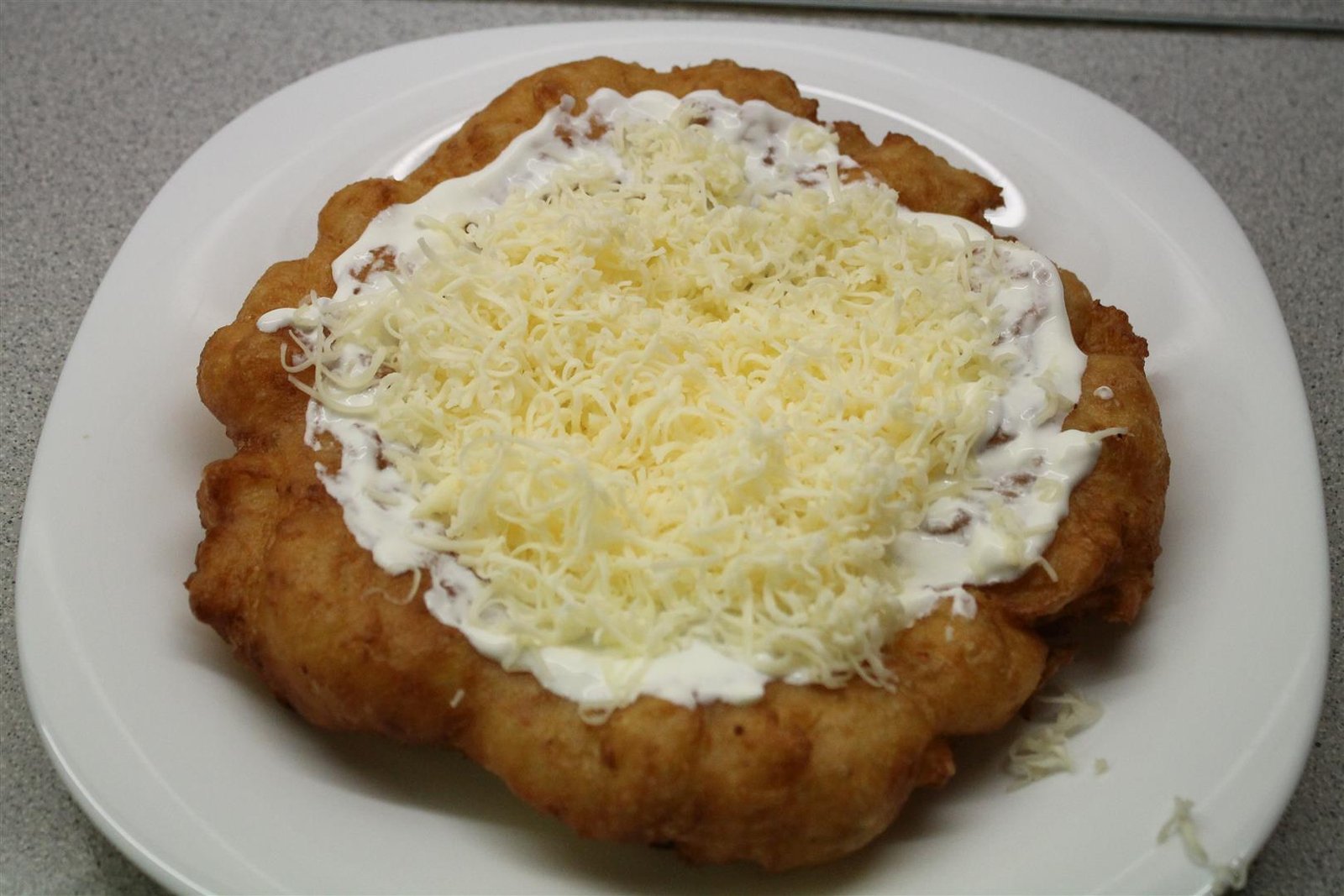
Potato lángos, or lángos made with potato, may be one of the very best of all lángos recipes. The boiled potato, yeast, and milk make it so light, fluffy, and soft that it is hard to resist.
At markets and food stands, in my experience, you come across real potato lángos relatively rarely. The reason is that it is a little harder to make than plain lángos, and all things considered, it probably comes out a bit more expensive too. Not only because of the ingredients, but in the case of a vendor, for example, once labor time is factored in as well.
But if you love to cook, and you are willing to get your hands messy at home for a good lángos, then I suggest you do not skip the potato lángos. You will not be disappointed. It will become a real family favorite, something you will have to magically put on the table by popular demand from time to time!
Potato Lángos Ideas
I think everyone has their own favorite topping when it comes to lángos. At the same time, since this is a market-style fast food, you cannot forget that most of us probably know it from food stalls. So with the toppings, too, we expect what we are used to there.
Salt and garlic are almost mandatory every time. For the garlic sauce, simply mix grated or pressed garlic with a little water or oil, and brush it over the lángos.
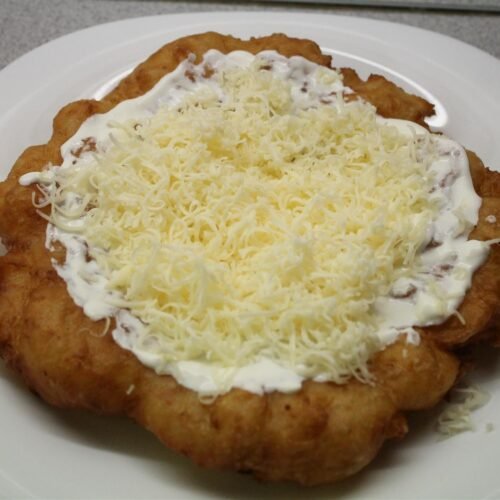
Classic toppings include sour cream and grated cheese, either separately or together. These days, of course, all kinds of lángos are available, but in the heyday of market food, lángos with cheese and sour cream was considered the luxury version of lángos. I admit, to this day, that is still my favorite.
And from here, your imagination can run wild. Potato lángos can really be served with anything and everything you feel like!
Potato or Non-Potato Lángos?
In this recipe, I describe how to make classic potato lángos from a dough made with milk. I think these are the two ingredients—namely the potato and the milk—that make this otherwise simple dish truly soft and a real experience.
Of course, there are many different recipes for lángos, and you can make it without potatoes too. Whether someone does that to save money or because they like it that way is another question. For me, real lángos is made with potatoes, and even this way it is still a fairly inexpensive dish. I do not think this is where you should cut costs. Though you can make delicious lángos without potatoes too.
But if you prefer, you can reduce the amount of potato, or even leave it out completely, and you can also replace part of the milk with water. In both cases, you will get a much crispier, less fluffy lángos.
Enjoy!
Potato Lángos
Ingredients
- 12 oz potatoes 350 g
- 3 ⅓ cups flour 400 g
- 1 ⅔ cups milk 400 ml
- 1 oz fresh yeast 30 g
- 1 tsp sugar
- 1 tsp salt
- Oil for frying and shaping
Instructions
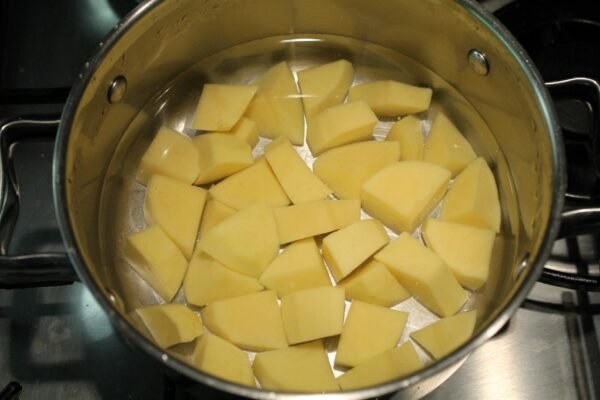
- To make potato lángos, first peel the potatoes, cut them into cubes, and put them on to boil in salted water.

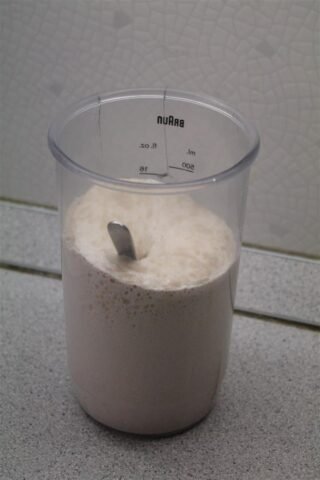
- Meanwhile, proof the yeast in a small bowl. To do this, add 1 tsp sugar, 1 tsp flour, and the yeast to 1/2 cup (100 ml) lukewarm milk. It will foam up in about 10 minutes.

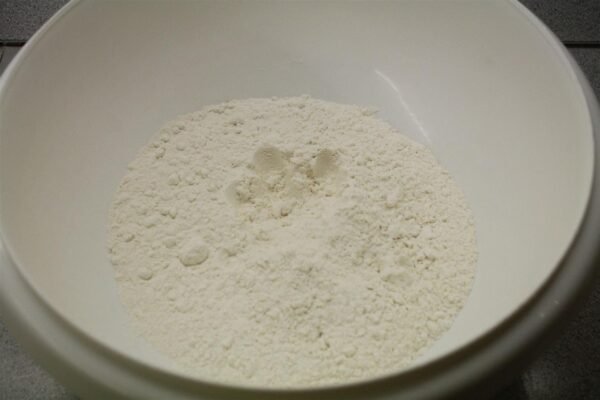
- In a larger bowl, for example a kneading bowl, sift in the remaining flour and mix it with the salt. I use 1 tsp salt for this, but of course this is a matter of taste. Lángos can also be salted after frying, so try it with less salt at first rather than more.
- Once the potatoes are cooked, meaning completely soft, and the yeast has foamed up, it is time to make the potato lángos dough.
- Drain the potatoes, and press the still-warm potatoes into the bowl of flour with a potato ricer. Add the remaining 1 1/4 cups (300 ml) lukewarm milk and the proofed yeast.
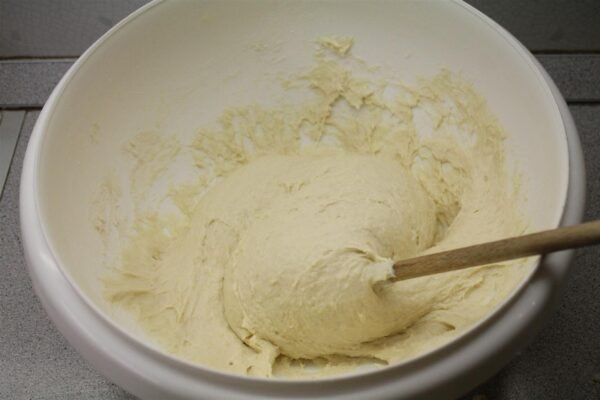
- Lángos dough, especially potato lángos dough, is quite soft. The easiest way to handle it is to beat it, so to speak, with a wooden spoon. This means holding the bowl with one hand and, with a larger wooden spoon in your other hand, striking the dough firmly toward yourself. It is not easy, but it is worth the effort. In a few minutes the dough will become smooth and even, and then you can stop.
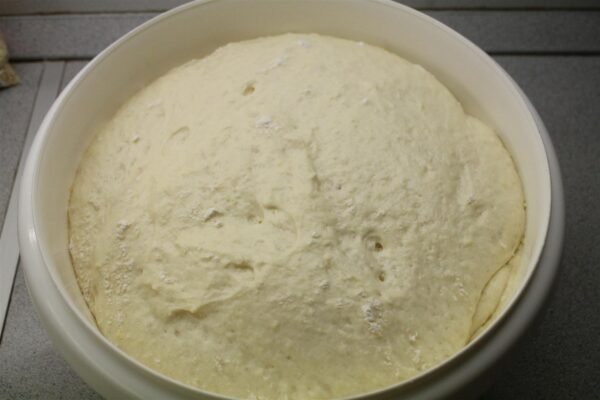
- Sprinkle the top with flour and let it rest, covered, for about 1 hour.
- As the last step, shape and fry the lángos. To do this, first start heating oil for frying in a larger pot. Lángos is fried in plenty of oil; the fat should be at least 2–2 1/2 inches (5–6 cm) deep.
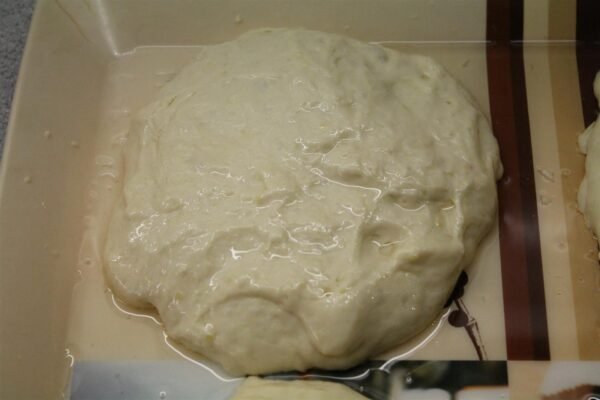
- With oiled hands, tear off roughly palm-sized pieces of the risen dough and gently shape them into balls. Put them on an oiled tray so they will not stick together.
- When the oil is hot enough, stretch the dough balls out with your hands. You can do this on the oiled surface, or by lifting the dough up. The thinner you stretch the middle, the crispier it will be. This is really a matter of taste.
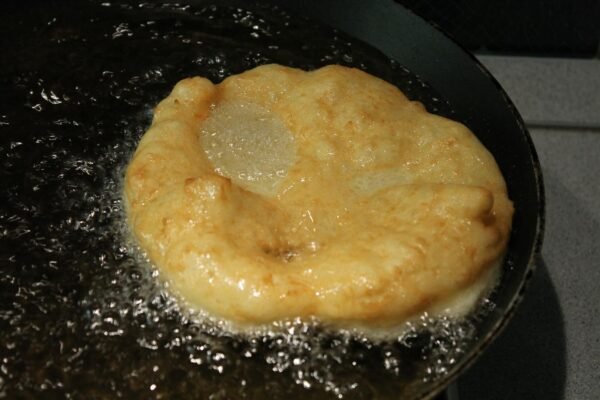
- Carefully place the dough in the hot oil and fry both sides until golden. It cooks very quickly, no more than 1–2 minutes per side, so watch it carefully so it does not burn.
- Take out the finished potato lángos and drain off the fat, as much as you can. Serve warm, however you like!