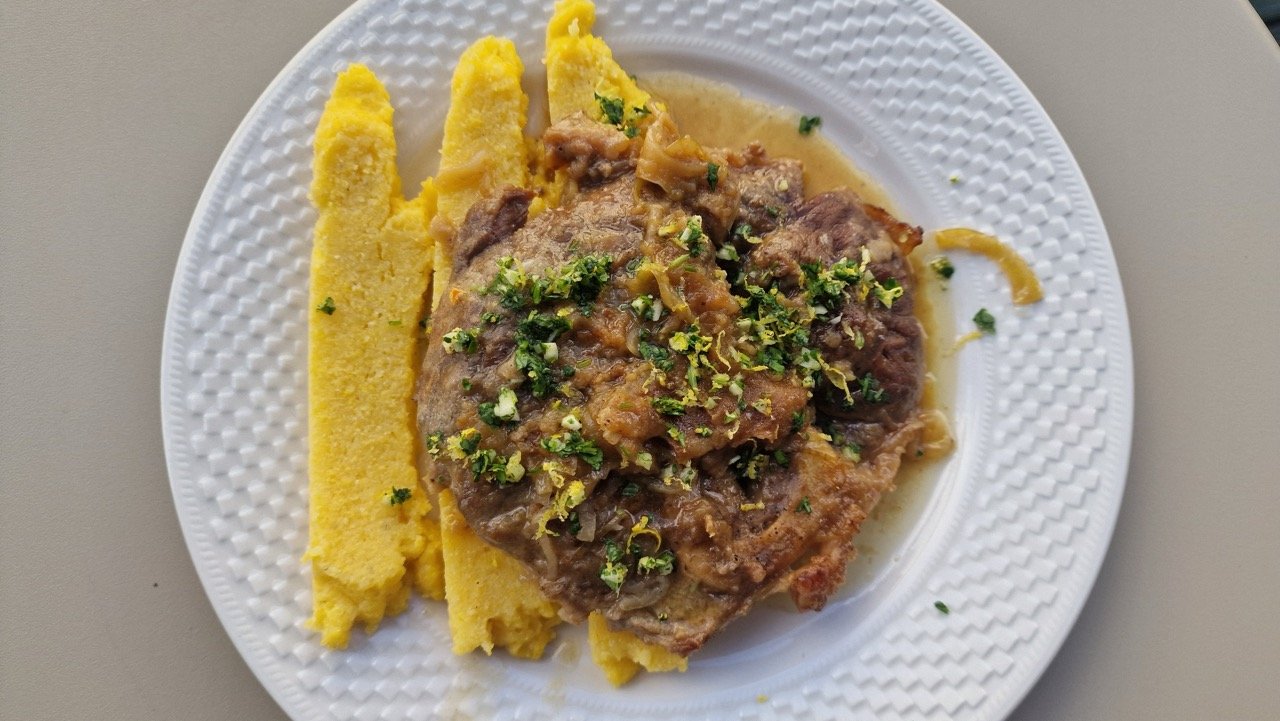
Osso buco is a truly special meat dish, and one that is becoming more and more widely known around the world. The name of the recipe—osso buco—has spread internationally, but what we usually mean by it is really ossobuco alla milanese, or Milanese osso buco, which is the recipe I’m sharing here.
In Italy, ossobuco is basically the general name for dishes made by slowly braising cross-cut slices of veal shank—more on that below the recipe. But as with everything in Italian cooking, this dish also has many local versions.
Milanese osso buco is braised in a white wine and onion sauce, then finished with the essential, characteristic gremolata, a fresh seasoning mix made with garlic, parsley, and lemon zest. In Lombardy, around Milan, even what you serve it with matters—more on that below the recipe as well.
Osso Buco alla Milanese
Ingredients
For the meat
- 4 pieces osso buco cross-cut veal shank, about 2.2–2.6 lb (1–1.2 kg)
- 2 onions about 9 oz (260 g)
- 1/4 cup 60 ml white wine
- 1/4 cup 60 ml extra virgin olive oil
- 3 1/2 tbsp 50 g butter
- About 6 tbsp 50 g flour
- 2 1/2 cups 600 ml stock
- Salt
- Ground black pepper
For the gremolata
- 2 cloves garlic
- 1 bunch parsley
- Grated zest of 1 lemon
Instructions
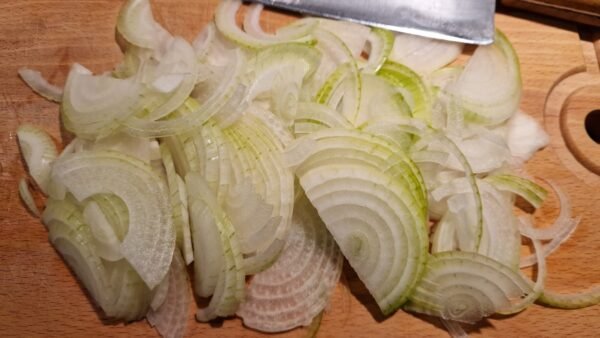
- Peel and slice the onions.

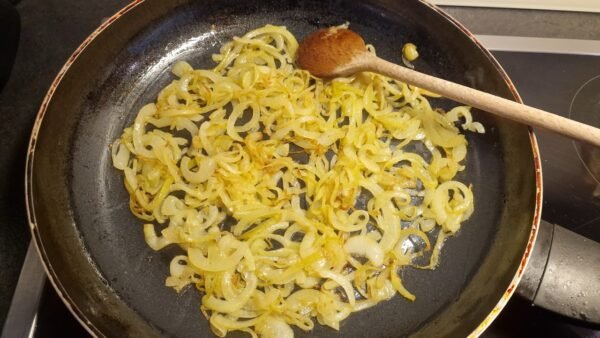
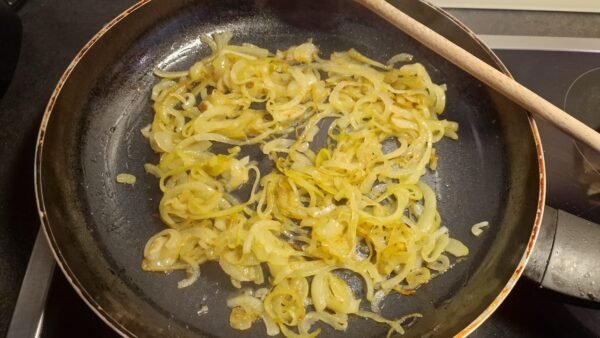
- In a large skillet or wide pot, cook the onions in half of the oil over medium heat for 20 minutes, stirring occasionally. They should be golden, but not too browned.
- Add half of the white wine, stir, and cook over low heat for another 10 minutes. When done, set the onions aside on a plate.
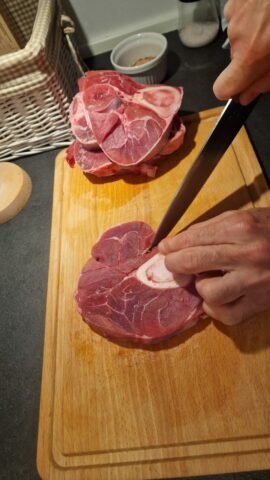
- While the onions are cooking, prepare the veal shank. Cut into the tendons around the edge in 3–4 places with sharp scissors or a knife so the meat curls up as little as possible during searing and cooking. Season both sides of the meat with salt and pepper.

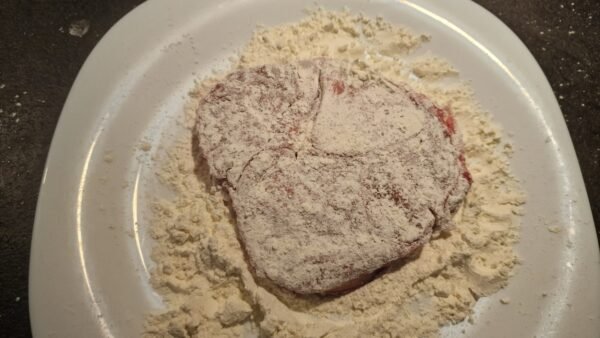
- Dredge the meat slices in flour, shake off the excess, and place them on a plate.
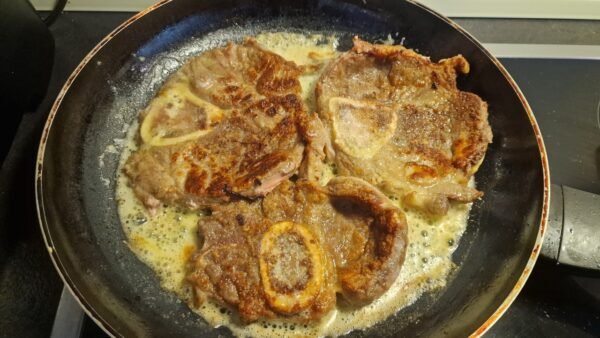
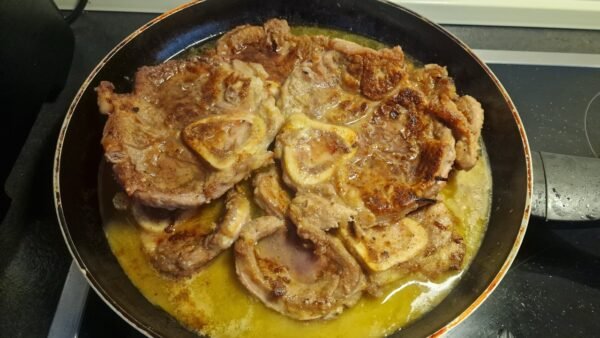
- Pour the remaining oil into the pot used for the onions, and add the butter. Melt the butter over high heat, then add the meat slices. Brown them on both sides, about 3 minutes per side. If the meat does not fit in the pot all at once, as in my case, brown it in two batches.
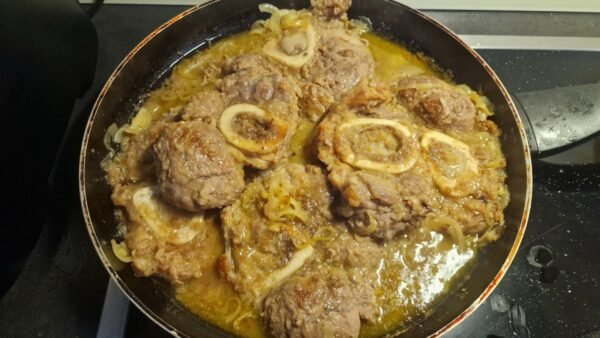
- Add the remaining wine, pour in enough stock to almost cover the meat, and add the onions. If you are using unsalted stock, add more salt at this point. If the meat does not fit in a single layer, you can stack the slices while they cook. But only add enough stock to just cover the first layer.
- Start cooking it covered, over low heat. After half an hour, carefully turn the meat over. If your skillet does not have a lid, use aluminum foil. Be careful that the meat does not fall apart when turning, and that the marrow does not come out. If you stacked the meat slices, move the top ones to the bottom when turning so every slice becomes tender evenly.
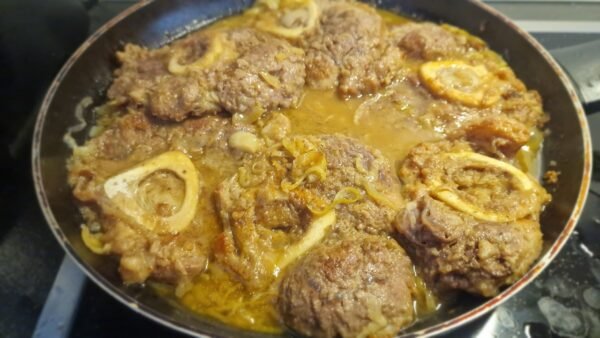
- Cook for another 45–60 minutes, until the meat is completely tender. This makes the total cooking time 75–90 minutes. It depends on the thickness of the meat slices, and even on the skillet. It is better to cook it a little longer, until it is completely soft and fall-apart tender, than to leave it even slightly chewy.
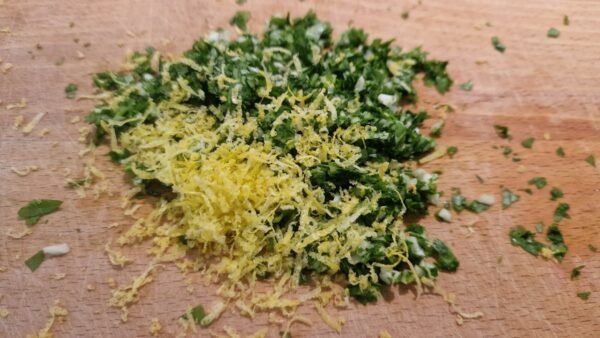
- While the meat is braising, make the gremolata. Grate the lemon zest, peel the garlic, and smash it with the flat side of a large knife. Remove the thicker stems from the parsley. Finely chop the garlic and parsley with a sharp knife, then add the grated lemon zest.
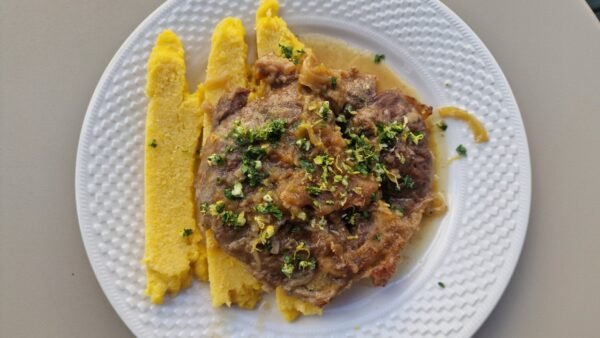
- When serving, sprinkle the gremolata over the meat slices. Classically, it is served with Milanese saffron risotto or polenta.
Notes
What Kind of Meat Is Osso Buco Made From?
It’s not only a question of what kind of meat, but also how that meat is prepared. The meat itself is veal shank. But the preparation is very important—in fact, essential. The shank is cut crosswise into slices about 3/4 inch (2 cm) thick. This creates its characteristic look, which also makes the Italian name of the dish easier to understand, as explained below.
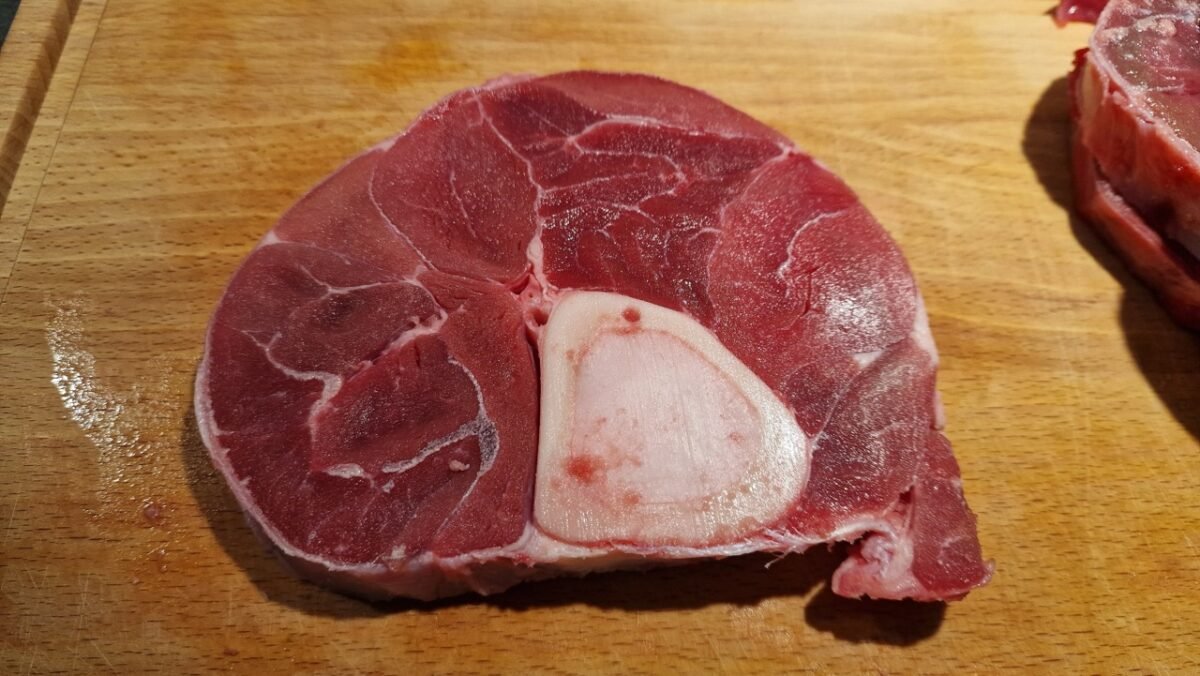
As a result, osso buco meat is not something you can simply walk into a store and buy in most parts of the world. In fact, outside Italy, it may not usually be part of the standard selection at butcher shops or grocery stores. You either need to keep your eyes open in case a store puts it in its special-offer selection, or order it specifically from your butcher.
What Does Osso Buco Mean?
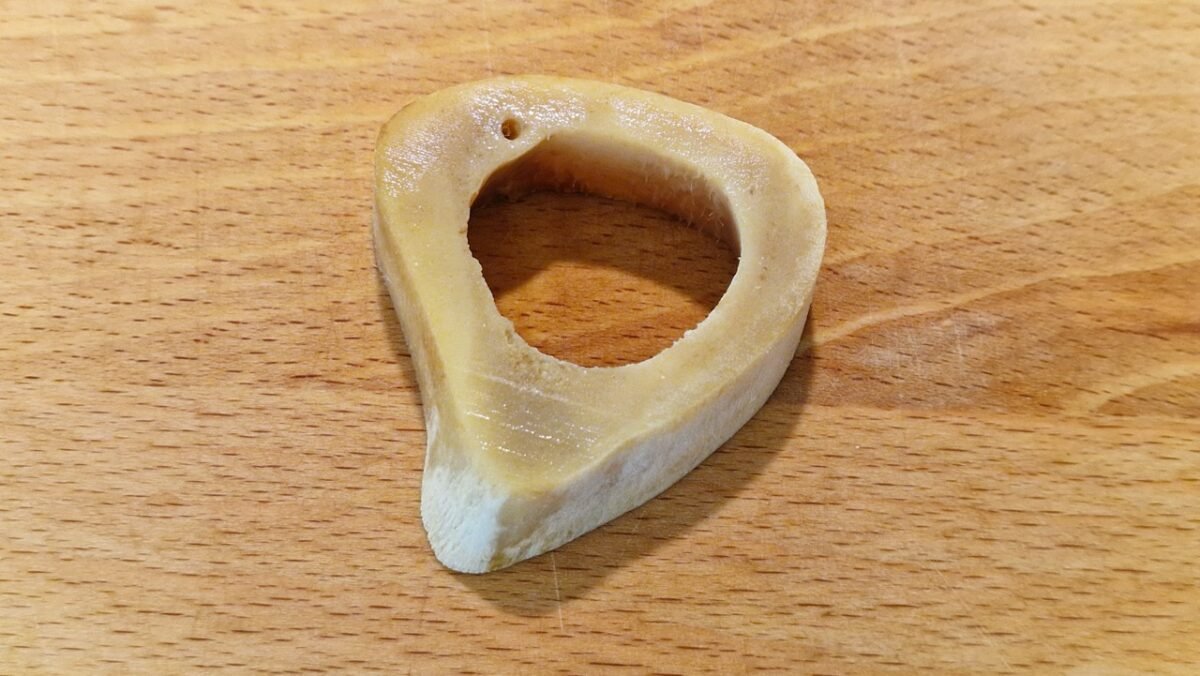
Osso buco literally means hollow bone. That is a pretty descriptive expression when you look at veal shank sliced crosswise this way. The shank bone in the center of the round meat slice, with the marrow inside, is so characteristic of this dish that anyone who has seen or eaten it once can tell at a glance that this is osso buco. And as the marrow shrinks during cooking, then gets eaten together with the meat, what is left at the end is truly a round, hollow bone.
By the way, Italians usually write the name of the dish as one word. So in Italian, it is less often osso buco and more often ossobuco, also written as one word in the plural: ossibuchi.
The Stock
The stock you cook it in is part of the perfect flavor of osso buco. With water, it will not be nearly as flavorful as it is with the other ingredients in this recipe. And in a dish of this quality, I think a bouillon cube should not even come into the picture. I assume you don’t want to ruin expensive, delicious veal shank with an industrial powder made from palm fat and flavor enhancers.
Making stock, however, is not a big deal at all; you just need to factor in an extra 2 hours of cooking time. On the one hand, you can make it the night before, and on the other, during those 2 hours you really do not need to do anything with it.
For truly full flavors, use some kind of bone stock—chicken, pork, or beef—to make the osso buco. For tips, take a look at my chicken stock recipe. But it is very simple: put a few bones and soup vegetables (i.e. carrots, celery, onions) in water and bring them to a boil, skim off the foam after boiling, then cook covered over very low heat for 2–3 hours. You do not even need to season it—here, the stock itself is the seasoning.
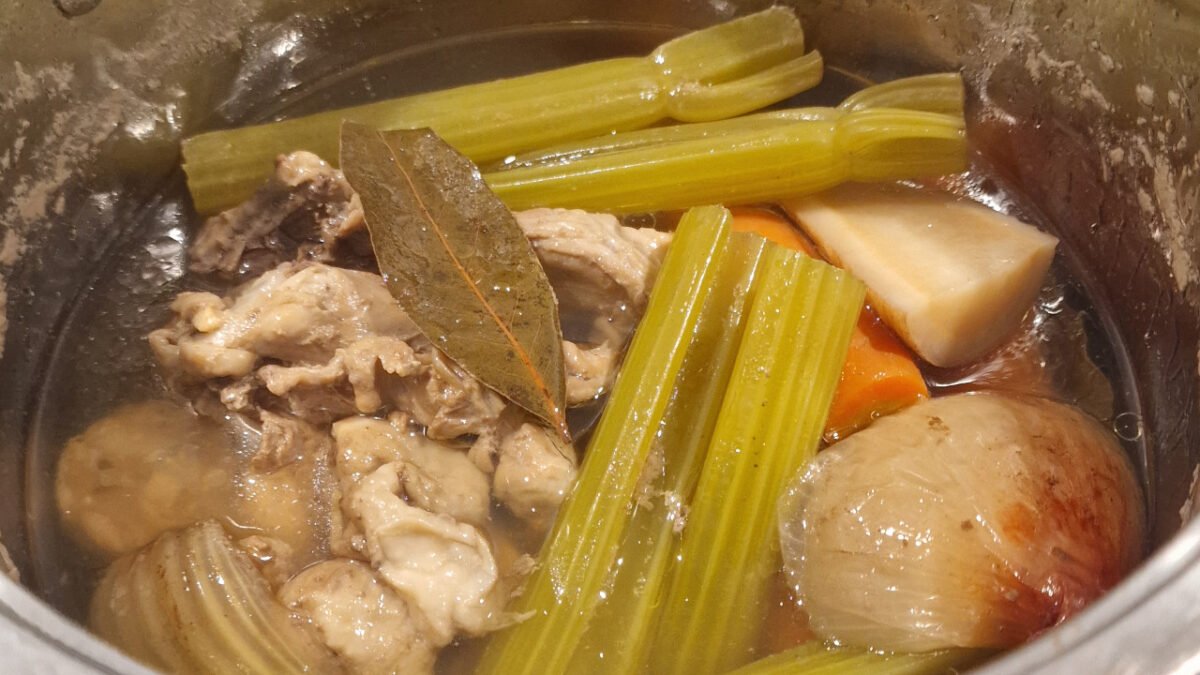
For example, for this osso buco recipe, the night before I used chicken backs I had cut off from chicken thighs earlier and put in the freezer, a few carrots, a few stalks of celery, a leftover half onion, and 2 bay leaves, and cooked them for 2 hours.
Serving Milanese Osso Buco
With Italians, everything has its own order, especially when it comes to food. It is no different with ossobuco alla milanese. Even the preparation itself—the recipe you are reading here—is Milanese style, since sliced veal shank can of course be seasoned in other ways as well.
But perhaps even more interesting is that this dish is not served with just anything.
In the version said to be truly authentic, risotto alla Milanese is the essential accompaniment. It is a very simple risotto, containing practically only saffron, and the beautiful yellow color it gets from that is an indispensable companion to original Milanese ossobuco in almost every photograph.
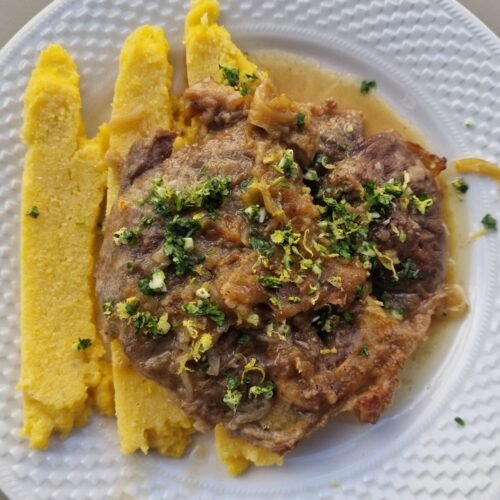
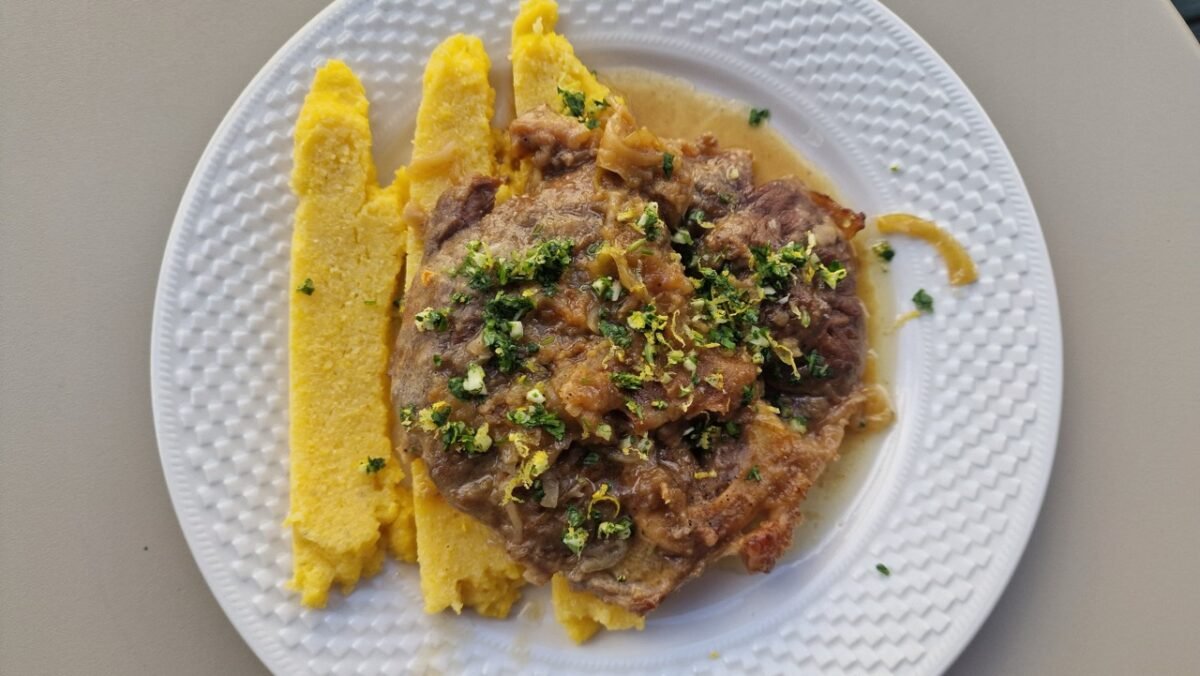
Perhaps precisely because of that yellow color, another common side dish is simple polenta. It also goes very well with it, whether you cook it firmer and sliceable, or soft and pourable.
But whatever you serve it with, I guarantee that Milanese osso buco will win you over, and you will hardly be able to wait until it is on the menu at home again!
Source used for the recipe: Giallo Zafferano ossobuco alla milanese recipe.