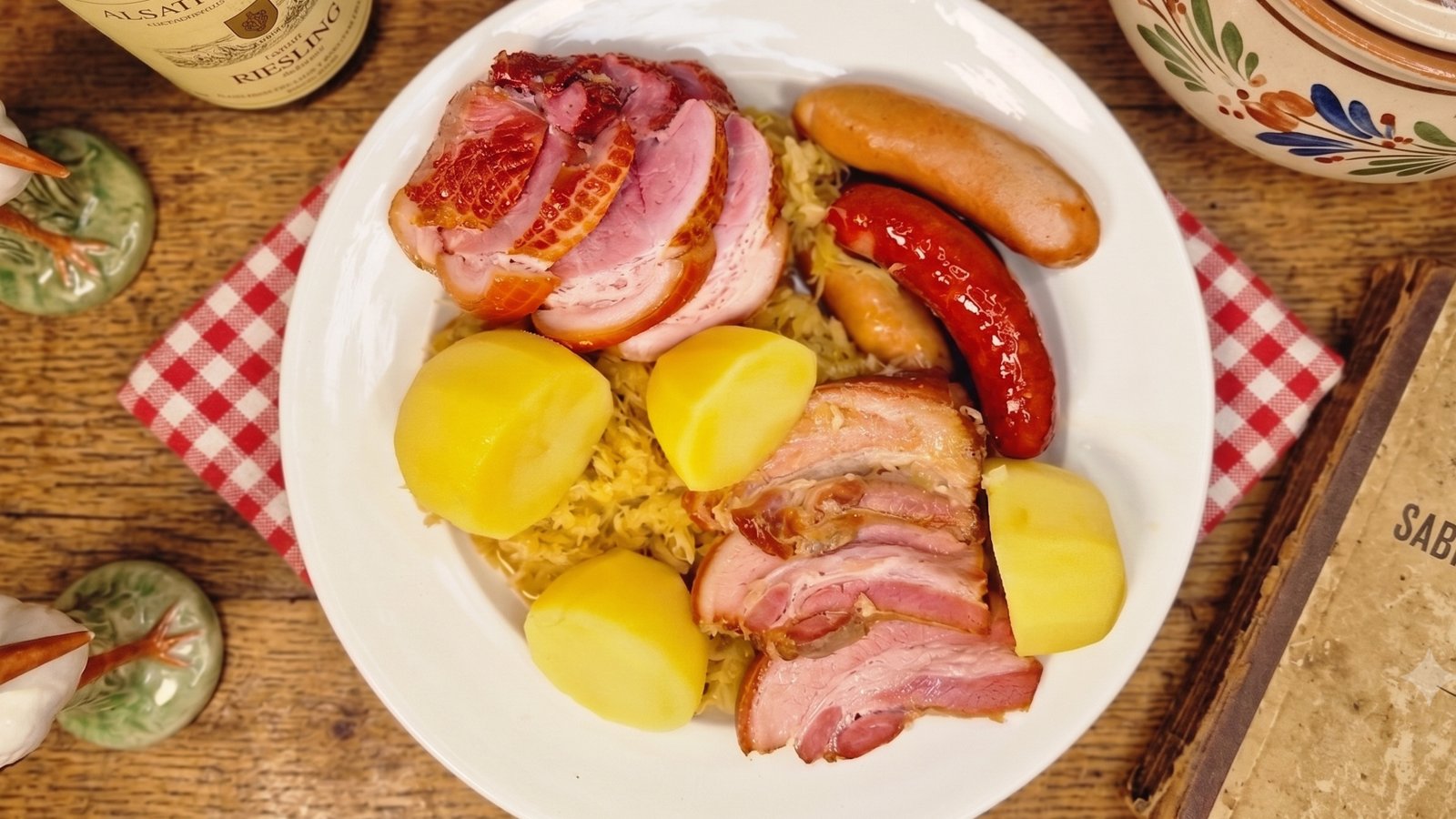
Choucroute garnie [pronounced roughly shoo-KROOT gar-NEE] is one of the best-known and most distinctive dishes of Alsatian cuisine. It’s actually very easy to make, but the huge amount of salted and smoked meat, along with the sausages, still makes it a true special-occasion dish.
Since it’s an Alsatian dish, it’s also often called choucroute alsacienne. You can read a little more about what these names mean below.
Two Interesting Facts
There are two interesting facts about choucroute garnie that are definitely worth mentioning.
- The name itself simply means garnished sauerkraut. In French, choucroute means sauerkraut, while garnie means garnished or generously topped. As you’ll see from the recipe, the sauerkraut is essentially garnished with all kinds of delicious pork and sausages—which is, naturally, the reverse of how we usually think about it, since we would be more likely to serve the sauerkraut as a side for the meat. Following the same logic, choucroute alsacienne means Alsatian sauerkraut, or choucroute prepared Alsatian-style.
- Choucroute garnie is one of those rare recipes that is almost impossible to make in precisely its original form outside its place of origin—but in my opinion, it can be considered just as perfect and authentic even when you don’t make it with authentic ingredients.
Choucroute Garnie Ingredients
Let’s take a closer look at that last statement. The ingredients for choucroute garnie are extremely simple, yet according to authentic recipes and descriptions, it can be made almost exclusively with Alsatian ingredients.
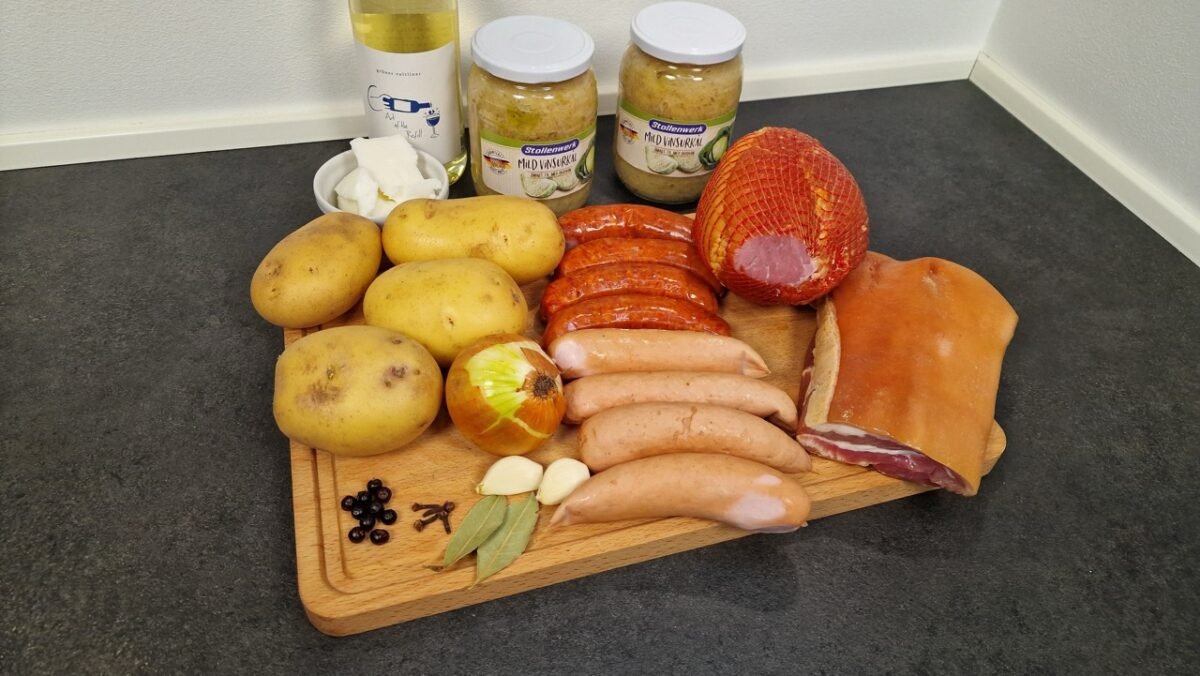
But I think we can take that rule with a pinch of salt—in this case, naturally, alongside the choucroute. Just because the sauerkraut isn’t Alsatian doesn’t mean the dish will be any less delicious, and I think it can still remain true to tradition. Sure, it won’t taste exactly the same as it does in Alsace, but we can be certain that even there, choucroute is bound to taste a little different from one home to the next.
All the more so because this is not a single recipe, but rather a collection of suggestions for how to serve sauerkraut “garnished” with all kinds of delicious salted and smoked meats.
Sauerkraut
The most important ingredient is the sauerkraut itself. Truly authentic choucroute is made with Alsatian sauerkraut, but I suspect you won’t be ordering that either, unless you happen to be in Strasbourg or the surrounding area.
The only thing I’d add here is that you should use the least sweet sauerkraut you can find. This isn’t the sweeter, German-style kind of sauerkraut dish; here, the tangy flavor of the sauerkraut is very much welcome.
The defining feature of the protected Choucroute d’Alsace is precisely its balanced flavor, which is neither overly acidic nor sweet. Traditionally, sauerkraut that is too sour or salty is rinsed before being added to the dish.
Wine
In theory, choucroute is made with an Alsatian white wine, typically Riesling or Sylvaner. But I think we can pause here again and say that it will be every bit as delicious if, instead of ordering an expensive French wine, we use a good substitute that is available locally.
Riesling and Sylvaner are perfect, but in this recipe, for example, I actually used Grüner Veltliner. And I think even an Alsatian would have licked every last finger clean afterward!
Smoked Meat and Sausages
And this brings us to the other essential component of choucroute, which is also impossible to source in its fully authentic form far from Alsace.
You really need to think of this as a special-occasion dish. The sauerkraut is served with a lot—and a lot of different kinds—of smoked meats and sausages. By that, I mean you can plan on as much as 9–10½ oz (250–300 g) of smoked pork and one or two sausages or frankfurters per person.
If you want to make it truly authentic, use Strasbourg sausage (which is more like a type of frankfurter) and Montbéliard sausage. But again, let’s be realistic: it will be delicious with whatever is available locally. Frankfurters—preferably thicker, more flavorful ones—and a sausage suitable for simmering, rather than a paprika-seasoned sausage, are perfect here.
As for the salted and smoked meats, be creative and see what you can find. Smoked pork belly, bacon, pork shoulder, pork hock, salt-cured pork loin—any of these can work.
Potatoes and Seasonings
The other ingredients in choucroute garnie are potatoes and seasonings. The potatoes are essential—leaving them out is not an option.
As for the seasonings, juniper berries and bay leaves are almost indispensable, but here, too, you can adapt the recipe to your taste. I also added cloves.
Be careful with the salt. Both the sauerkraut and the smoked meats are very salty, so you generally don’t need to add any extra. I used salt only in the water for boiling the potatoes.
Rendered Fat (Not Oil)
The French don’t mess around, and they haven’t fallen for the “healthy cooking oil” story. A proper choucroute is made with lard, duck fat, or goose fat—not oil.
How to Serve Choucroute Garnie
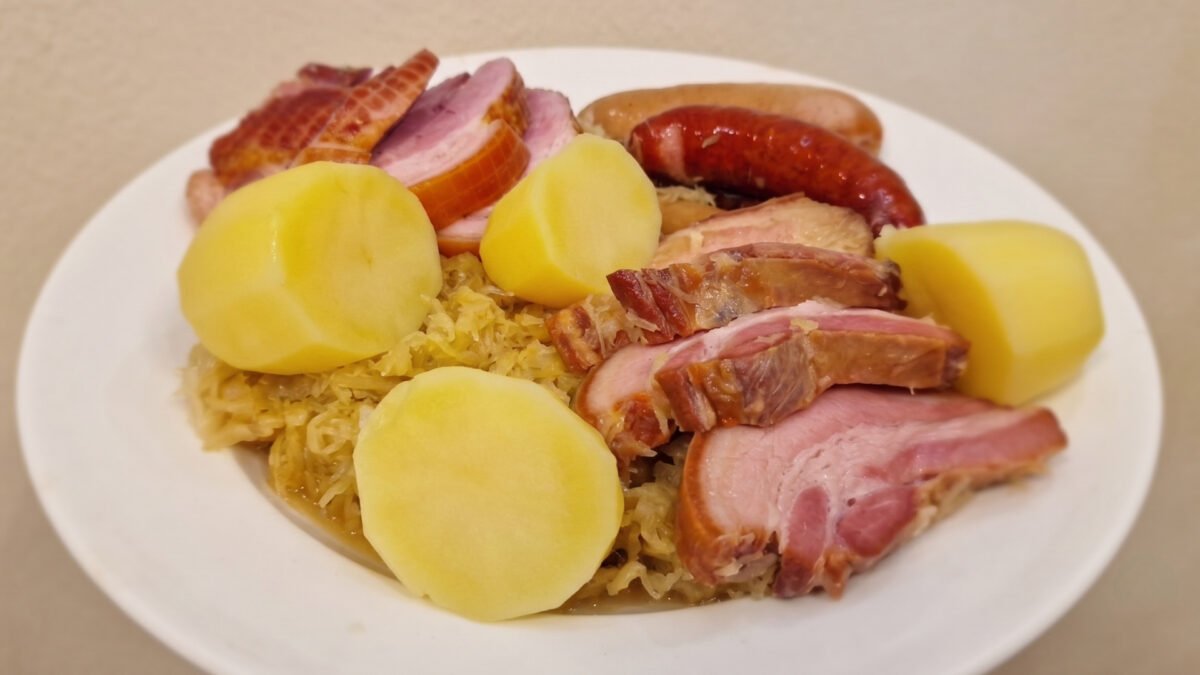
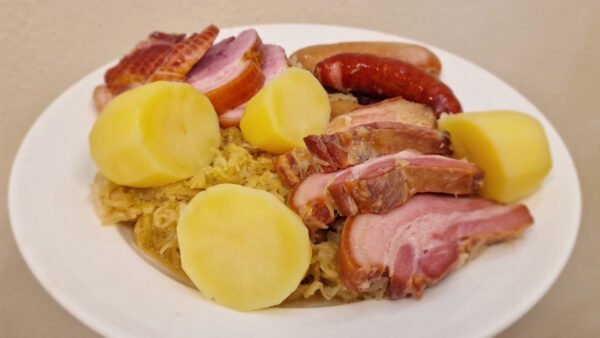
Choucroute garnie is a special-occasion dish, but there is no need to do anything elaborate when serving it. Typically, the sauerkraut is spooned onto a large platter while still hot, then topped with the meats and potatoes. From there, everyone can take whatever they like and as much as they want.
The potatoes are served in large pieces. They are boiled whole—or halved if they are large—and then served on top of the sauerkraut.
The meats can be cut into smaller pieces before cooking so they become tender more quickly. Before serving, it is best to slice them or cut them into individual portions.
Not So Much a Recipe—More of a Suggestion
Naturally, you’ll find what can be considered an authentic Alsatian choucroute recipe below. Even so, it’s important to say that with this dish, the exact recipe isn’t really the point.
The success of the finished dish will not depend on exactly how many ounces or grams of meat or sauerkraut you add. It can be delicious this way, and it can be delicious that way. And it can be authentic when prepared in many different ways.
Sauerkraut slowly braised in white wine with seasonings, good-quality smoked and salted pork cooked along with it, plus frankfurters, sausages, and potatoes. That is choucroute garnie. Within those boundaries, however, you can make it however you like, using whatever quantities and specific ingredients you prefer—and whatever you happen to find.
Alsatian Choucroute Garnie from an American Perspective
Let’s pause for just a moment and take a step back. Let’s look at this Alsatian specialty through the lens of traditional American cooking and tastes, especially those shaped by German and Central European influences.
Braised sauerkraut, smoked pork cooked along with it, frankfurters, sausages, and boiled potatoes.
I think that in this form, it would feel perfectly at home on many American tables—heaven forbid, it could almost pass for a local dish in some parts of the country. And because of that, I can almost guarantee that if you enjoy traditional American dishes built around sauerkraut, smoked pork, and sausages, you will love choucroute garnie, too!
Choucroute Garnie
Ingredients
For the Sauerkraut
- 1.2 kg sauerkraut 2 lb 10 oz
- 1 onion
- 2 cloves garlic
- 3 oz lard, goose fat, or duck fat 80 g
- 1¼ cups dry white wine 300 ml; for an authentic version, use Riesling or Sylvaner
- ¾ cup water or cooking liquid from the smoked meat, or stock; 200 ml
- 10 juniper berries
- 2 bay leaves
- 4 cloves whole
For the Garnish
- 4 potatoes medium to large
- 4 frankfurters
- 4 sausages
- 2.2 lb smoked meat 1 kg
- saltto taste to taste, only for the potato cooking water
Instructions
Preparing the Meats
- If you are using any large pieces of smoked meat, it is a good idea to precook them in barely simmering water for 1–3 hours, depending on their size.
Preparing the Sauerkraut
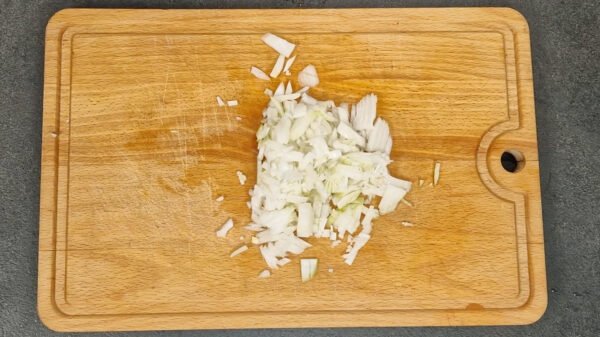
- Peel the onion and garlic. Finely chop the onion.

- Taste the sauerkraut. If it is too sour and/or salty for your taste, rinse it with water—more than once if necessary—to mellow its flavor.
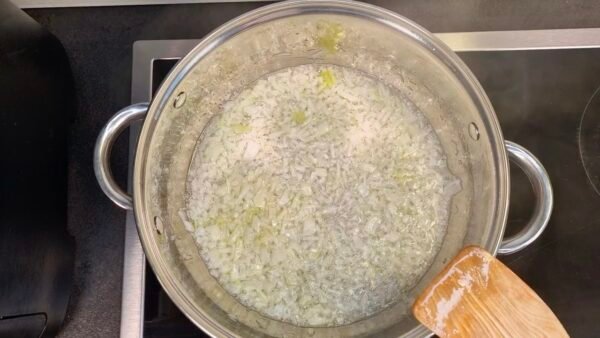
- Heat a wide pot over medium-high heat and add the rendered fat. Sauté the onion for a few minutes.

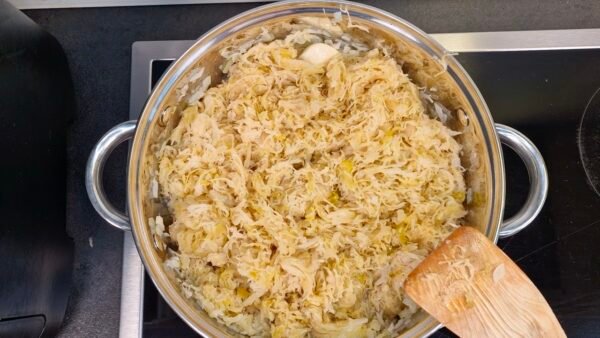
- Add the seasonings to the fat—the whole garlic cloves, juniper berries, bay leaves, and cloves—then add the sauerkraut. Stir to combine. Pour in the white wine and water.If you precooked the pork, use its cooking liquid instead of the water.
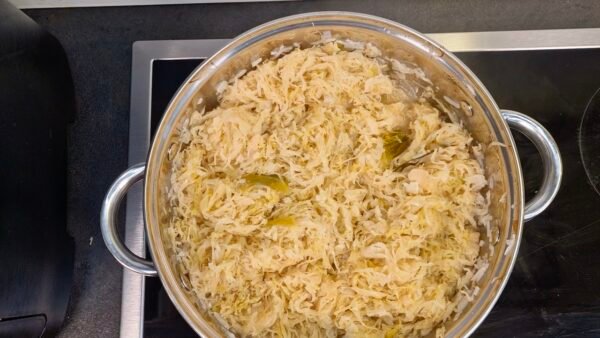
- Cover and cook over low heat for about 1½ hours, until the sauerkraut has softened slightly but still has a definite bite.
Finishing the Choucroute Garnie
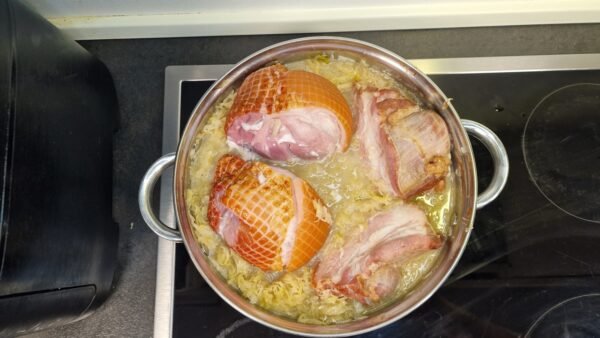
- Add the smoked meats to the sauerkraut, cover, and cook over low heat for 1 hour.
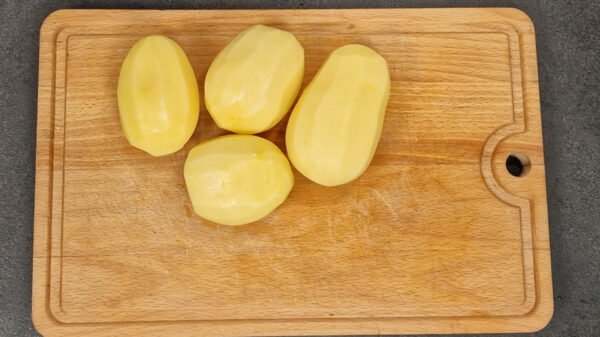
- Meanwhile, peel the potatoes and boil them whole—or halved if they are large—in salted water until tender, about 30 minutes.You can also boil the potatoes in the cooking liquid from the meats. Or, if there is a lot of liquid in the sauerkraut pot, add some of that to the potato water.
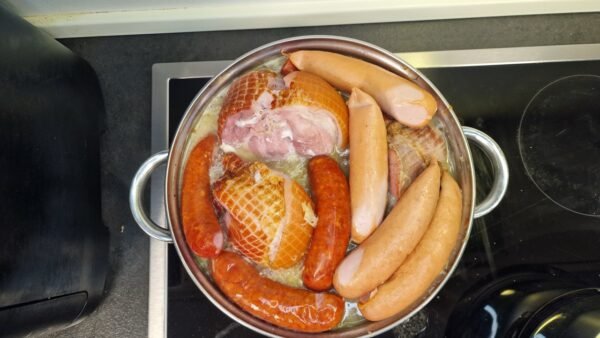
- Add the sausages and frankfurters to the sauerkraut at the very end. Cook for another 15–20 minutes.
- When everything is done, spoon the sauerkraut onto a large platter. Arrange the sausages and frankfurters on top, along with the smoked meat—sliced or cut into serving-sized pieces—and the potatoes. Serve hot.