Chimichurri [pronounced roughly chee-mee-CHOO-ree], also called salsa chimichurri, is an Argentine parsley and garlic sauce often served with steaks and roasted meats.
It’s very easy to make, and perhaps surprisingly, it really does go beautifully with just about any steak. It isn’t the kind of sauce many of us picture when we think of steak. Essentially, it’s finely chopped parsley, scallions, garlic, and other fresh herbs in oil. But spoon it over the meat, and the aroma alone is heavenly. Chimichurri sauce makes an already wonderful steak feel like something special.
How to Serve Chimichurri
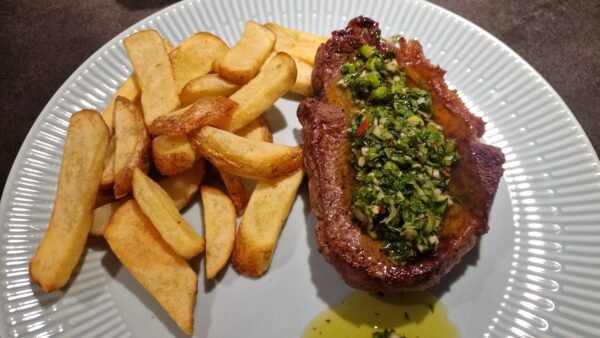
Chimichurri may be the best-known Argentine recipe around the world. It is, first and foremost, an extremely popular sauce for steak in Argentina. It’s delicious with any beef steak. Try it with a sirloin steak, for example—that’s how I served mine.
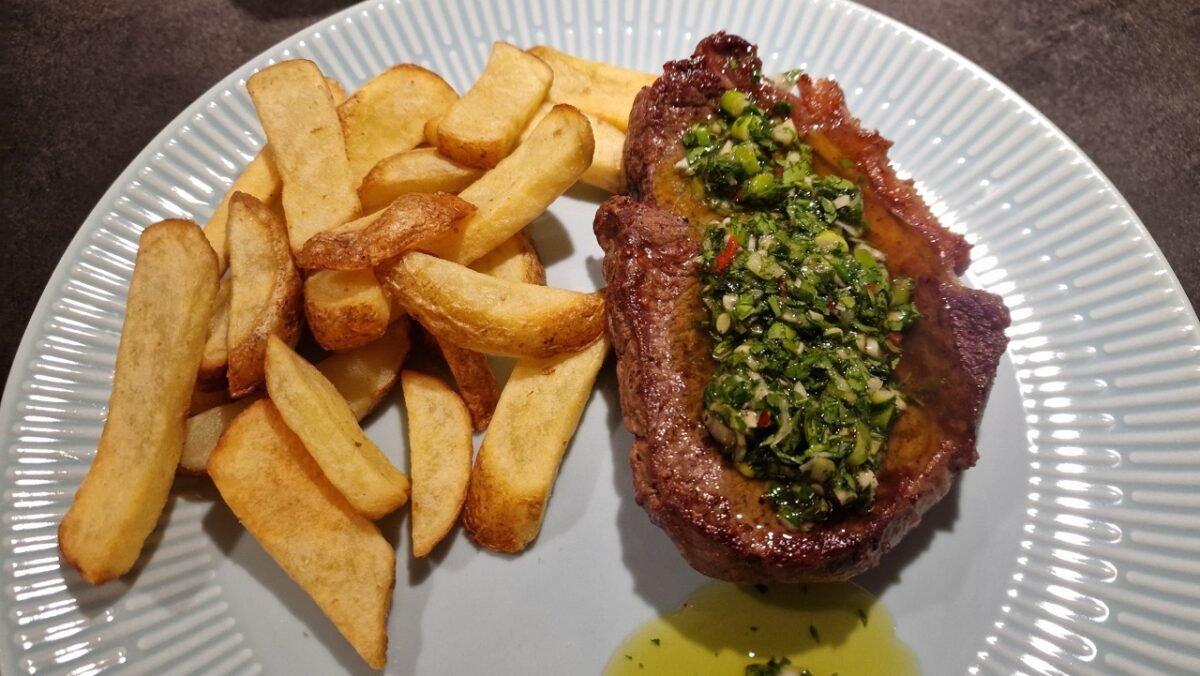
But this fresh, herbaceous sauce goes well with almost any roasted or grilled meat. It’s an excellent match for roast pork or even chicken.
Chimichurri benefits from a little time in the refrigerator after you make it. Ideally, prepare it the day before, or in the morning if you’re serving it that evening, and let the flavors come together. Take it out of the refrigerator an hour or two before serving, and serve it at room temperature.
Because this really is such a fresh sauce, though, don’t store it for more than 48 hours. After that, it loses its freshness and much of its flavor.
An Authentic Chimichurri Recipe
As I mentioned, this is perhaps Argentina’s most popular recipe, often made and served with all sorts of meats. So don’t expect there to be one single, truly original chimichurri recipe. There are almost as many versions and ways to season it as there are households.
What I’m sharing here is a fairly typical chimichurri recipe. Of course, you can vary it; see the detailed ingredient notes below for ideas.
Once you make it, you’ll see just how much room there is to experiment. Go by what you have at home, what you can find, and what tastes good to you and your family.
If I had to give you one rule of thumb for making it—and you can certainly break it—it would be this: Measure out roughly equal volumes of chopped parsley, finely chopped scallions, and olive oil. Here that means ½ cup (120 ml) of each. Then season the mixture to your liking.
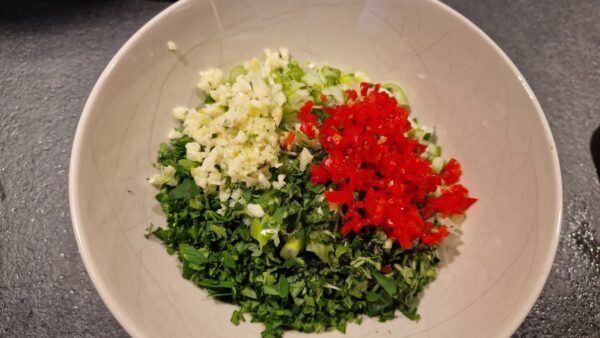
One note: Don’t use the ingredient photo to judge the quantities. I arranged it for the photo; the published recipe uses more parsley and oregano, and less chile.
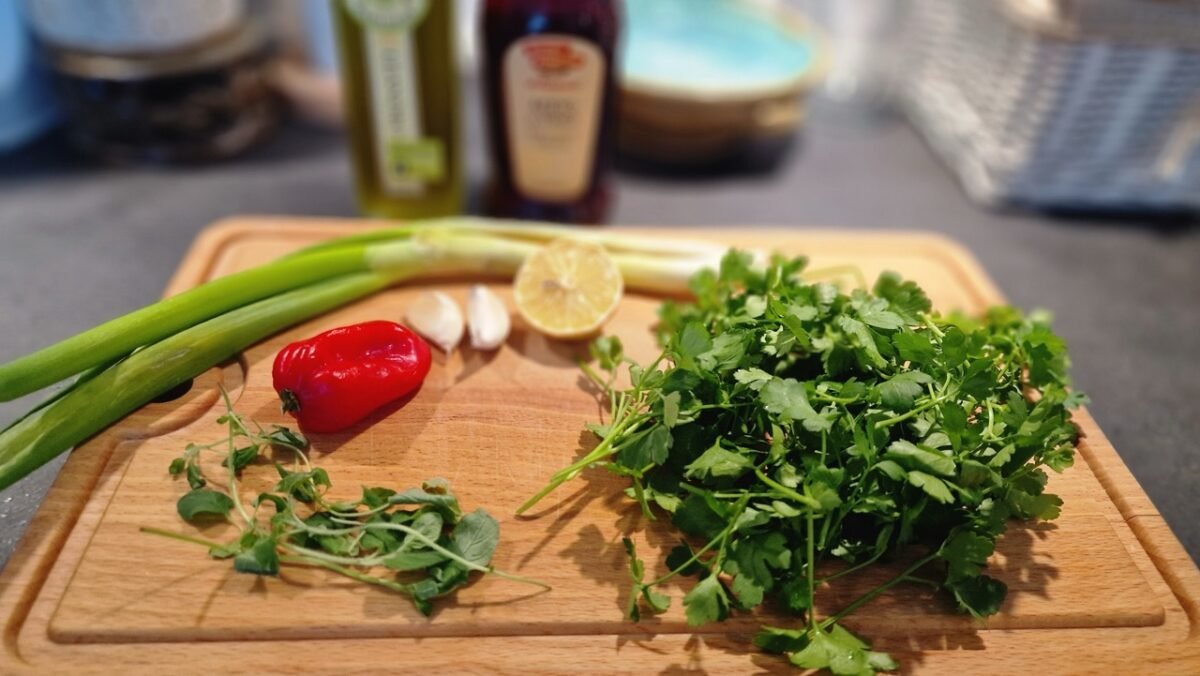
Chimichurri Ingredients and Substitutions
To be honest, even in an area with fairly well-stocked stores, it wasn’t easy to find every ingredient, especially fresh oregano. So I wanted to explain what you can substitute, and to reassure you that you don’t need to worry too much if you can’t buy everything.
Keep in mind, of course, that changing the ingredients changes the flavor. And with such a simple recipe, the quality of what you use has a particularly big effect on the final sauce.
- Fresh parsley: This is the heart of chimichurri. It’s the one ingredient I wouldn’t replace.
- Fresh oregano: Its flavor is important, but you can use dried oregano if fresh isn’t available.
- Fresh chile: The same goes for the chile: use dried if you can’t get fresh. It’s there more for its flavor than its heat, though, and dried chile can’t quite replace that fresh flavor. That’s why the ribs and seeds are generally removed.
- Scallions: They’re delicious here, but shallots also work. You could even use a little regular onion, though that would be my last choice; use less of it.
- Olive oil: A generous amount of oil is the base of chimichurri. There’s an interesting pattern in Argentine recipes: They often point out that olive oil isn’t the original choice, then say the sauce tastes better with it and use it anyway. It may not be traditional in the centuries-old sense, but its flavor really suits this sauce, and many people in Argentina make it this way today. You can use another kind of oil if you prefer.
How to Make Chimichurri
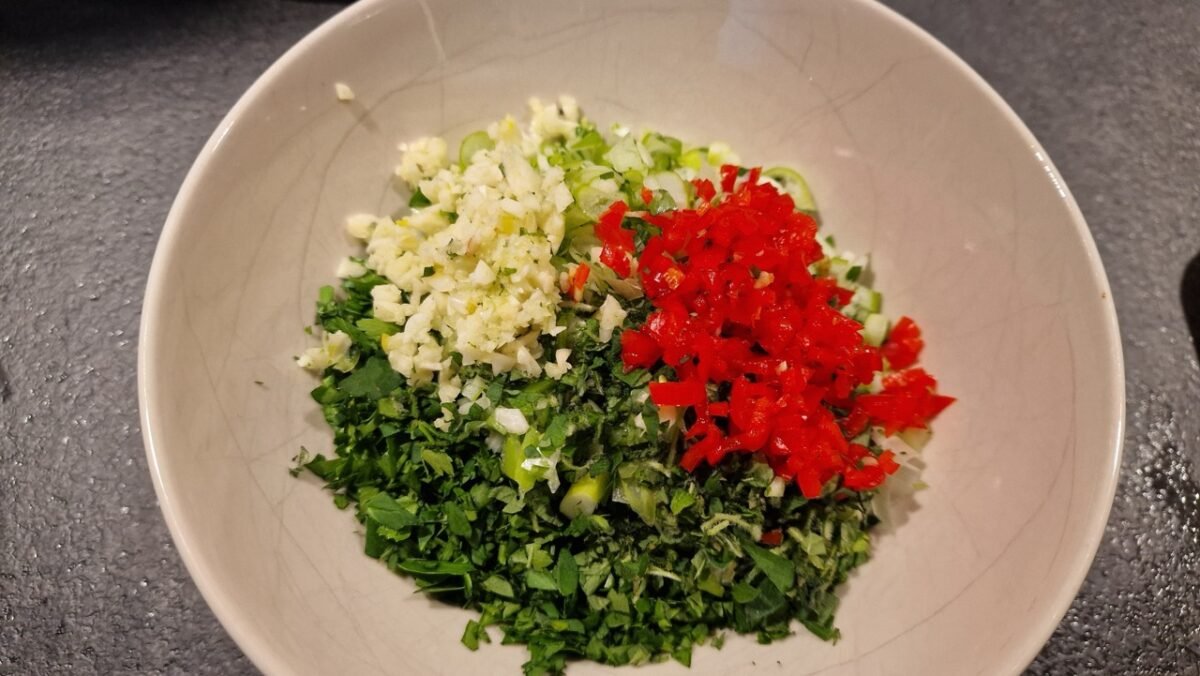
The herbs, chile, scallions, and garlic all go into chimichurri finely chopped. There are essentially three ways to do it:
- Chop everything with a knife. This is the most authentic approach and perhaps the best way to get the character of the original sauce. It’s how I made mine, and I recommend it, even if it means a few extra minutes in the kitchen.
- Use a mortar and pestle. That works too, though the result will be a little more like Italian pesto. It is sometimes made this way in Argentina, but you may not want to go to the trouble.
- Use a food processor. This is the easiest and fastest option. Just know that you’ll end up with something closer to a purée than a traditional chimichurri sauce. Unless you really can’t stand chopping, I would skip this one.
A Note on the Measurements
This is a simple recipe, and ingredients for sauces like this are often measured by volume—cups, half cups, and the like.
I’ve given both US and metric quantities below. For the volume measures, I use a standard US cup as approximately 240 ml, so ½ cup is approximately 120 ml. I’ve included weights and ingredient counts where they help you work out how much to buy.
Chimichurri
Ingredients
- 1 bunch fresh parsley about ½ cup finely chopped (about 27 g)
- 2 scallions green onions, about ½ cup finely chopped (about 45 g)
- ½ cup olive oil 120 ml
- 2 cloves garlic
- 1 fresh chile pepper small
- 4 sprigs fresh oregano about 2 teaspoons finely chopped (about 2 g)
- 1 tsp lemon juice 5 ml
- 2 tsp red wine vinegar 10 ml
- Salt to taste
- Ground black pepper to taste
Instructions
- Finely chop the parsley leaves, oregano, scallions, and garlic. Remove the ribs and seeds from the chile, and finely chop it too.

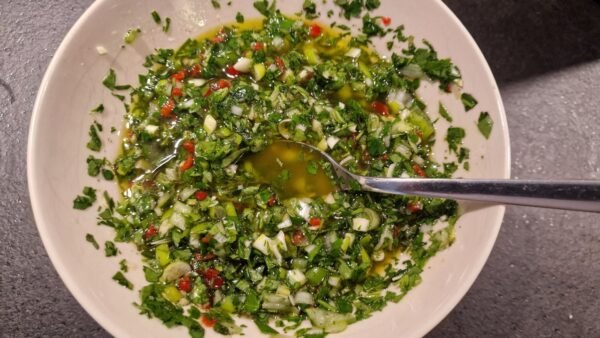
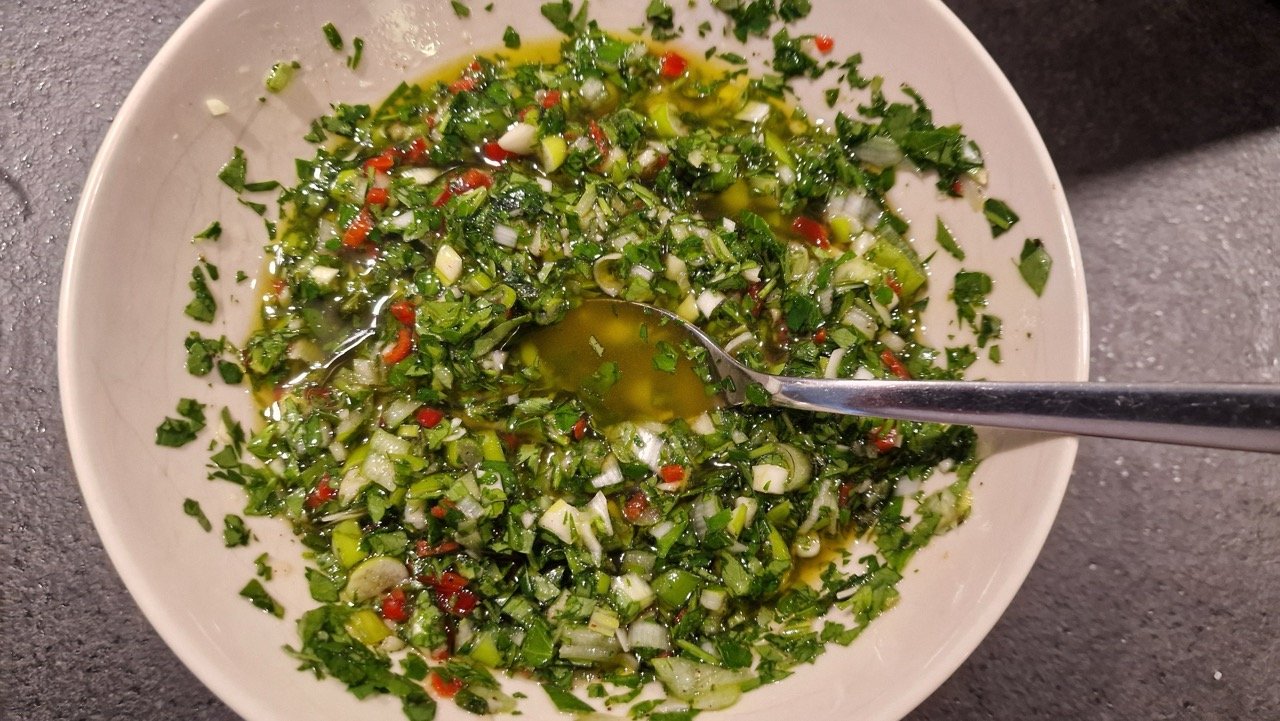
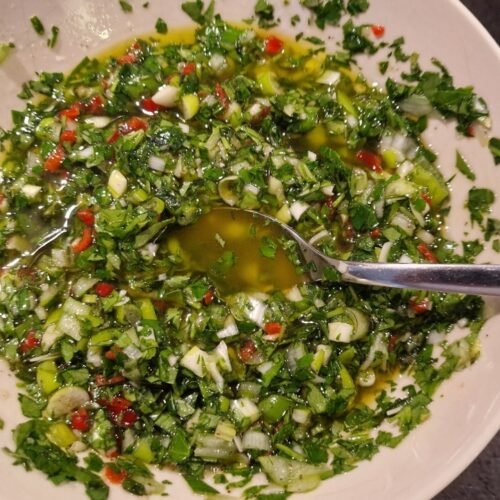
- Put the chopped ingredients in a bowl. Add the lemon juice, red wine vinegar, and olive oil, and mix well. Season with salt and pepper to taste.
- Refrigerate for 4–24 hours to let the flavors come together. Serve at room temperature.