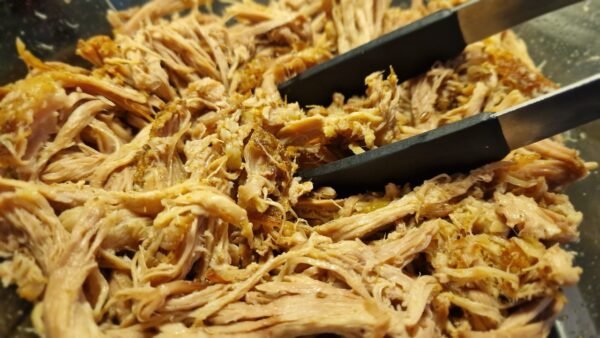
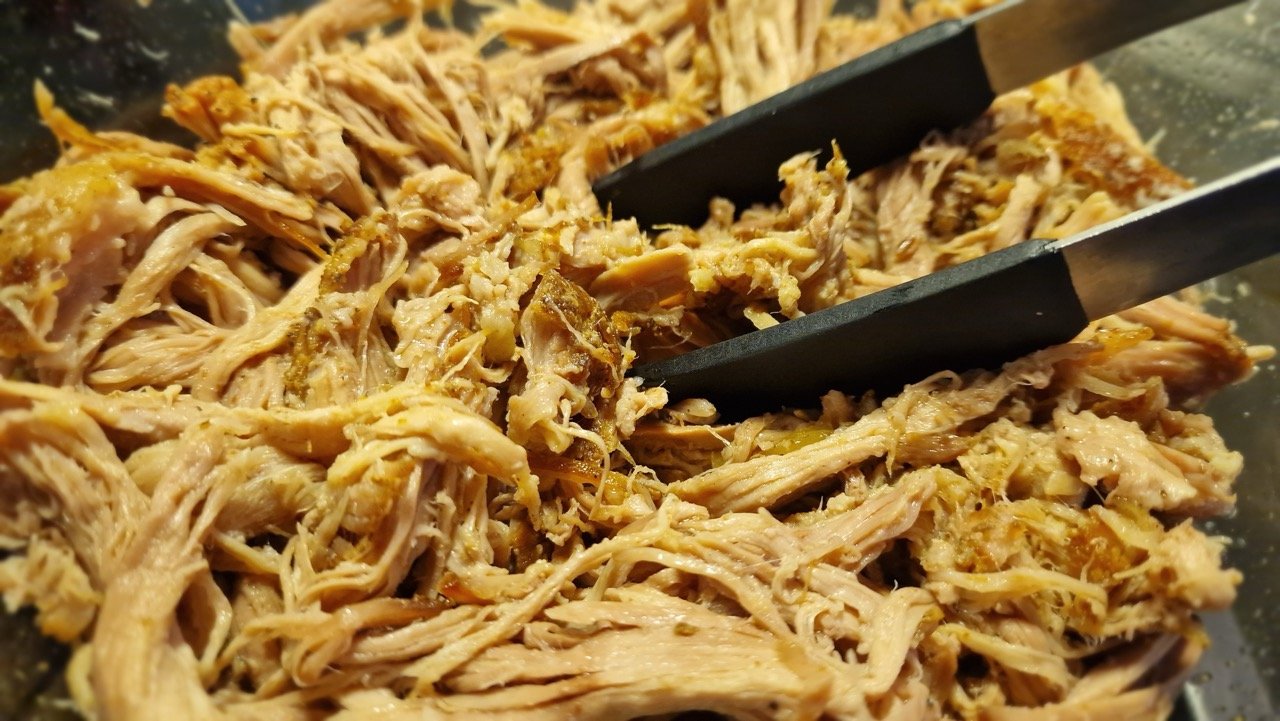
Pulled pork—also known as shredded pork—comes from the USA, and today you can find it in many forms all over the world.
Pulled pork is one of those recipes where it is almost impossible to find one single, original version. Even if we set aside the fact that meats prepared with a similar technique and texture exist in several places around the world, American pork-based barbecue itself developed in several regional forms, and the North Carolina tradition connected to pulled pork goes back centuries.
Add to that the fact that by now every restaurant working in this style has made its own version, and good luck finding anyone who can decide what the original pulled pork really is. But of course, that is not necessarily the point.
Eastern Carolina pulled pork / barbecue
The original Eastern North Carolina version is perhaps the one that comes closest to what we might call original pulled pork today. Or, more precisely, one of the most important predecessors of what we now know as pulled pork.
Because it is important to point out here that originally—and partly even today—this type of roasted pork is prepared outdoors, by slowly roasting a whole hog. So yes, this may be the original version, but I certainly do not think there is much chance of anyone making it in an average home kitchen.
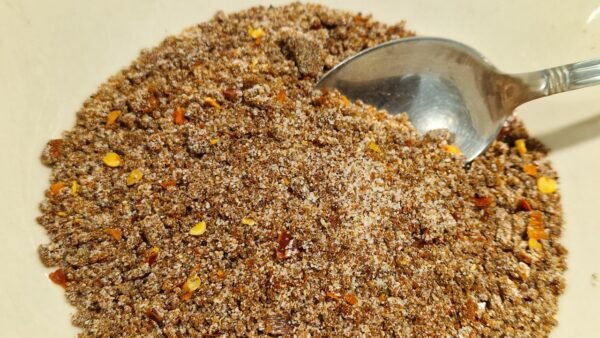
When it comes to seasoning, though, you can—and if you are looking for the original recipe, you should—start from this version. That is roughly what I am showing below in the recipe as well: a home-oven adaptation that relies mostly on Eastern Carolina barbecue in its seasoning and overall approach.
In the oven, on the grill, or smoked?
Once we let go of the idea of roasting a whole pig for a simple home lunch, based on the above, there is still one very important question when it comes to real pulled pork. Or maybe two.
First, what should we cook it in—in other words, in an oven, in a smoker, on a covered grill over indirect heat, or in a traditional barbecue pit over coals—and second, how should we provide that classic smoky flavor, which is unquestionably present in the original version.
And this is the point where, in my opinion, it is worth switching from the wannabe influencer creating trendy and cool, but in reality mostly useless, things for the virtual world into a food writer who stays grounded in reality and gives practical advice that can actually be used in real life.
Because the average person does not have a grill—or if they do, they fire it up far less often than they hoped before buying it—and they also do not really have a way to bring the same smoky flavor as the original into a pulled pork recipe. There is a solution for the latter, of course; see that below.
Until then, here comes the sobering news: this pulled pork recipe was created for home cooking in the oven. As such, I think it will make a larger share of my readers happy, because you can make it without any special equipment. If, however, you want to smoke a whole hog in the backyard, then unfortunately you are not in the right place this time.
The smoky flavor
One important element of classic barbecue, and therefore of traditional pulled pork as well, is the aroma that comes from wood-fired, smoky, low-temperature cooking. But as a home recipe, pulled pork is completely acceptable even without smoke. In that case, it is simply worth saying it out loud: this is an oven adaptation, not classic barbecue cooked over smoke.
At home, the aroma itself can be replaced, or at least approached, in the following ways:
- With actual hardwood smoke — this is the closest to the original, but it really only works outdoors, in a smoker or on a covered grill over indirect heat, and in my opinion it goes well beyond the average person’s average tolerance for everyday cooking.
- With liquid smoke — this is not impossible to find, but I would still not call it an everyday ingredient.
- With smoked paprika — this will only be an approximation, and it is certainly not an authentic Carolina solution, but if you do not overdo it, it can be a pretty good option even when making pulled pork in the oven.
- Not at all — for this, you just have to accept that a few know-it-alls are absolutely going to tell you on Facebook or Instagram that this isn’t even authentic.
Actually, it is a very simple recipe
I admit, I put off making pulled pork for a very long time—maybe you will not even believe it, but for more than 10 years—because I thought it was an overly complicated recipe. Then, once I started making it, I realized it is not that at all.
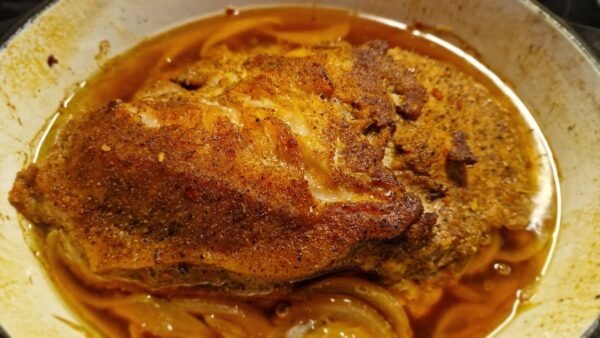
Yes, the meat roasts for a long time—that is exactly the point. It depends on the recipe, but in my version, the meat spent 4 and a half hours in a relatively low, 300°F (150°C) oven to become truly tender and pull-apart soft.
But there is not much work involved. In fact, the work that goes into making pulled pork can hardly be called serious kitchen labor at all. At the beginning, you rub it with the dry rub, cut up the onion, and put the whole thing in the oven. You do not even have to turn it; you simply leave it to roast.
What kind of meat should you use?
For pulled pork, you need a cut of pork that can handle long, slow cooking. In fact, it does not just handle it—it becomes good precisely because of it. In other words, do not think in terms of leaner cuts, but choose fattier meat with more connective tissue, which becomes meltingly tender after several hours of cooking and can be pulled apart into strands.
In American recipes, this is most often listed as pork shoulder or Boston butt. The latter name can be misleading at first, because it does not refer to the rear part of the pig, but to the upper, fattier part of the shoulder. That is exactly why it is good for pulled pork: it has enough fat and collagen to turn into juicy, pull-apart meat after long cooking, rather than becoming dry.
For this recipe, pork shoulder is the most straightforward choice, but pork collar or pork neck also works very well. In fact, for a homemade oven version, that cut often gives the most reliable, juiciest result, because it is nicely marbled and fattier.
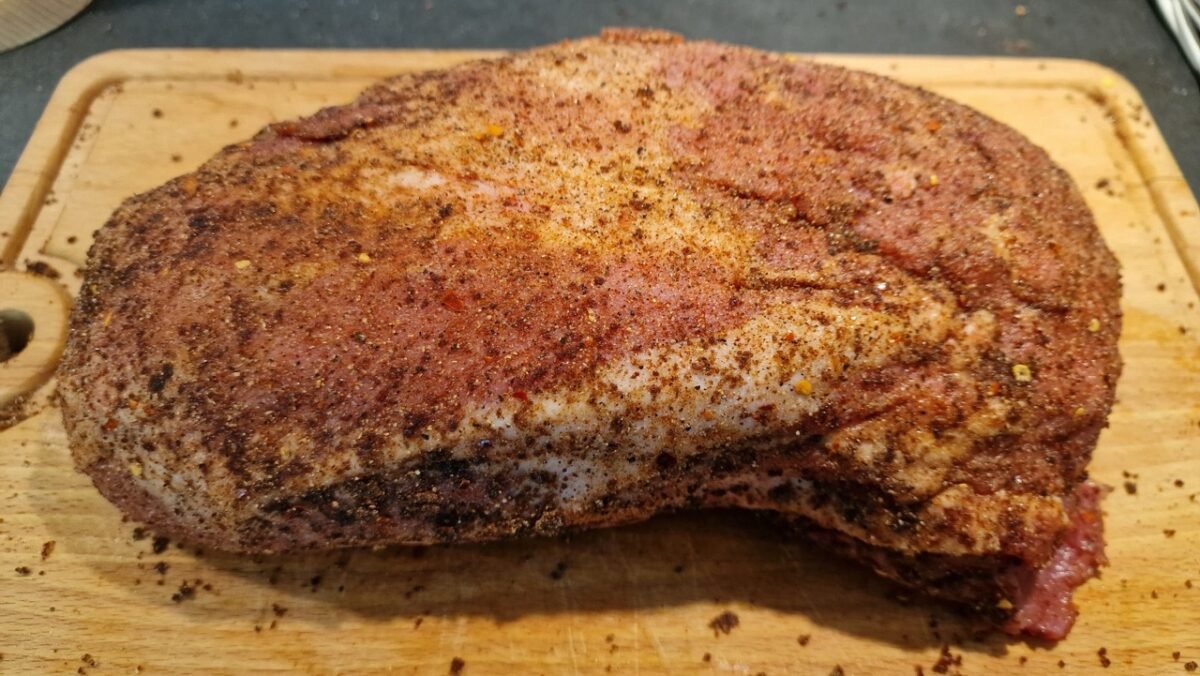
For this recipe, I recommend about 4.4 lb (2 kg) of fattier pork, definitely in one piece. A piece this size is already large enough to stay juicy during long roasting, but it is still very easy to handle in an average home oven.
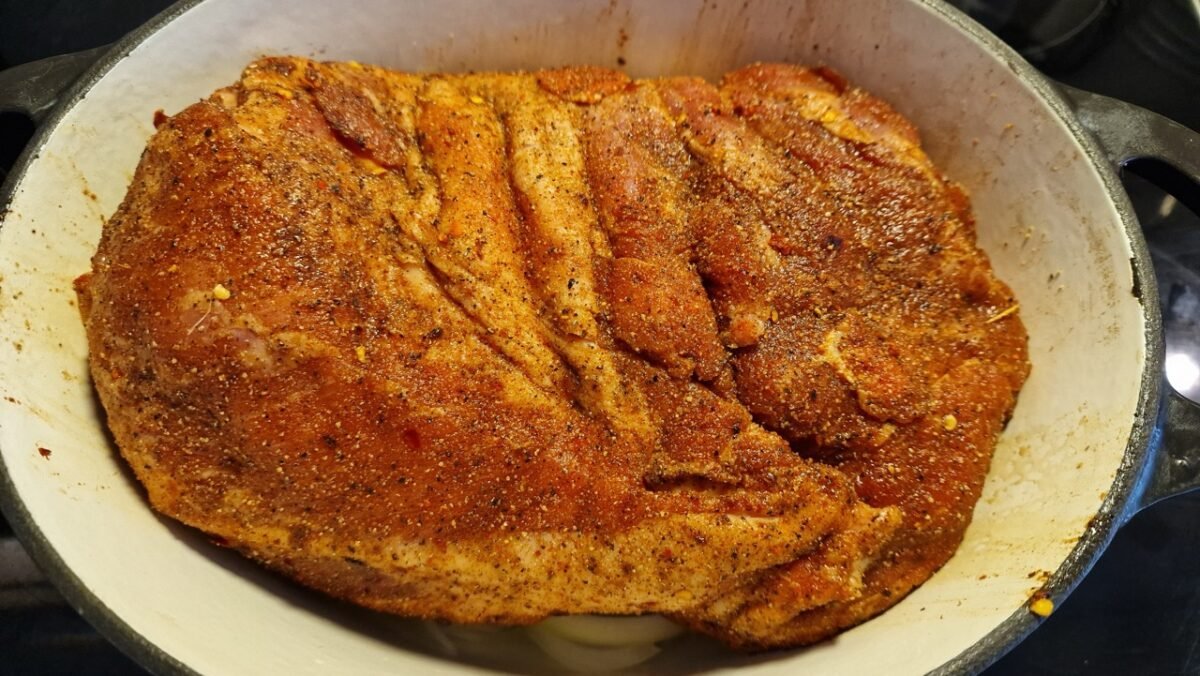
Serving pulled pork
There are many different ways to serve pulled pork, or shredded pork, and you can even shape it according to your own imagination. Still, I will try to bring up the variations here that can be called at least somewhat authentic when it comes to Carolina barbecue pulled pork.
First, you can simply serve it on a plate. This is probably the easiest way and requires no extra work at all. As a side, it can handle practically anything you feel like eating with it, but coleslaw, for example, can be called very authentic.
It is also very popular to serve it “hamburger” style, in a bun. In that case, a good amount of American coleslaw can go in there too.
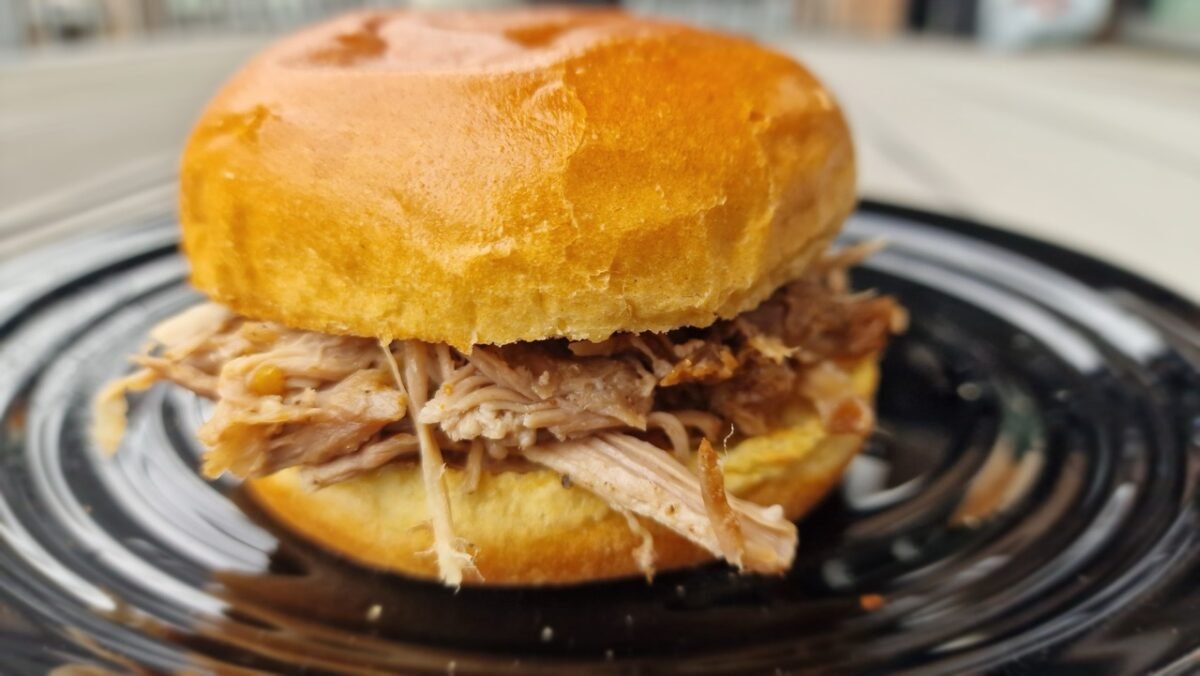
As for extra seasoning and sauce, you have several options for brightening up the flavor of pulled pork:
- Definitely use the meat juices. Pour them over the meat either when serving, or for example in the bun.
- According to Eastern Carolina tradition, you can also season the meat at serving time with a vinegary, spicy sauce. In its simplest form, it consists of apple cider vinegar, salt, hot pepper or chili flakes, and possibly black pepper, and it gives the meat a tangy, bold, acidic flavor.
- If authenticity is not the main consideration, you can of course serve it with a thicker, sweeter barbecue sauce. This works very well with pulled pork, but it takes the dish more toward the modern, general BBQ world, not the Eastern Carolina direction.
- Here in this recipe, the meat roasts on onions, and the onion itself can also be worked into the meat, giving it an extra sweet flavor.
Enjoy!
Pulled Pork
Ingredients
Spice Mix
- About 0.9 oz salt 25 g
- About 0.14 oz ground black pepper 4 g
- About 0.9 oz brown sugar 25 g
- About 0.07 oz smoked paprika 2 g
- About 0.1 oz ground coriander 3 g
- About 0.04 oz crushed chili 1 g
Meat and Roasting
- About 4.4 lb pork shoulder 2 kg, whole, see the tips in the recipe
- 1 ½ onions
- 3 Tbsp plus 1 tsp water 50 ml
Instructions
- In a small bowl, mix together the spices for the pulled pork dry rub. Preheat the oven to 300°F (150°C), using conventional top and bottom heat.

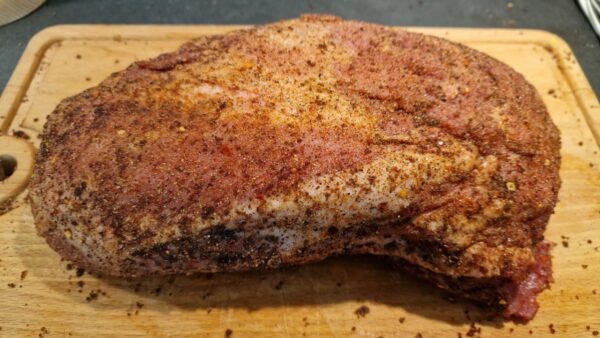
- Pat the meat dry, and rub the outside thoroughly with the spice mix.You can let the meat rest, for example wrapped in plastic wrap in the refrigerator, but you can also start roasting it right away.
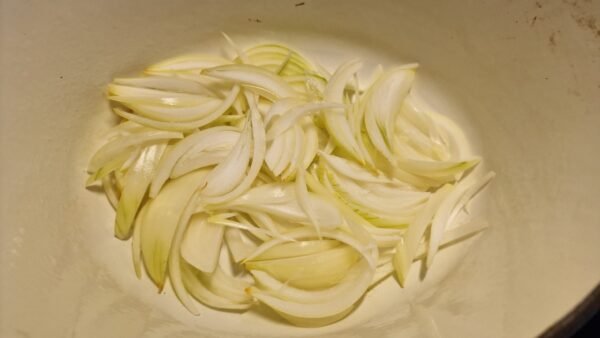
- Peel the onion, cut it in half, and slice it into rings or half-moons.
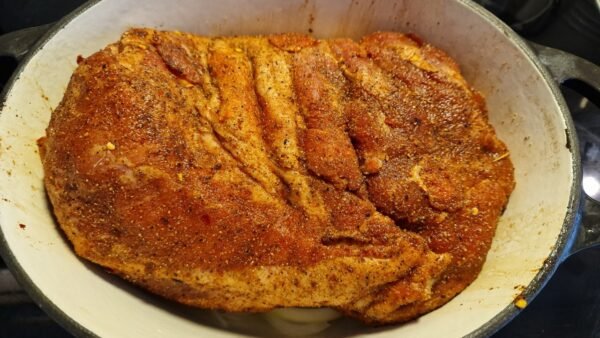
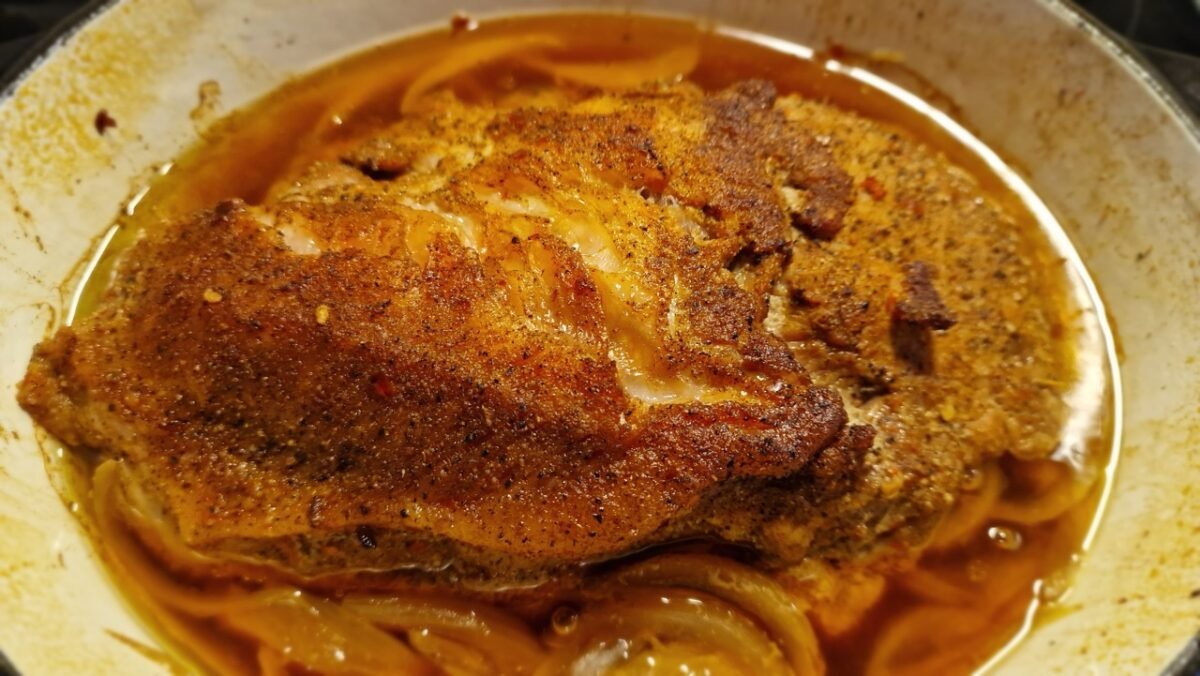
- Place the onion on the bottom of a covered oven-safe dish, pour a little hot water over it, and place the meat on top.
- Cover it, place it in the oven, and roast for 4 and a half hours.You do not need to do anything with it; just leave it to roast under the lid.
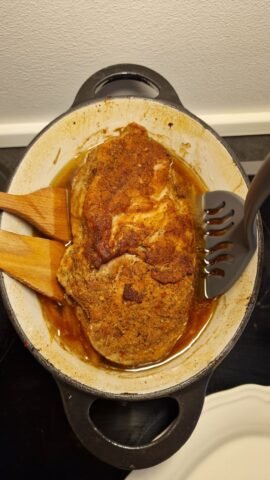
- Remove the dish from the oven, and using tongs and/or spatulas, transfer the meat to a plate or bowl. Let it rest for half an hour.

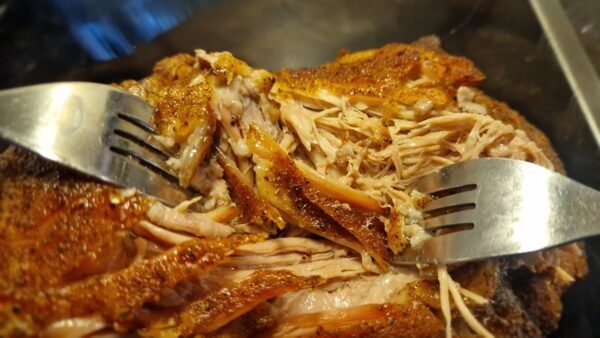
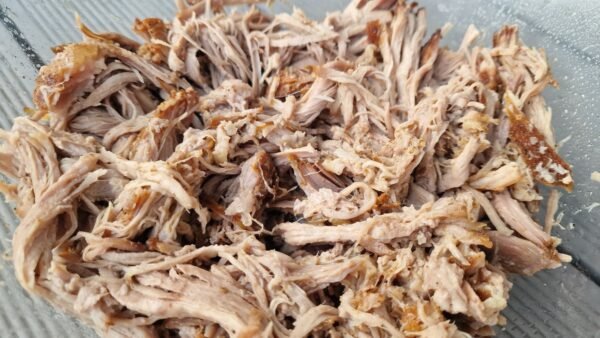
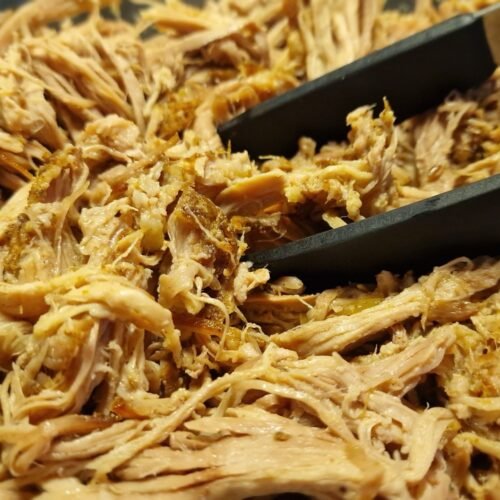
- Place the meat itself in a larger bowl. Using two forks, “pull” it apart into stringy pieces.
- Remove the onion from the juices, and either add it to the meat or serve it separately, to taste. Serve the juices with the meat as well, and you can also mix a little of it directly into the serving bowl with the meat—it will make it juicier.
- Serve to taste on its own or in a hamburger bun.Add American coleslaw, apple cider vinegar seasoned with chili or cayenne pepper, or possibly BBQ sauce.